Indonesian products may lose their US markets to other countries with lower tariffs and better cost of doing business, according to the Indonesian Employers Association (Apindo).
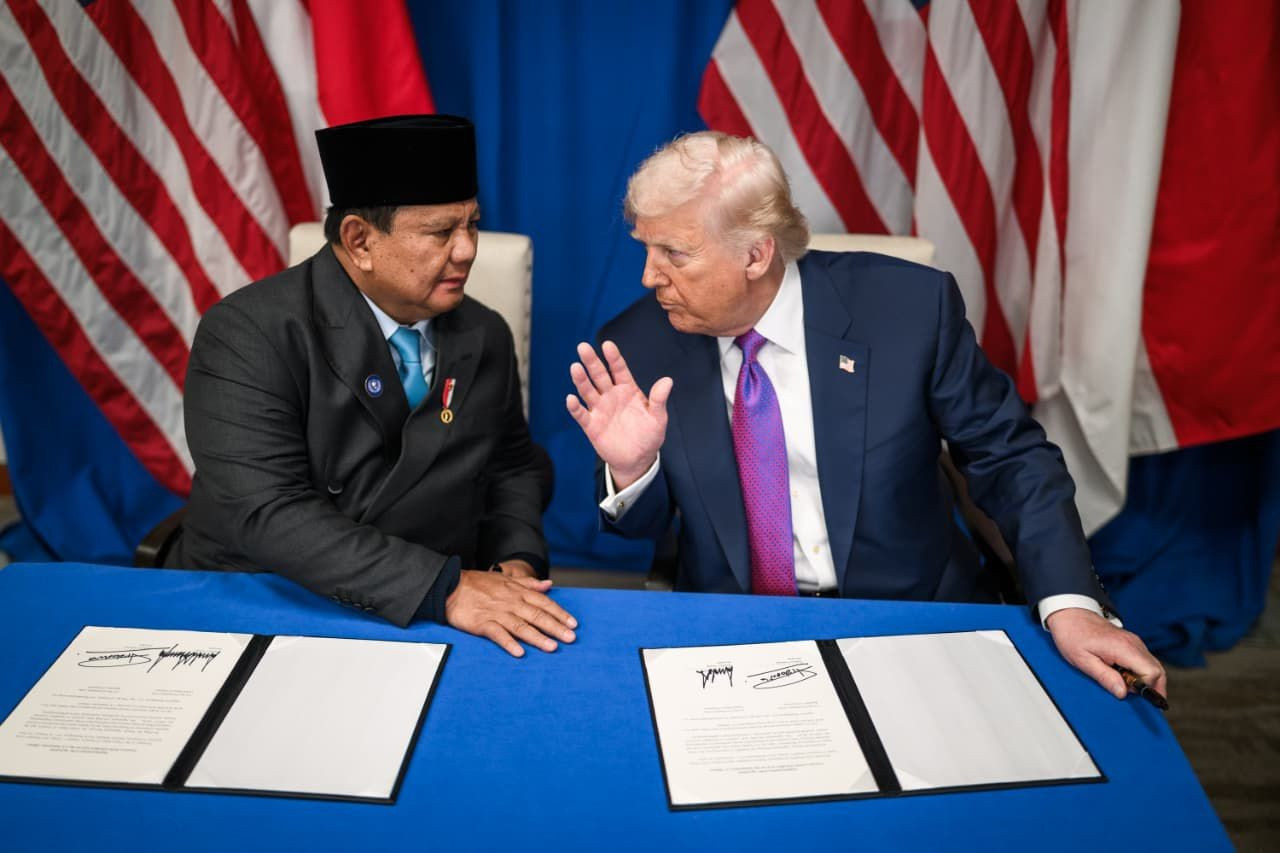
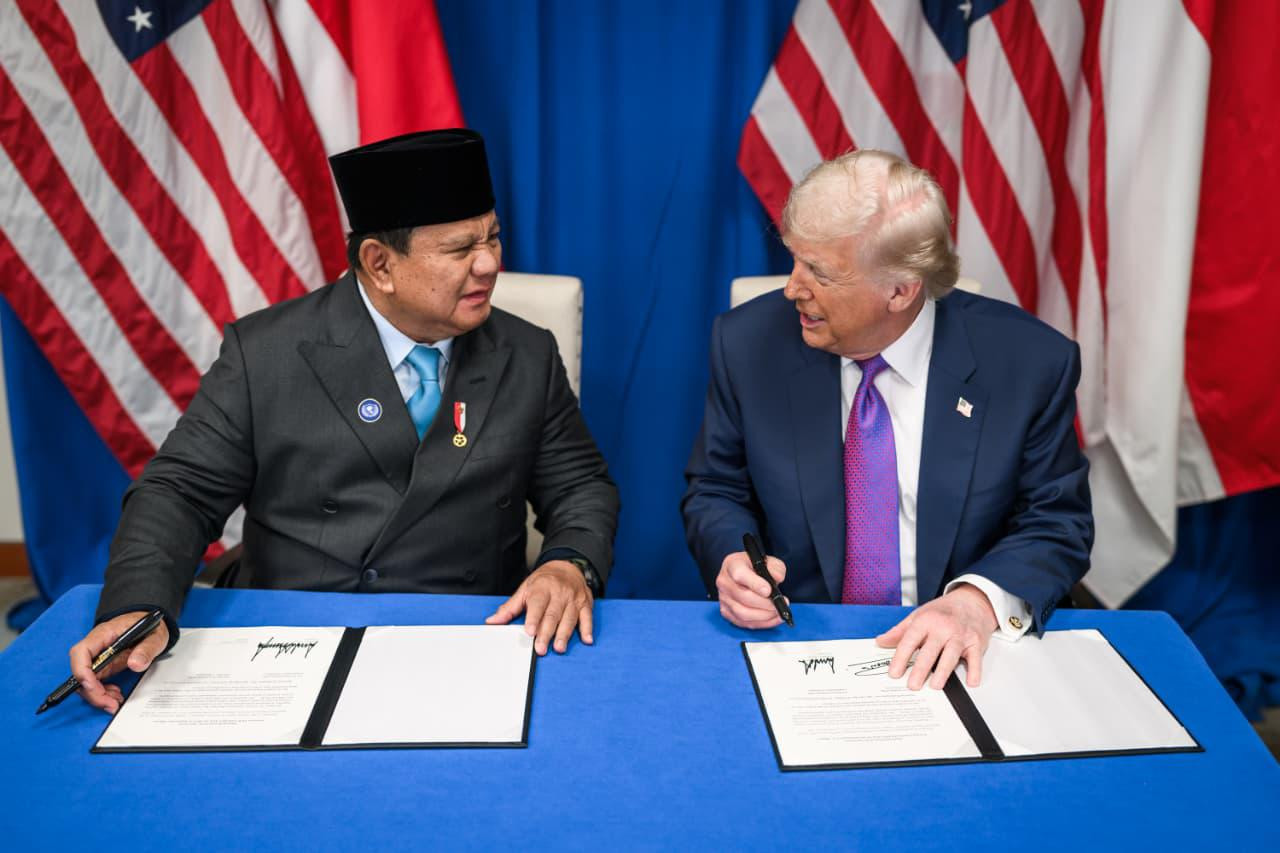
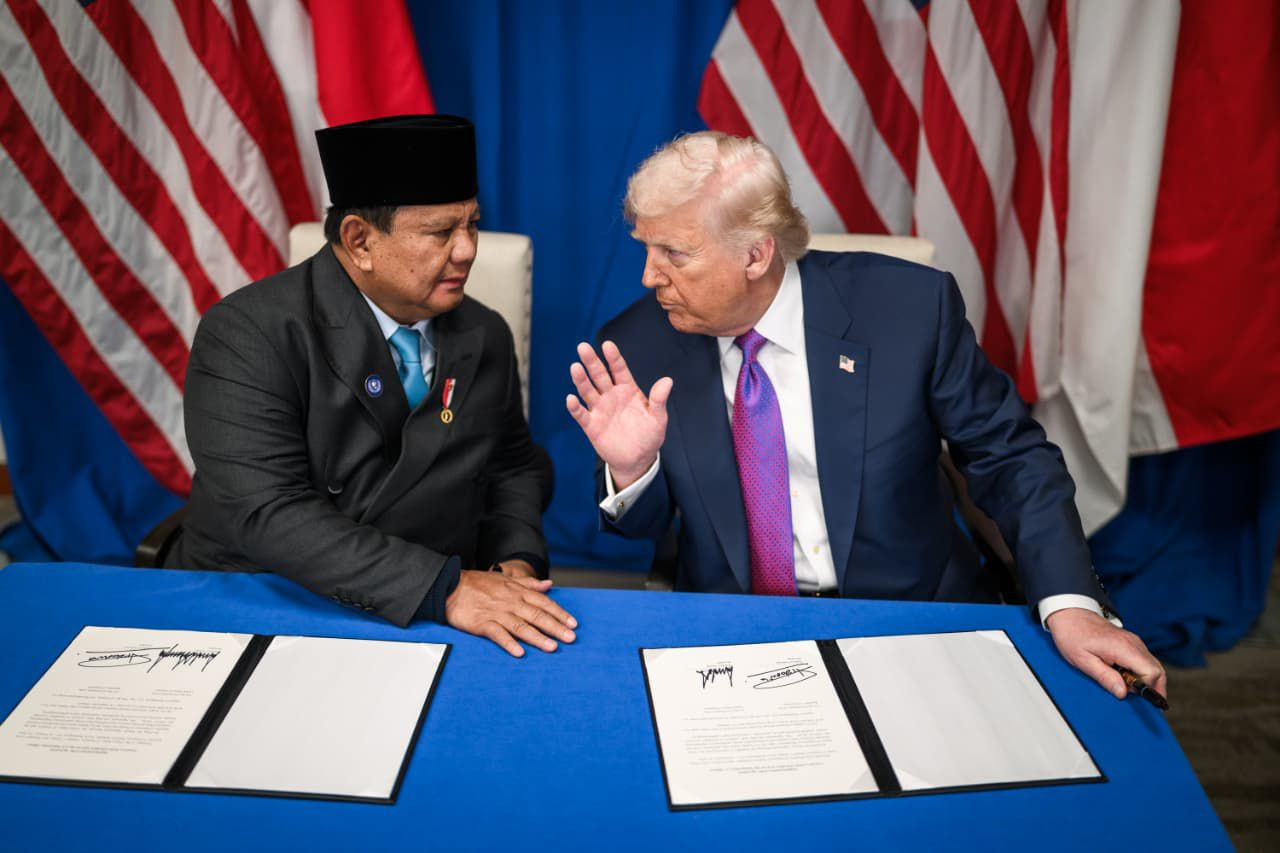
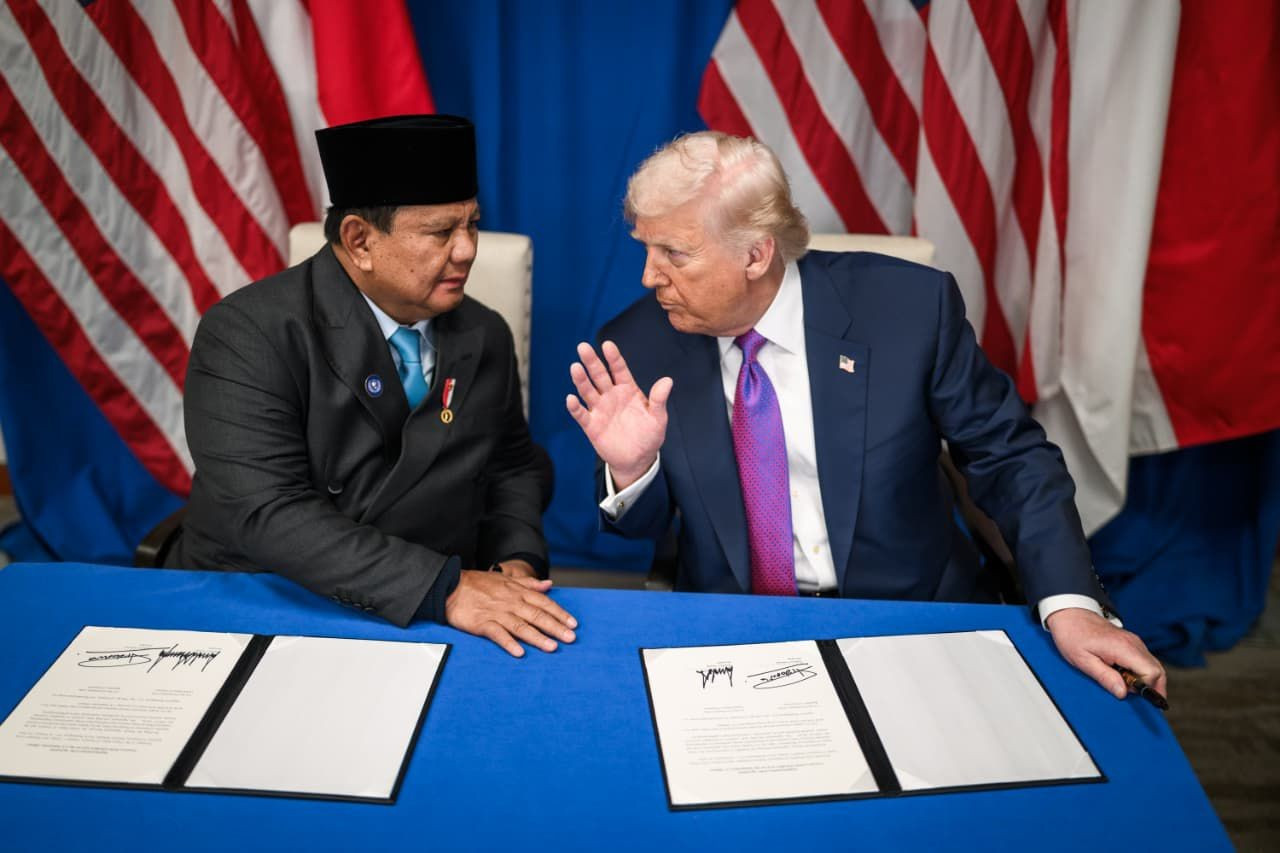
President Prabowo Subianto (left) speaks to United States President Donald Trump on Feb. 19, 2026, during the signing of the US-Indonesia Agreement on Reciprocal Trade (ART) in Washington, DC. (Courtesy of Presidential Secretariat/White House)
The Indonesian Employers Association (Apindo) has stated that the competitiveness of Indonesian exports depends not only on tariffs imposed on Indonesia, but also on the treatment received by competing countries and Indonesia's own costs of doing business."The key question is not only what tariff Indonesia gets, but what other countries get," Apindo chairwoman Shinta Kamdani told reporters on Tuesday, referring to Indonesia's competitors in labor-intensive industries such as textiles, garments and footwear.
Her remarks came after the announcement that Indonesia would be subjected to a 10 percent tariff under Section 301 of the United States Trade Act of 1974, which targets countries deemed not to have effectively enforced prohibitions against imports produced using forced labor, while still awaiting the outcome of the US investigation into alleged excess production capacity.