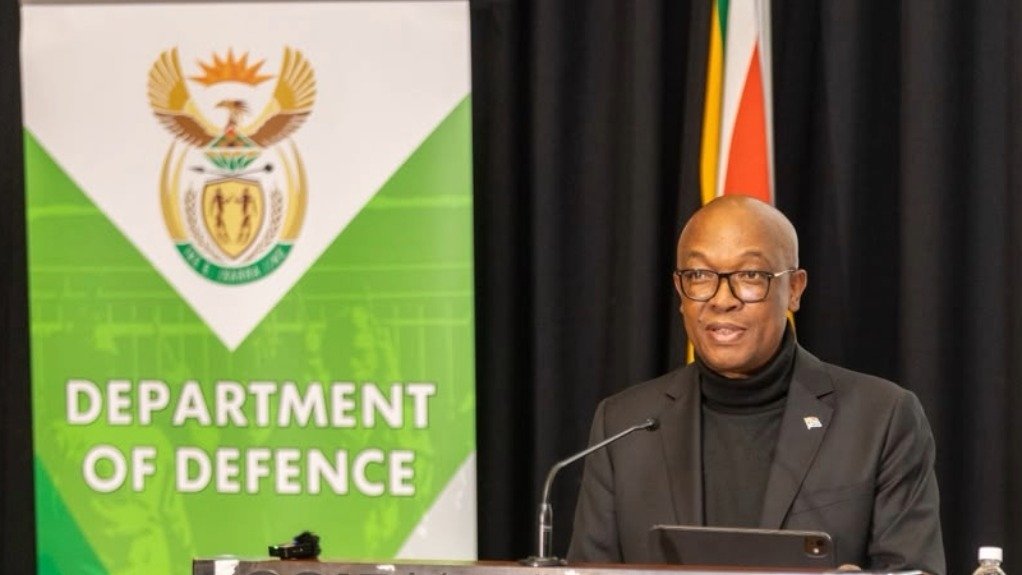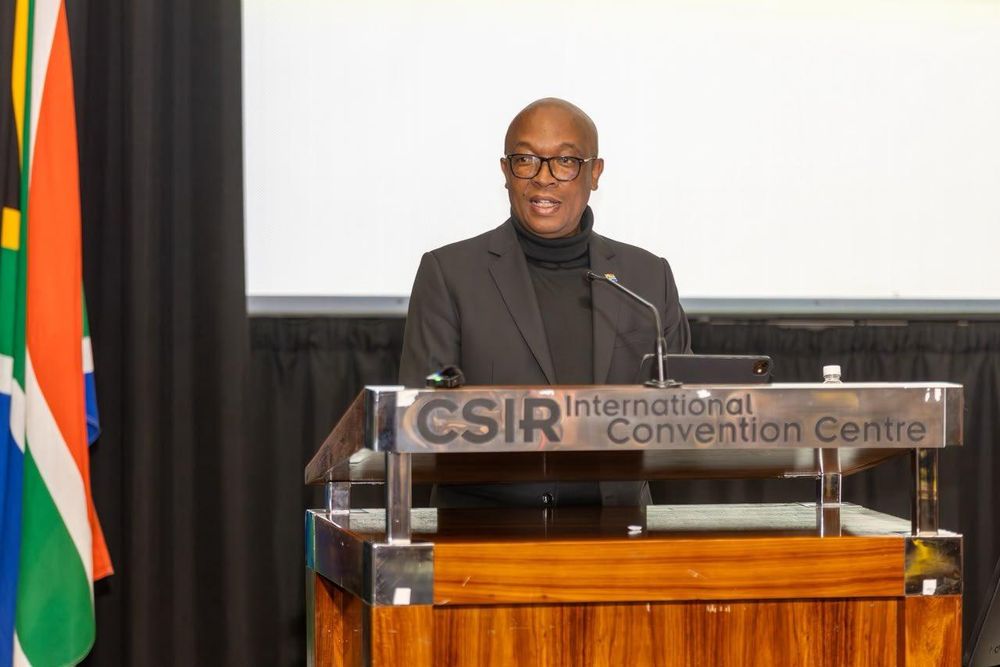
Countries rarely lose advanced manufacturing overnight. They lose it engineer by engineer, laboratory by laboratory and research programme by research programme. South Africa’s defence industry illustrates precisely that process. Addressing the recent defence industry lekgotla at the Council for Scientific and Industrial Research (CSIR) Pretoria corporate headquarters, trade, industry and competition minister Parks Tau said defence R&D expenditure had fallen from R6.1bn in 1989/90 to R500m in 2017, far below the value recorded in the national R&D survey of 2017/18. It must be presumed the minister’s statistics refer only to Armscor, and that they are expressed in constant rands. Context and comparability matter. That context is extraordinary. South African defence R&D produced a remarkable range of matériel in the past: radar systems, nuclear weapons, armoured vehicles, missiles, munitions, drones and helicopters. In 1989/90 the Stockholm International Peace Research Institute (Sipri) reported the country was 11th among arms exporting countries. High-technology exports were then about 10% of South Africa’s manufactured exports. Long before “mission-oriented innovation” became fashionable in Organisation for Economic Co-operation and Development policy circles, South Africa had constructed such a system around defence. Armscor co-ordinated universities, the CSIR, state laboratories and hundreds of specialised firms around clearly specified technological missions. Today Sipri ranks us 21st in the world. High technology exports have fallen to about 6% of the total, well below other emerging economies such as Brazil, Malaysia and Türkiye. In the same period our automotive exports have surged, but the UN Comtrade database records automotive exports as medium-high technology, not high technology. So we languish. Now to data comparability. Much has changed in the defence sector since 1989/90. The regional wars ended and democratic South Africa sharply reduced the military mission. Defence tenders to the private sector contracted. Co-operation with Israel was terminated and new opportunities appeared in the Middle East. The nuclear weapons and ballistic missile programmes were iced. Next, the integrated Armscor system was dismantled with the creation of Denel. To add to the loss of capability, the Strategic Defence Procurement Package shifted resources towards imported platforms rather than domestic technology development. Finally, state capture crippled Denel’s ability to sustain advanced engineering capability, the gap being partially filled by new enterprises such as privately owned Paramount and Milkor. The apartheid state built much of this capability in the service of minority rule and regional war. Democratic South Africa thereby inherited a sophisticated technological infrastructure but never fully articulated how such mission-driven capabilities would be sustained under peacetime conditions. This brings us to Tau’s numbers, best thought of as before and after. The figures appear to refer to a narrower and unspecified constant-price series. For a transparent comparison, I use the 1991/92 historical defence R&D estimate and the 2017/18 National R&D Survey total, both expressed in 2023/24 prices.“Before” is R&D expenditure (constant 2023/4 rand) of R7.02bn for 1991/92, the final year of the integrated Armscor. “After” is R&D expenditure as reported by the department of science, technology and innovation’s national R&D survey 2017/18 (constant 2023/4 rand) of R2.82bn. The survey covers public and private R&D expenditure. It is clear defence R&D expenditure fell by 60% over the three-decade period. The two trends do not establish causation, but the association is difficult to dismiss. The late economist Dave Kaplan argued R&D is a lead factor in export performance. Defence R&D is unusual as it accumulates tacit engineering capability rather than producing scientific papers. Notably, defence contractors avoid patenting for security reasons and due to the fast-moving technological frontier. As an insider explains: “Once you implement a new radar system, it is already obsolete.” Defence firms rely instead on secrecy, contractual protection and maintaining a technological lead. Once experienced missile engineers, radar specialists or systems integrators disperse, rebuilding that capability is not measured in months but in generations. South Africa’s shortage of experienced nuclear engineers offers a parallel warning. So much for the bad news. Is the minister’s proposed Western Cape military technology SEZ good news? There is no doubt the SEZ principle is attractive. However, the recently released World Bank review offers caution: “Without targeted reforms to incentivise design, governance, infrastructure delivery and private sector participation, the programme risks entrenching underperformance at a moment when South Africa can least afford it.” The review finds the programme reached an annual financial turning point in 2024, yet remains structurally weak, unevenly governed and heavily concentrated in a handful of successful zones. The bank does not express a view on location; the issue is governance. How to resuscitate the defence industries? Is the solution a 13th SEZ that may take five to 10 years to gain traction? Resolution entails the mixing of innovation policy and industrial policy. Successful innovation policy rarely creates ecosystems from nothing. It identifies ecosystems that already exist and strengthens their connections. The Western Cape already hosts a dispersed telemetry innovation ecosystem stretching from Saldanha through Stellenbosch and Silvermine to Houwteq near Grabouw, the De Hoop test range, Somerset West, Westlake and the Institute for Maritime Technology at Simon’s Town. Swartklip retains advanced munitions production, while Stellenbosch Technopark, originally conceived as a radar and missile supplier park, houses firms descended from the defence electronics complex. The Stellenbosch municipality Technopark is arguably the most successful “innovation hub” in the country. It is home to Reunert Radar, and was the birthplace of Alphawave, whose detectors power the MeerKAT telescope array at Carnarvon. It is central to the telemetry innovation ecosystem. Stellenbosch University, the University of Cape Town and Cape Peninsula University of Technology are vital players in the ecosystem, bringing software and engineering skills. Add the completers of the local technical and vocational education and training colleges, and stir. These elements celebrate South Africa’s role as an emerging economy initiator of a mission-driven innovation system, and this in the 1970s. Few regions outside the North contain such a dense concentration of defence-related capabilities. Universities, specialised suppliers, testing facilities, telemetry infrastructure, missile ranges, software firms, electronics companies and precision manufacturers already co-exist. Unlike most proposed SEZs, the Western Cape does not begin with vacant land waiting for investors. It begins with an existing network. Universities educate engineers. Rheinmetall manufactures sophisticated ammunition. The Institute for Maritime Technology supports naval technologies. Reunert Radar traces its lineage to defence electronics. Houwteq demonstrated South Africa’s early satellite ambitions. The De Hoop range remains one of the few facilities in the developing world capable of missile testing. These institutions evolved independently, yet together they already possess the characteristics of an innovation ecosystem. The components of a military equipment innovation ecosystem are evident. It may be branded as a super-special SEZ. There is no reason why the telemetry innovation ecosystem cannot be configured as a decentralised SEZ. International SEZ systems increasingly permit firm-based, sectoral or multi-site arrangements rather than requiring every beneficiary to occupy one contiguous estate. A decentralised SEZ would comprise multiple accredited nodes under a single governance structure, with shared incentives, research facilities, export support and procurement arrangements. Such a model would require legislative amendment and careful rules governing security, procurement, intellectual property and export control. However, it would be better aligned with the actual geography of advanced technological production than another fenced estate. The telemetry SEZ is in accord with the review that stresses the importance of agglomeration, supplier networks and industrial capabilities as the source of successful SEZs. The lessons are larger than defence. Countries that abandon mission-oriented R&D rarely retain advanced manufacturing. They progressively lose high-technology exports, engineering capability and technological sovereignty. Tau is right to call for a reset. Innovation ecosystems are not built by proclamation or by declaring another SEZ. They emerge when government, firms, universities and research organisations pursue demanding technological missions over decades. South Africa once understood this, though it did so in the service of an indefensible political order. The challenge is not to recreate that past, but to recover the institutional imagination through which advanced capabilities were assembled and renewed. Tau’s initiative deserves support, but only if it builds an innovation ecosystem rather than another sealed industrial estate. • Dr Kahn is research fellow at the Stellenbosch Institute for Advanced Study and the Centre for Research on Evaluation, Science & Technology at Stellenbosch University, and visiting professor in the College of Business & Economics at the University of Johannesburg.
MICHAEL KAHN | When defence R&D disappears, so do exports
Decades of defence cuts erode South Africa's high-tech export edge
1,373 words~6 min read