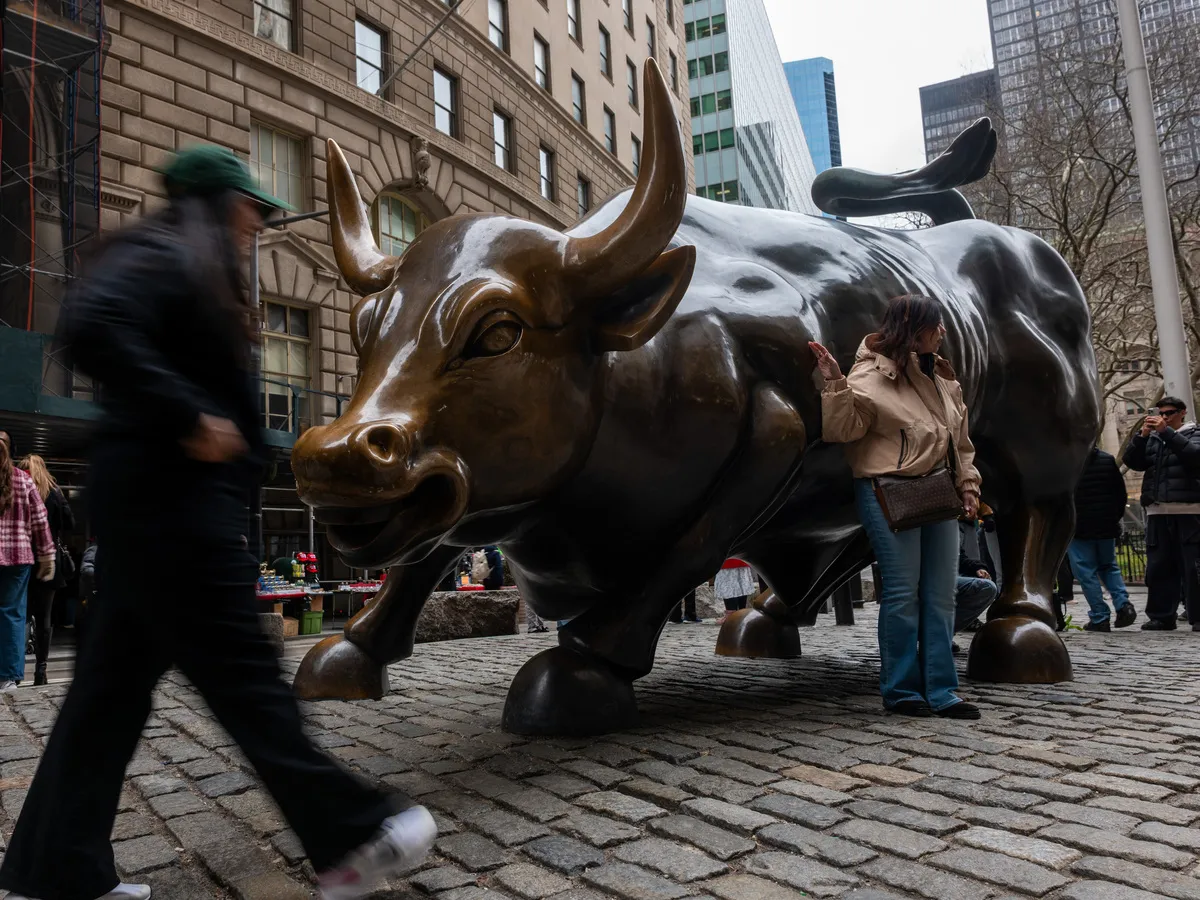
Skip to Content News Archives Economy Energy Oil & Gas Renewables Electric Vehicles Mining Commodities Agriculture Real Estate Mortgages Mortgage Rates Finance Banking Insurance Fintech Cryptocurrency Work Wealth Smart Money Wealth Management Investor Personal Finance Family Finance Retirement Taxes High Net Worth FP Comment Executive Women Puzzmo Newsletters Financial Times Business Essentials More Innovation Information Technology FP500 Podcasts Small Business Lives Told Tails Told Shopping Financial Post Store Obituaries Place a Notice Advertising Advertising With Us Advertising Solutions Postmedia Ad Manager Sponsorship Requests Classifieds Place a Classifieds ad Working Profile Settings My Subscriptions Saved Articles My Offers Newsletters Customer Service FAQ News Economy Energy Mining Real Estate Finance Work Wealth Investor FP Comment Executive Women Puzzmo Newsletters Financial Times Business Essentials HomeInvestorInvestors wondering when the stock market party will end are caught between the rock of FOMO and the hard place of fearNoah Solomon: There have been 13 bear markets in the bellwether U.S. index in the postwar era. Here's how today’s market comparesLast updated 52 minutes ago You can save this article by registering for free here. Or sign-in if you have an account.The Wall Street Bull in the Financial District, home to the New York Stock Exchange, in Manhattan, in New York City. Photo by Spencer Platt/Getty Images filesClowns to the left of meJokers to the rightHere I am, stuck in the middle with you —Stealers WheelSubscribe now to read the latest news in your city and across Canada.Exclusive articles from Barbara Shecter, Joe O'Connor, Gabriel Friedman, and others.Daily content from Financial Times, the world's leading global business publication.Unlimited online access to read articles from Financial Post, National Post and 15 news sites across Canada with one account.National Post ePaper, an electronic replica of the print edition to view on any device, share and comment on.Daily puzzles, including the New York Times Crossword.Subscribe now to read the latest news in your city and across Canada.Exclusive articles from Barbara Shecter, Joe O'Connor, Gabriel Friedman and others.Daily content from Financial Times, the world's leading global business publication.Unlimited online access to read articles from Financial Post, National Post and 15 news sites across Canada with one account.National Post ePaper, an electronic replica of the print edition to view on any device, share and comment on.Daily puzzles, including the New York Times Crossword.Create an account or sign in to continue with your reading experience.Access articles from across Canada with one account.Share your thoughts and join the conversation in the comments.Enjoy additional articles per month.Get email updates from your favourite authors.Create an account or sign in to continue with your reading experience.Access articles from across Canada with one accountShare your thoughts and join the conversation in the commentsEnjoy additional articles per monthGet email updates from your favourite authorsSign In or Create an AccountorWith the current bull market now into its fourth year, investors could be forgiven for wondering when the party will end. They are trapped between the “rock” of FOMO (fear of missing out) and the “hard place” of FOL (fear of losses).There have been 13 bear markets in the bellwether S&P 500 index in the postwar era, which have ranged in depth from a loss of 20.6 per cent to a loss of 56.8 per cent and have lasted between 33 and 929 days. Unless you believe that bear markets have become extinct, markets will continue to suffer periodic episodes of malaise. As the saying goes, “You don’t need to know when something will happen to know that it will.”Canada's best source for investing news, analysis and insight.By signing up you consent to receive the above newsletter from Postmedia Network Inc.A welcome email is on its way. If you don't see it, please check your junk folder.The next issue of Investor will soon be in your inbox.We encountered an issue signing you up. Please try againIn terms of length, the current runup in equities does not appear long in the tooth. As of the end of June, it has been 1,357 days since the end of 2022’s bear market. In contrast, the average duration of S&P 500 bull markets since the Second World War has been 1,905 days.With respect to returns, the present bull market appears similarly unalarming, with the S&P 500 index producing a total return of 123.2 per cent, as compared with an average return of 177.4 per cent for all previous bull markets in the postwar era. However, this average is heavily skewed by the bull run that included the late 1990s tech bubble, during which the index produced a total return of 582.1 per cent. Once this extreme data point is removed, the average bull market return falls to 140.6 per cent, making the current bull market appear considerably less contrasting.From a rate of appreciation perspective, the current 1,357-day bull run appears somewhat ahead of itself. The S&P 500 index has delivered a total return of 123.2 per cent, as compared with an average return of 104.8 per cent over the same period during the three previous bull markets. Only the recovery after the global financial crisis had a greater rate of ascendance, returning 125.4 per cent over its initial 1,357 days. However, when equities troughed in March 2009, the forward price-to-earnings (PE) ratio of the S&P 500 was about 11. Once investors became comfortable that the world was not collapsing, bargain basement prices and hyper-stimulative monetary policies served as rocket fuel for stock prices. In contrast, the current bull run began with a PE ratio of over 16 and current rates are not particularly accommodative.Perhaps the most striking feature of the U.S. market is its strength over an extended period. Annualized returns over the past 10 years through the end of 2025 are 14.68 per cent, as compared with an average of 10.97 per cent for all rolling 10-year periods in the postwar era. Reversion to the long-term mean would require a 44 per cent decline in prices or subpar returns over an extended period.Although U.S. companies’ earnings growth has been strong, it has been surpassed by the appreciation of stock prices. Ten years ago, the S&P 500 index was valued at approximately 18 times next year’s estimated earnings, as compared with about 22 times these days. In other words, stocks have had about a 25 per cent boost purely from multiple expansion. A reversion to the average PE multiple over the past 20 years of 17.9 would entail a 19 per cent decline in prices.Regardless of whether price gains have been excessive or whether valuations are unrealistic, these considerations don’t matter when it comes to markets over the near to medium term. Bull markets don’t die of old age. Rather, they get slaughtered.Historically, the most common cause of bear markets has been a toxic brew of high inflation, a U.S. Federal Reserve hiking cycle, a recession, lower earnings and a decrease in the multiples that investors are willing to pay for them. Although less common, market euphoria and speculative bubbles such as the tech mania of the late 1990s and the real estate bubble of the mid 2000s have also ended in tears.Both elements are in play today, although perhaps not dangerously so. Inflation has remained stubbornly high. In response, the European Central Bank, the Bank of Japan and the Reserve Bank of Australia have all raised rates this year, and U.S. markets have gone from pricing in rate cuts to discounting rate hikes. Moreover, while it is impossible to precisely discern between healthy optimism and irrational euphoria, today’s extreme enthusiasm for all things artificial intelligence warrants close monitoring.Lastly, elevated levels of deficit spending in the U.S. and many other countries could cause investors to demand higher yields to compensate them for increased risk. This presents the risk of a vicious cycle where higher rates make additional borrowing increasingly expensive, thereby creating a self-reinforcing cycle of debt, pessimism and sluggish growth.I am nearly 100 per cent certain that at some point something will cause the current bull market to end. The critical question is when.Bull markets tend to behave in a similar fashion to automobiles: Although they can last for a long time, they tend to show wear and tear after the first few years. Historically, bull markets have exhibited stronger performance in the first half of their lives than in the second. The corollary is that although stocks may very well have some gas left in the tank, the current uptrend is likely past its prime. If this 1,357-day bull market lasts another 1,357 days, it is unlikely to deliver the same 123.2 per cent gain. The rock of missing out, although clearly present, has shrunk, while the hard place of losses has grown.Noah Solomon is chief investment officer at Outcome Metric Asset Management LP._____________________________________________________________If you like this story,sign up for the FP Investor Newsletter. Join the Conversation This website uses cookies to personalize your content (including ads), and allows us to analyze our traffic. Read more about cookies here. By continuing to use our site, you agree to our Terms of Use and Privacy Policy.
Investors wondering when the stock market party will end are caught between the rock of FOMO and the hard place of fear
Investors are trapped between the 'rock' of FOMO (fear of missing out) and the 'hard place' of FOL (fear of losses). Find out more.
1,502 words~7 min read