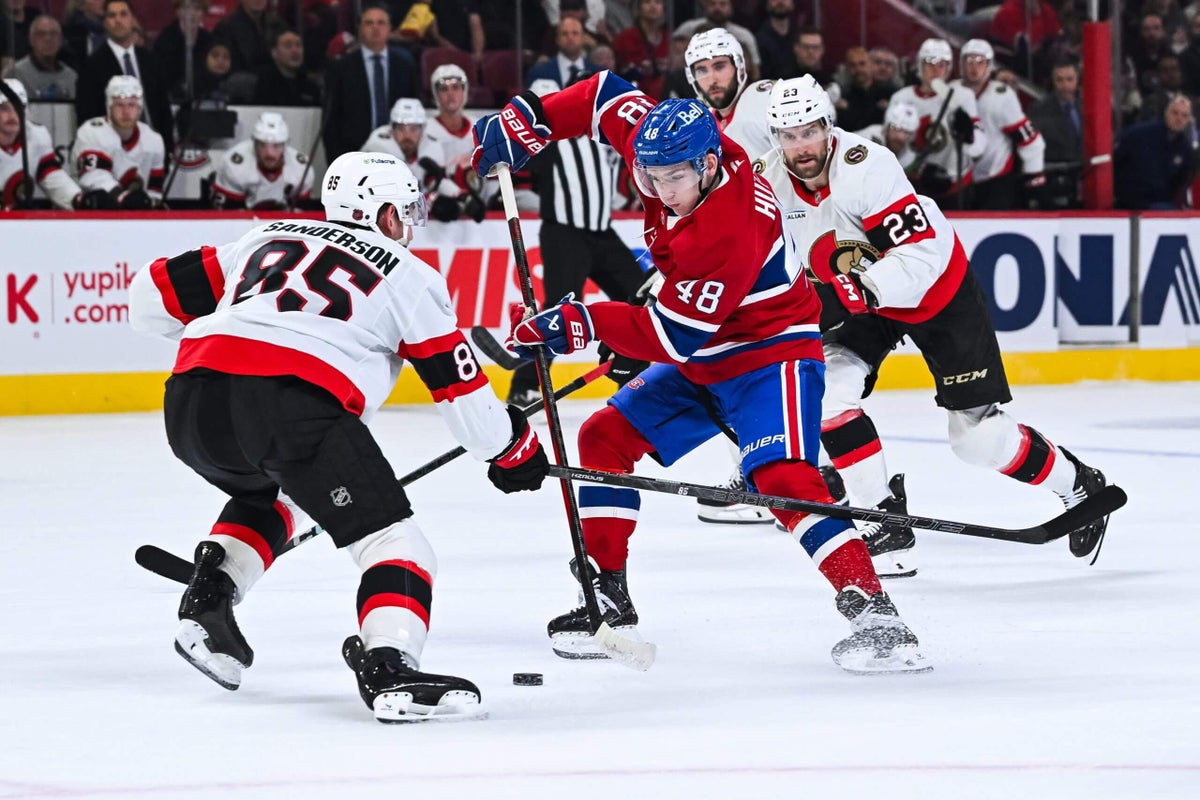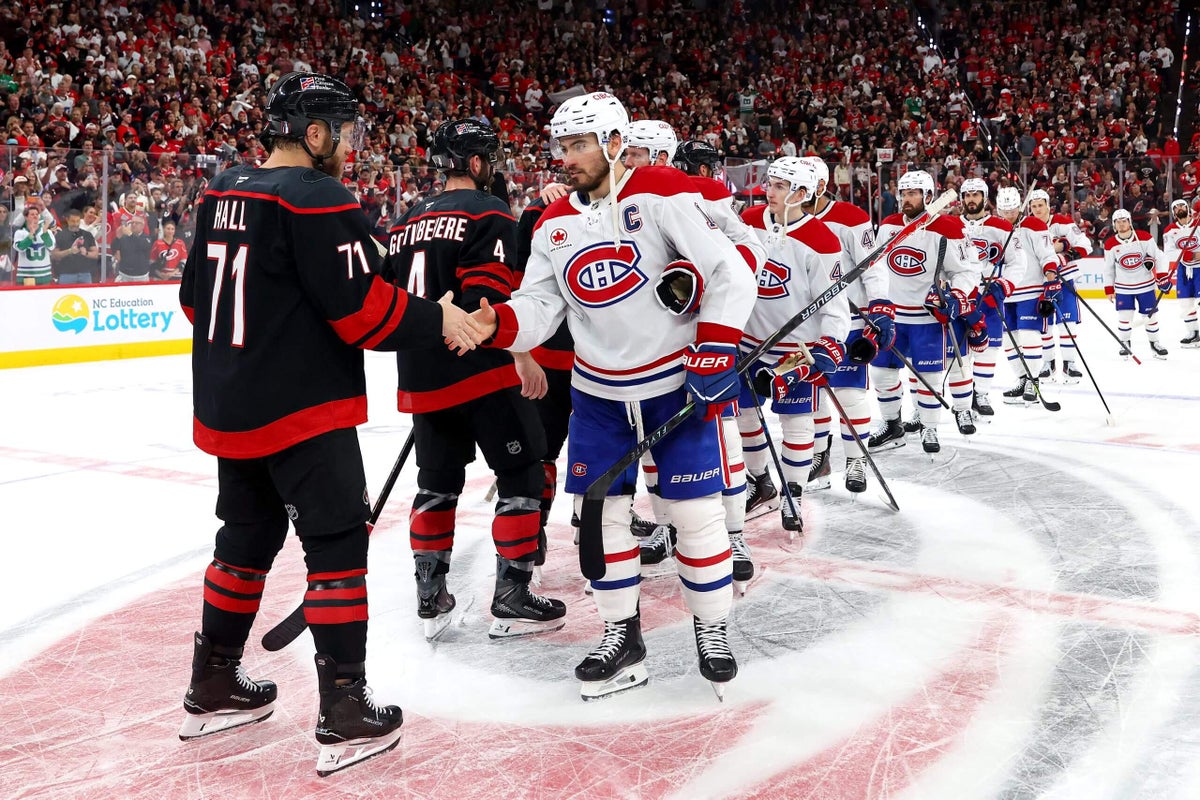
Every summer I take some time to dig into the NHL’s contract landscape. The best of the best, the worst of the worst and then the rest: A deep dive that ranks each team’s cap sheet.That’s today’s goal: Assessing every player’s market value over the remainder of his contract, comparing it to his actual cap hit and then measuring the probability of the deal providing positive value. From that, I put all the pieces together to see which teams are spending their money best.Over the last two years, the cap landscape has obviously shifted dramatically, leaving a lot of older contracts looking great and a lot of newer contracts looking less so. What that means is that a large majority of the league have more positive value than not on their books, but also that the teams with the most term left on legacy deals hold the most power. It’s not enough to get a “fair” deal, and having negative value on the books can put a team way behind.All of this is ever-changing, of course — that’s why it’s an annual exercise to see how things shift around the league as players develop and decline. Using the same criteria as the best and worst contracts list, each player is judged based on total surplus value (more term means more time for value to compound, for better or worse) and the likelihood of the deal being good. Both are based on every player’s future trajectory over the life of his contract, which uses player comps to determine his likeliest path(s) forward.How a player ages and how the cap increases are two of the biggest factors for this exercise. The current cap environment is an especially big factor when a 10 percent deal is worth $10.4 million next year, but could be worth as much as $15 million in seven or eight years. That means that valuations for younger players will look a lot better than some might expect if it’s over a lengthy term. Keep in mind that all the model estimates listed below — whether you agree or not — are based on an estimation of the future, not the past.With all that being said, here’s how every team measures up.Who’s the better power play QB: Quinn Hughes or Lane Hutson?Scott Wheeler, Max Bultman and moreThe goal here is to grade contracts empirically, with the same context being applied to each player across the league: how much value does each player bring to the table per year and over the life of the contract. The way that’s measured comes from comparing a player’s Net Rating and the expected salary that comes with it to a player’s current contract.What players have already done holds no merit; this is about the future value of the deal, with age effects based on player comps taken into account while accounting for expected salary growth. Contract clauses and bonus structure are important, but not considered with this assessment. Players on LTIR were not considered.1. Carolina HurricanesLast season: 2ndWith seven A-level deals, no team has it better than the Stanley Cup champions. Last year’s big bets on young talent look like absolute larceny in a rising cap world with the big term allowing plenty of surplus value to compound. Over one year, the value on Jackson Blake and Logan Stankoven’s deals has already appreciated 24 percent.Seth Jarvis, Sebastian Aho and Jaccob Slavin are the other core pieces on terrific lengthy deals while last year’s addition of K’Andre Miller has already aged wonderfully.Across the board, nearly every bet the Hurricanes have made has panned out well, from UFAs (Nikolaj Ehlers, Sean Walker, Shayne Gostisbehere) to trades (Taylor Hall, Mark Jankowski). The lone blemish is the Jesperi Kotkaniemi deal, but that feels fairly movable these days given the center market. And even with that, the team still has $10 million in cap space. That’s solid business and it’s why the Hurricanes likely aren’t done after winning the Cup this summer. They’re designed to keep winning for years to come.2. Montreal CanadiensLast season: 14thAfter a season in which the Canadiens ascended into the league’s final four, it should come as no surprise as to where they land given their relative age and long-term deals in place. No team jumped higher than Montreal, up 12 spots. Kent Hughes is building a monster off the back of some incredible cap efficiency for Montreal’s core group.Montreal has four A-plus grades on the books, two more than any other team in the league. Having forwards such as Nick Suzuki, Cole Caufield and Juraj Slafkovský at their current levels making less than Jacob Trouba will have that effect. Given their relatively young ages, there isn’t much decline expected; with the term on each deal and the cap rising, that leads to some gaudy market value. It wouldn’t be a shock to see Ivan Demidov get to that level this time next year either, and the model is a big fan of Jakub Dobes’ immediate future, too.Those contracts, though, don’t hold a candle to Lane Hutson’s deal, which is without question the best one in hockey. There’s a very strong chance Hutson is a top-10 defenseman for the entirety of his contract, and the model expects he won’t be close to 10th. He’s already that good and will only get better, which leads to a modeled value higher than the league max. That he makes less than $9 million for eight more years is pure robbery, leaving over $100 million on the table. That shouldn’t be that difficult to see after Bowen Byram’s eye-popping extension this summer.Those five deals do a lot of the heavy lifting here. The rest ranges from fine (Noah Dobson, Kaiden Guhle) to outright bad (Phillip Danault, Josh Anderson). The good news is the great deals will be cooking for a while and should allow Montreal to build something truly special. The bad deals? They’ll be off the books by next summer, where it wouldn’t be a shock to see the Canadiens sitting at the top of this list with plenty of room to add to one of the game’s best young cores.3. Ottawa SenatorsLast season: 5thEven without Brady Tkachuk in the fold, the Senators still land in the top five again this year. It’s a shame he didn’t stick around for what the Senators were building; they looked to be on the cusp and strong cap efficiency plays a central role in that.The biggest draw is the bets Ottawa made on its twin budding stars, Tim Stützle and Jake Sanderson. Deals just over $8 million for each look like nothing now, especially for Sanderson, who emerged as one of the game’s best defensemen last season. Add new deals signed for Shane Pinto and analytics darling Jordan Spence and the Senators look great. On the skater front, there is zero bad money on the books, which leads to an average positive value rate of 75 percent; only the Hurricanes are higher. If the Senators’ goaltending ever figures itself out, they’ll be cooking.4. Dallas StarsLast season: 6thWith Jason Robertson signed, the Stars are set and they’re looking excellent across the board. When the two worst deals on the books are a soon-to-be expiring deal for Tyler Seguin (who is still very good!) and an essentially fair deal for Mikko Rantanen, the franchise is living good. Almost everyone is underpaid.The difference between the Stars and the three teams above them is the lack of big wins. Wyatt Johnston, Roope Hintz, Esa Lindell, Miro Heiskanen and Jake Oettinger are all on fantastic deals — they just don’t quite land as hard as the teams above. A long-term extension for Robertson after Jan. 1 could change that, though even that doesn’t feel likely to be a big win given his reported asks; his new deal would likely be closer to fair money.And that’s if he stays. If he doesn’t, that’ll be a tough loss that would be hard to come back from — even with all the other efficient deals on the books.5. Tampa Bay LightningLast season: 1stLast year’s top dog has dropped to fifth, mostly because deals on other teams’ books have aged more strongly than Tampa Bay’s own.The one truly bad deal for Tampa Bay is the one that was weirdly signed this summer for Jeffrey Viel. Aside from that, everything looks rosy, led by Brandon Hagel having one of the best deals in hockey. The big question will be how much surplus value the Lightning can extract from Nikita Kucherov’s next contract. He’s worth nearly double his current salary at the moment, but age may make things tricky if he’s looking to command Kirill Kaprizov money.6. Colorado AvalancheLast season: 3rdHaving one of the best players in the world signed for the next five years at Bowen Byram money is a cheat code. That’s the main deal that powers Colorado’s standing, but it helps to have two recent extensions given out to Martin Necas and Sam Malinski already looking great, too. There’s a good chance Cale Makar’s deal adds to those wins.The Avalanche have a lot of great deals spread out, but the Brett Kulak one signed this summer already feels like a miss. He needs a big bounce-back from last season.7. Buffalo SabresLast season: 16thThe Sabres finally made the playoffs and that partly led to a healthy jump into the top 10 in cap efficiency. A breakthrough season from Mattias Samuelsson and continued excellence from Tage Thompson and Rasmus Dahlin helped on that front.Also helping are a pair of new deals for two emerging core pieces: Zach Benson and Josh Doan. The two spark-plug wingers are going to be a bargain for the next seven years, adding to the team’s foundation. If Owen Power can take a real step next season, the Sabres should be rolling.If there’s one nitpick, it’s Beck Malenstyn’s new contract. Giving term to a fourth liner is rarely ideal. That and a bunch of dead money is what keeps the Sabres out of the top five.8. Florida PanthersLast season: 4thThe Panthers are still in the top 10 after a rough year, but don’t rank as highly as they once did. Age, injuries and some recent extensions signed that were just fair (Eetu Luostarinen, Niko Mikkola) play a role, but it has more to do with the rest of the league catching up than anything. Florida’s average positive value and total surplus are both nearly identical to last season; other teams have just begun to score higher.
NHL contract efficiency rankings 2026: Which teams spend their money most wisely?
Every NHL team gets the same amount of cap space, but not all clubs put it to good use. Here are this year's cap-efficiency rankings.
5,004 words~23 min read