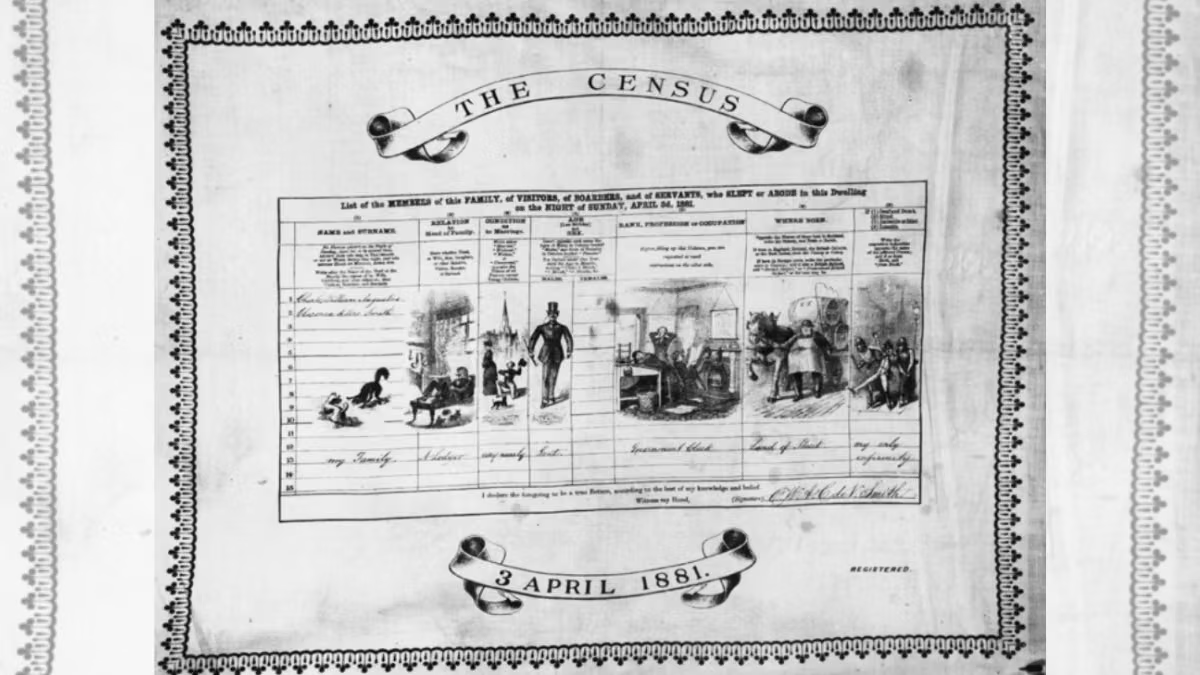
On the night of 17 February 1881, for the first time in British colonial administration, a single enumeration was conducted simultaneously — from the villages of Bengal to the towns of the Punjab, from the plains of the North-Western Provinces to the princely states of Rajputana — on one uniform date, under one controlling authority, and according to one standardized method. This was the first synchronous, all-India census, and it marked a decisive transformation in how the colonial state would come to know, classify, and govern the people it ruled.
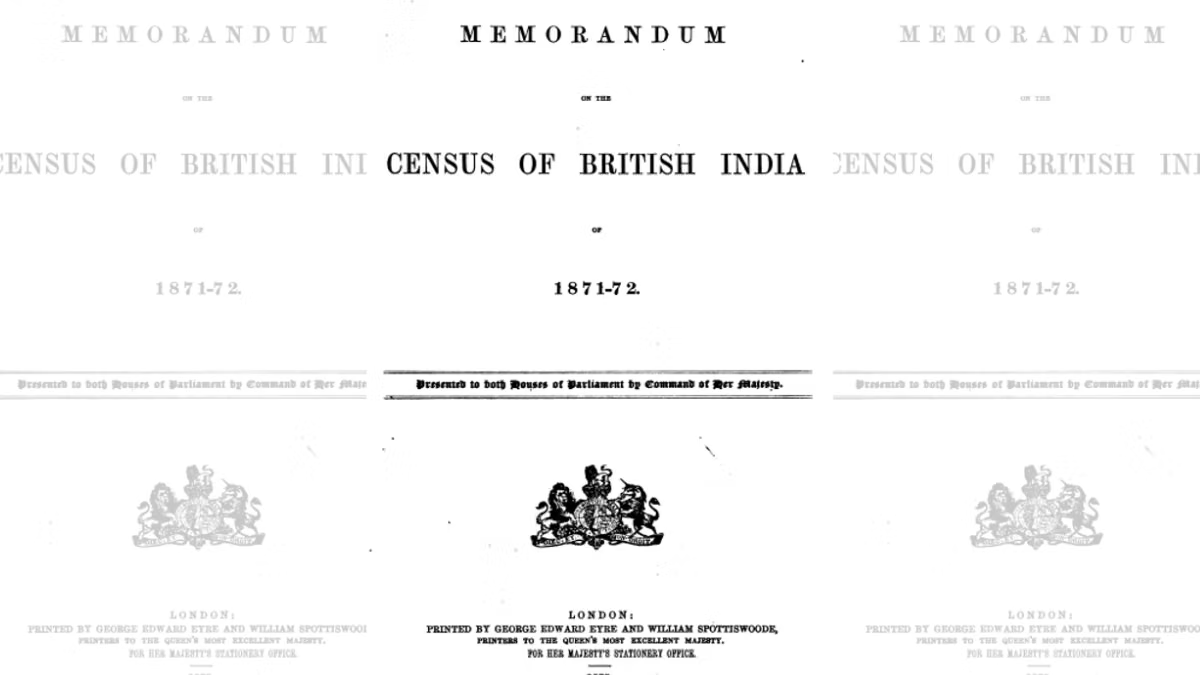
Census attempts in British India before (including the 1871-72 Census), had previously existed as a patchwork of fragmented provincial counts, conducted at different times by independent agencies with, in the census report’s own words, “no attempt to secure uniformity in the arrangement of the statistics then obtained,” was replaced by a centralized, continent-wide statistical system covering both British territories and the Native Indian states (Plowden, 1883). As Edward Albert Gait, a prominent British statistician who served as the Census Commissioner for India for the 1911 Census would later record, “the first synchronous census on a uniform plan was taken in 1881,” and with it, India was rendered as a measurable and governable subject of knowledge for the first time.