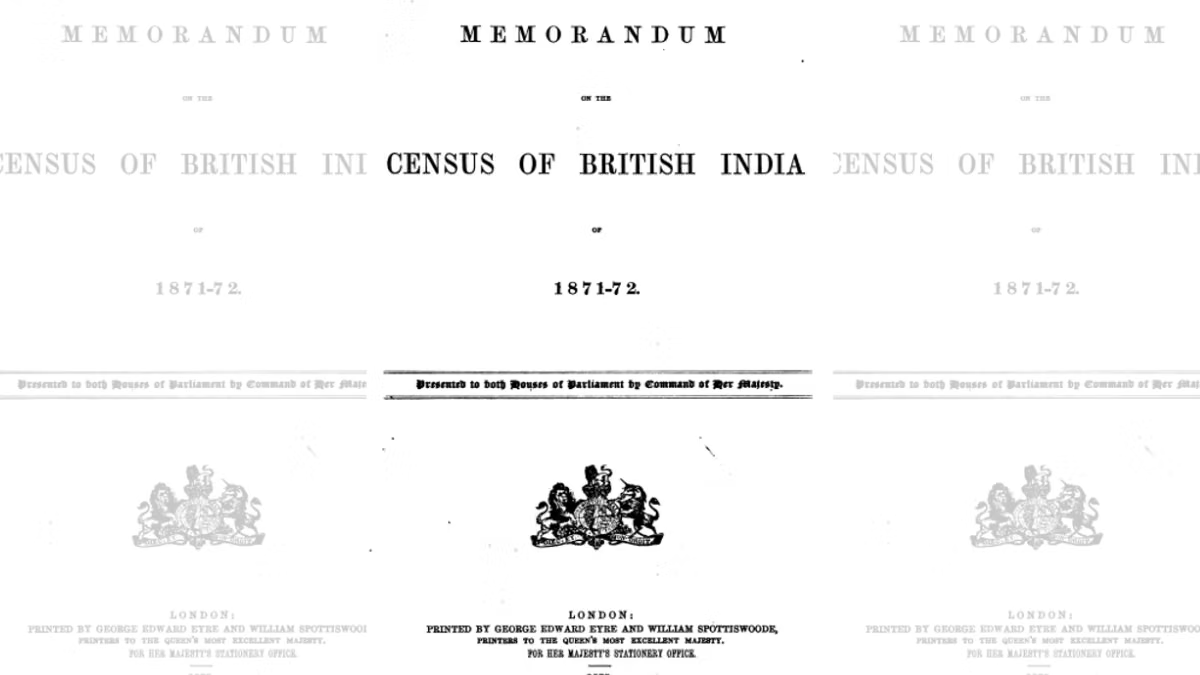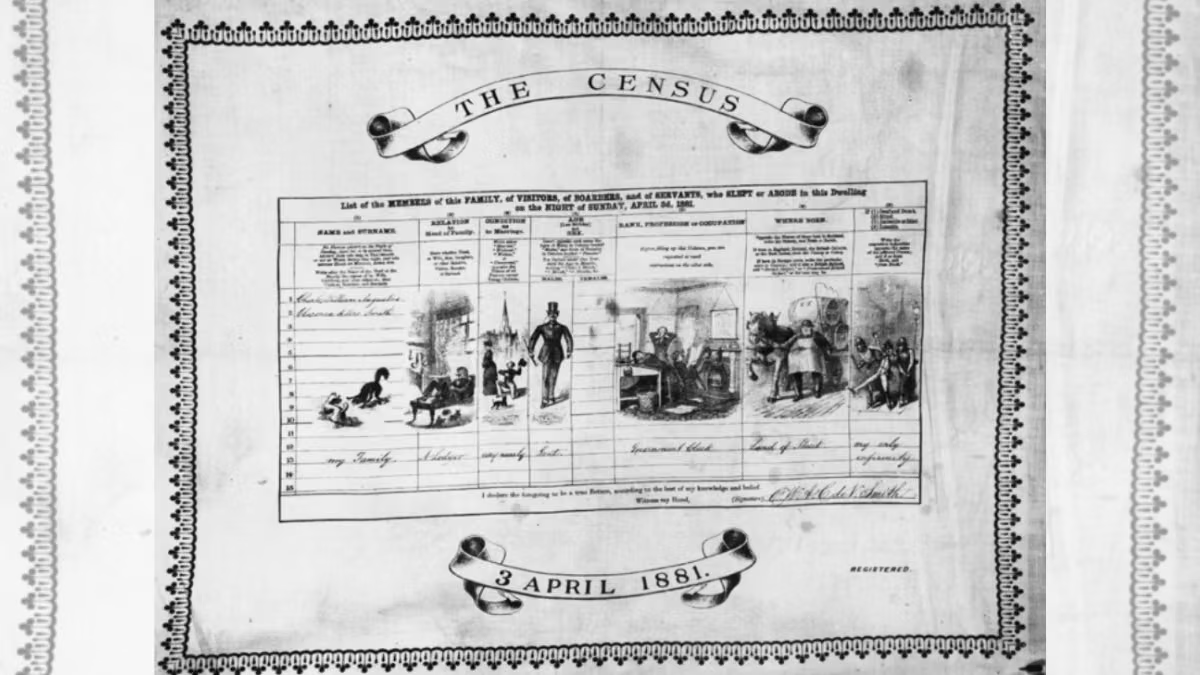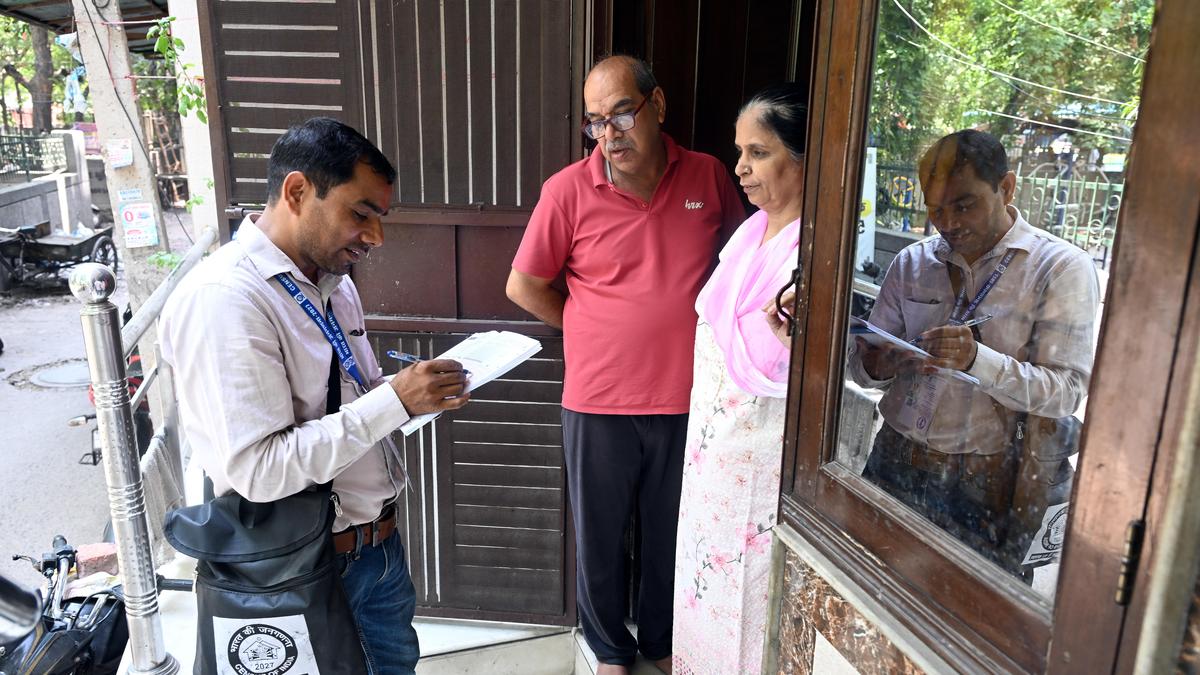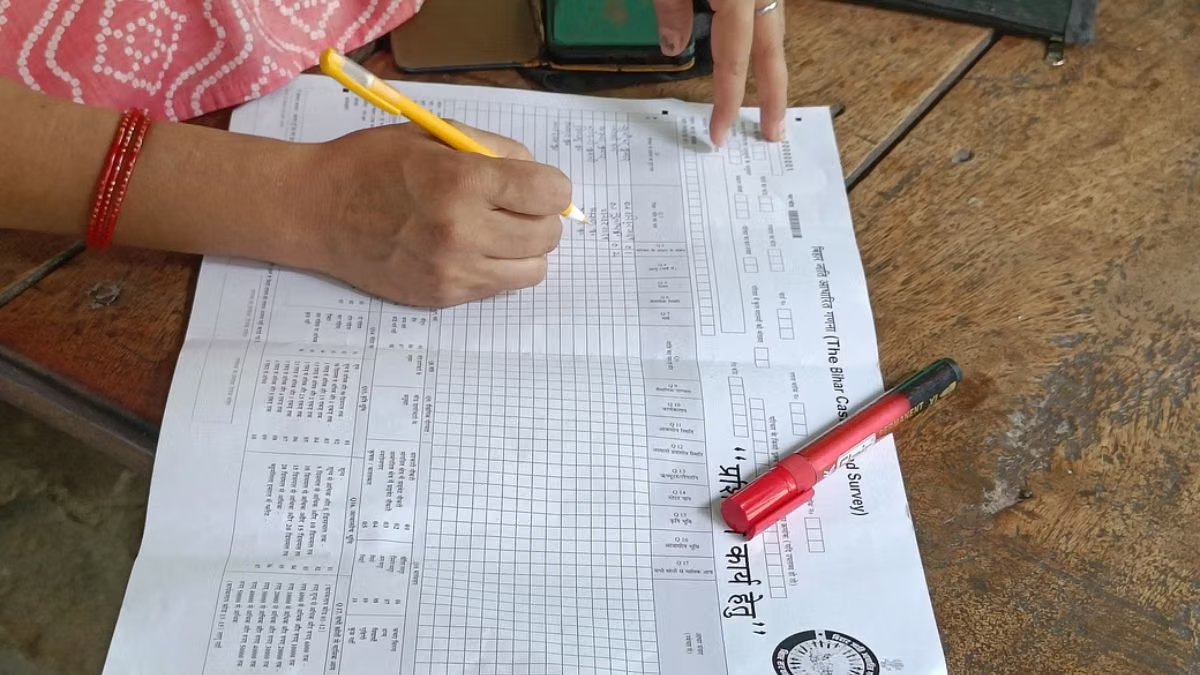
The development of census enumeration before 1872 was not a linear process in India, which smoothly progressed towards modern census. Instead, it was characterized by a series of administrative experiments – uneven in their approach, methodology – they were regionally fragmented, and deeply tied to the colonial logic of governance. These early efforts represent a significant transition from conjectures and estimates that were based on land revenue records, to the systematic house-to-house enumeration that would eventually form the basis of the current decennial pan-India census.
Early Efforts
Before the mid-19th century, most efforts by the colonial administration to quantify the population of India relied on rough calculations rather than actual headcounts. The census, in this phase, functioned as an extension of the revenue state, where knowing the number of people was an extension of knowing the land’s value. The earliest systematic attempts emerged after the consolidation of British rule, particularly post-1857, when the colonial state increasingly recognized the need to “know” its population. Until then several indirect methods were employed during this phase –
The Plough Test: Between 1807 and 1814, Dr. Buchanan computed the population of Bengal and Behar by estimating the extent of cultivated land. He assumed that each plough represented five persons and adjusted this figure based on the perceived proportion of agriculturists to other classes (Natarajan, 1971).