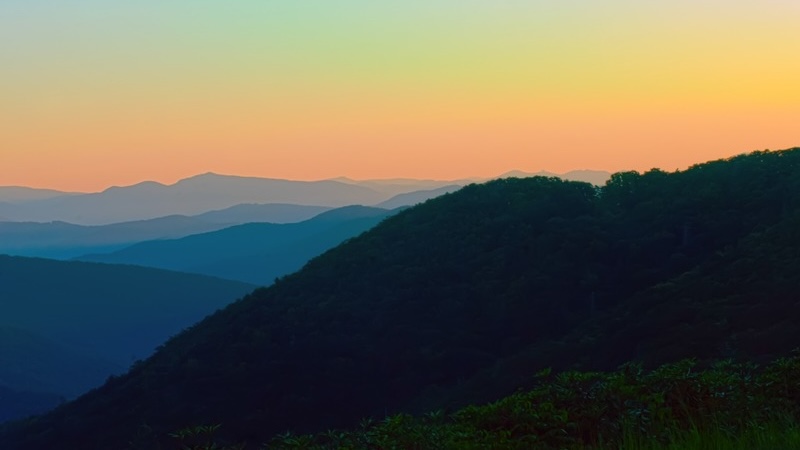
In one of my earliest memories, I’m shrinking. I’m in the back seat of my parents’ car, face pressed against the window, straining to see the peaks of the mountains outside. The road we’re driving on snakes through a deep, narrow cut between two ridges. The farther we go, the steeper the mountains grow, and the smaller I feel. I am dwarfed by their magnitude and majesty.Article continues after advertisement
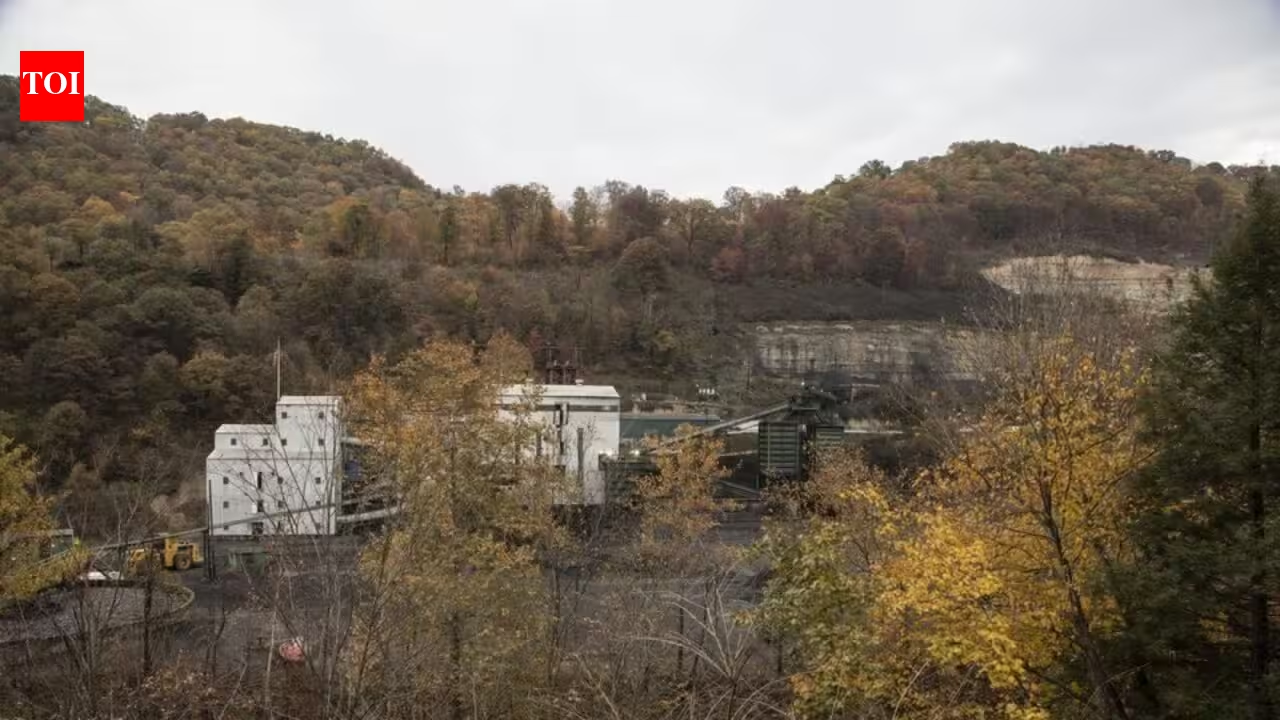
Even as a toddler, I’m awed by the mountains. They are confining and comforting, ancient and noble. They radiate a soft old wisdom, as if they were born at the very dawn of the world. I feel as if I were born from them, as if my bones were formed from their dirt. In a way, they were: I’m an eighth-generation Appalachian, attached to the land by something more sacred, more mysterious, than mere blood and history. There is magic in that mystery, and in the darkness of the valley that sits between the sunny ridges. I bounce in my car seat, thrilled by the swoop in my stomach as we round the hairpin curves. My parents glance back at me, amused: A dying little coal town, deeply isolated even by Appalachian standards, is my favorite place on earth.
*
Not that I knew of many other places. There was Tazewell County, where I was born and raised, and there was Buchanan County to the west, where my parents—and grandparents, and their grandparents, and their grandparents—were born and raised. That little corner of southwest Virginia was my entire world, my family’s entire world, too. Two and a half centuries ago, a German mercenary deserted the British army, fled the war, and settled in the mountains of what would eventually become known as Buchanan County. What drew him there, or made him stay, is unknown: The land was so rugged and rocky that it was never settled even by Native Americans. Since him, every one of my ancestors has lived and died within a few miles of his original homestead, in the shadowed hills and hollers that never see the sun.