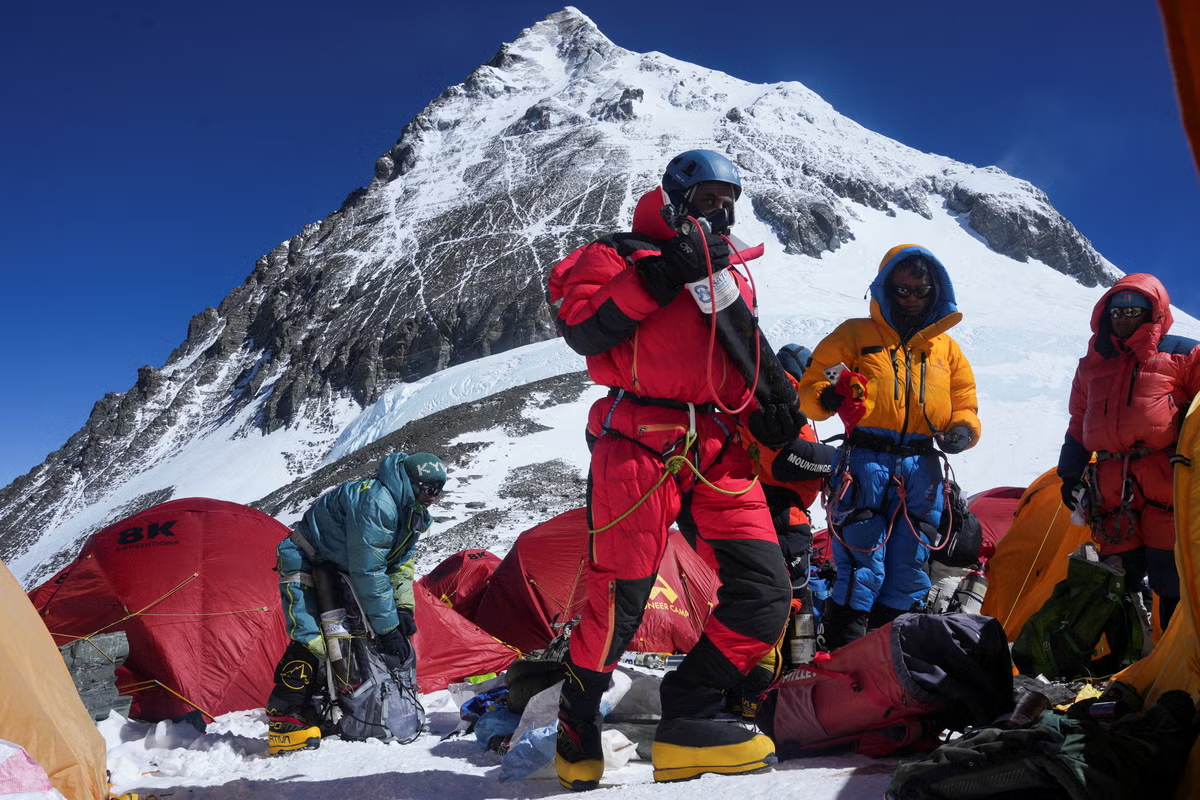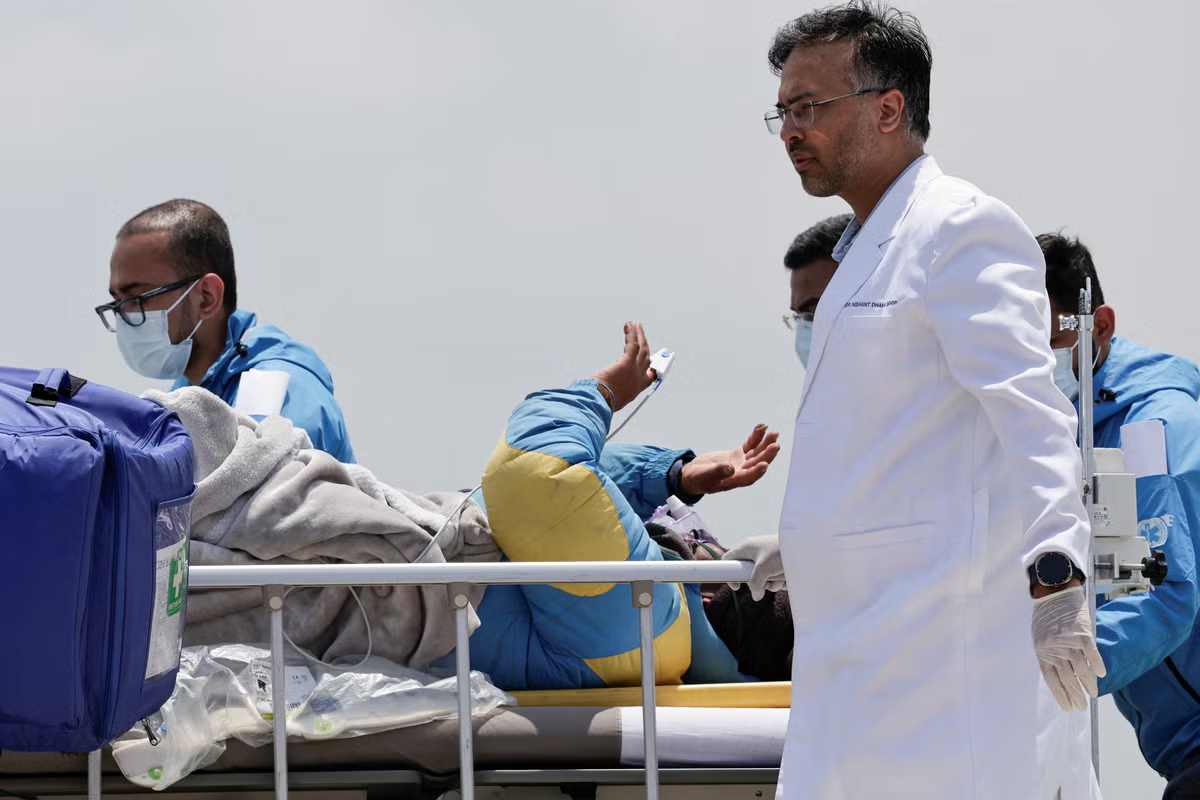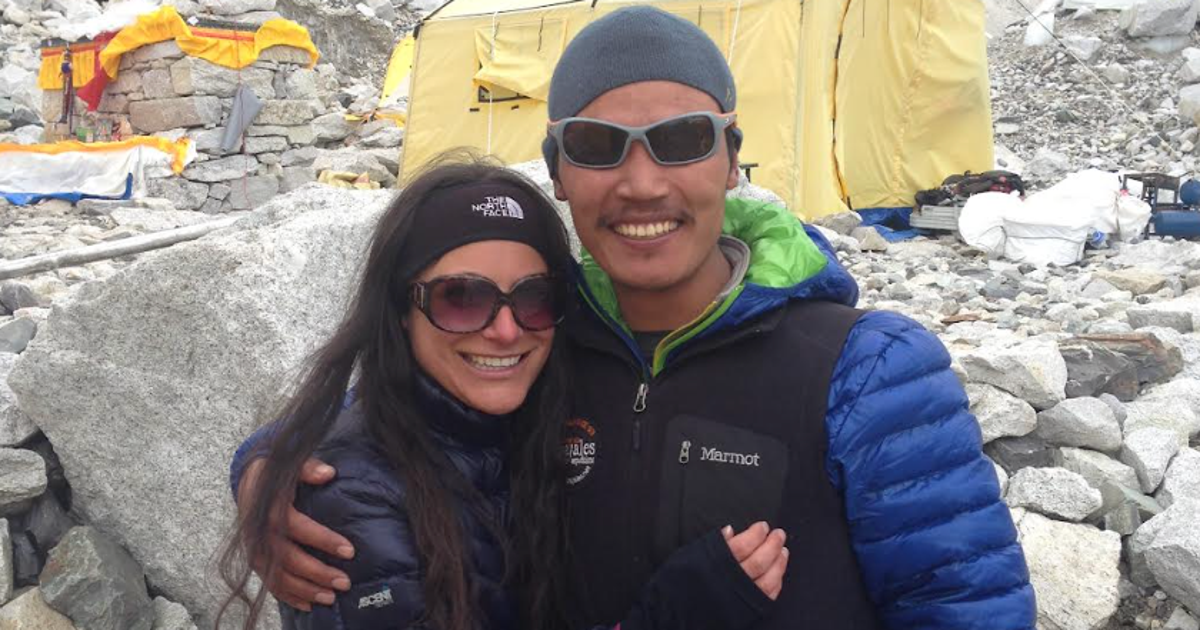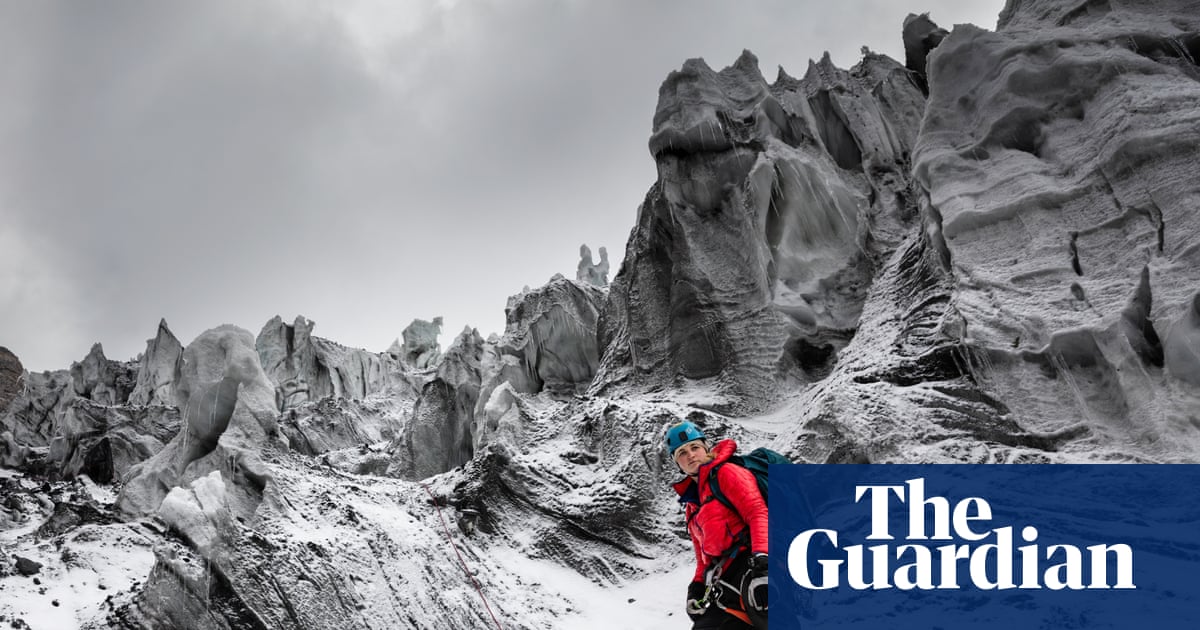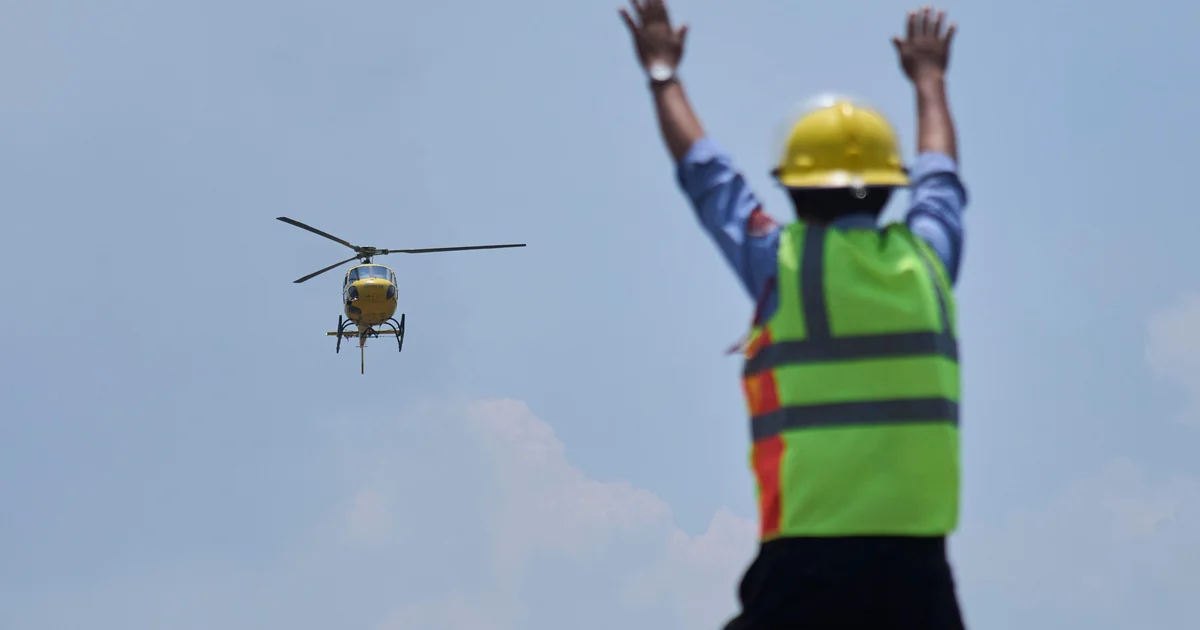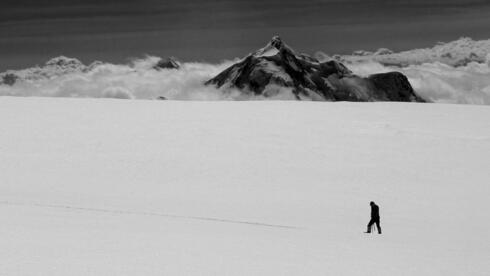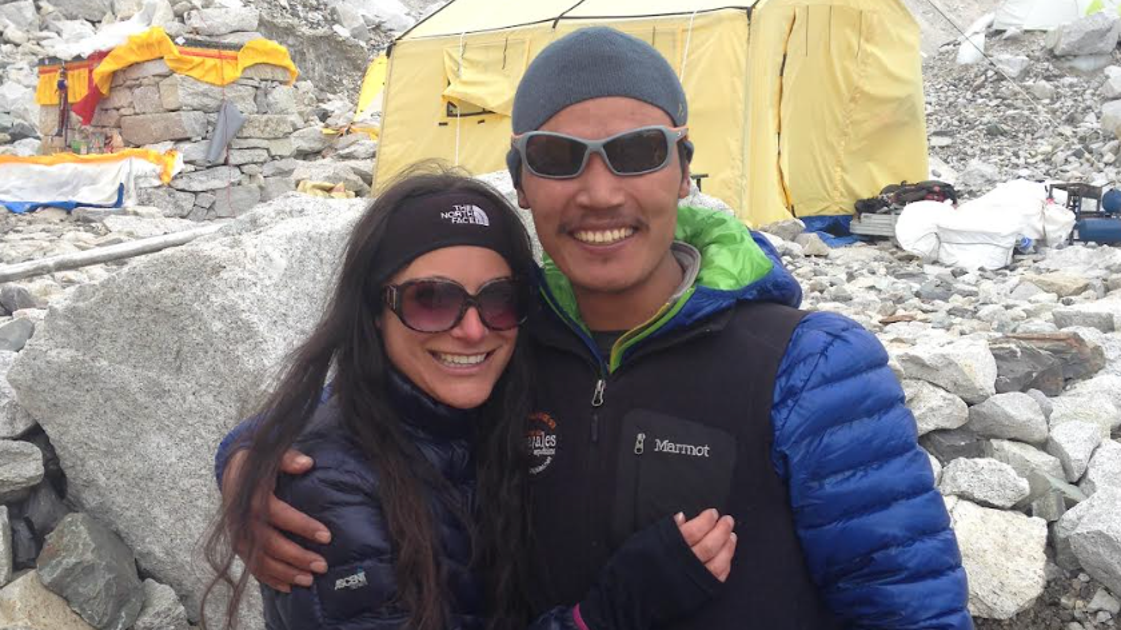
I never expected to find myself on Mount Everest.For seven years before that climb, I was the primary caregiver for my mother as ALS slowly dismantled her body. I learned how to lift her without hurting her. How to interpret a blink as a sentence. How to listen to a machine breathe when she no longer could. Strength, in those years, wasn’t heroic. It was repetitive. Intimate. Exhausting.When she died, the silence in the house felt louder than any storm. The days felt unstructured. I had spent years measuring time in medication intervals and oxygen levels. Suddenly there was nothing to monitor. Nothing to brace for.I didn’t start climbing mountains because I was fearless. I started climbing because I didn’t know what to do with all that strength once there was no one left to carry.Everest was not about a summit photo. It was about proving I was still alive.Base Camp felt like the most exclusive village in the world. Not because of wealth, though it costs more than most people’s annual salaries to stand there, but because everyone had chosen risk.A frozen metropolis at 17,500 feet. Prayer flags snapping against the Khumbu Icefall. Helicopters thudding overhead with resupplies and evacuations. Down suits in neon colors drying on lines between tents. WiFi routers propped beside oxygen tanks. Coffee brewed from glacier melt that tasted faintly of metal and altitude.You brush your teeth and feel winded. You walk from one tent to another and feel your pulse in your ears. You zip your tent knowing the walls between you and an indifferent mountain are made of nylon.Every climber there had filled out a body recovery form. Every climber there had imagined, quietly, what it would mean not to come home.And still, I had chosen to be there.The author (left) and her mom at her parents 30th anniversary party, the day after her mom was diagnosed with ALS (2004).Courtesy of Nicole LoBiondoBy the time we pushed to Camp One, we had already threaded the Khumbu Icefall in the early dark, stepping over aluminum ladders laid across crevasses that opened into blue nothingness. The ice shifted beneath our crampons. Seracs leaned overhead like frozen skyscrapers that could collapse without warning. Camp One sits inside the Western Cwm, in a gully between the south face of Everest and Nuptse. Climbers call it the Valley of Silence because sound behaves strangely there, absorbed and distorted by the walls of snow.There is nothing silent about it.On April 25, 2015, at 11:56 a.m., the earth ruptured beneath Nepal. It was a 7.6 magnitude earthquake. We did not know the number then. We only felt the mountain tilt.I was inside the tent with my climbing partner. One second we were sipping water, reviewing rope logistics and oxygen rotations. The next, the ground rolled beneath us like a wave passing under a boat. The snow floor rippled. Our stove tipped.Then the sound came — deeper than a roar.Snow and ice sheared off the shoulder of Nuptse above Base Camp, and the blast wave funneled down into the Western Cwm, straight toward our gully. It moved faster than thought.Our tent began sliding sideways across the snow.We tore it open and ran into white chaos. The avalanche did not surround us. It consumed us. The air turned solid. Blocks of ice and rock came with it, pieces of the mountain’s bone striking the slope around us.Then I was airborne.Up and down lost meaning. I could not tell if I was tumbling forward or backward. Instinct took over. I slammed my ice axe into the slope and threw my weight onto it. For a split second it caught. That single bite of metal into ice stopped me from tumbling deeper into the moving debris.Then the snow buried me anyway.It packed into my mouth and chest. My arms were pinned. Everything went white and heavy. I remembered the body recovery form I had filled out months before. I remember thinking, very plainly: I might be that body.The author with Tendi Sherpa at Everest Base Camp in 2015. Sherpa is widely regarded as one of the most respected guides on Mount Everest.Courtesy of Nicole LoBiondoI clawed upward. Seconds feel like hours inside snow. I punched the axe toward light and broke through. I dug myself out of what could have been my grave, coughing, disoriented, my ribs aching from the compression.I survived because of geography and seconds. I was in a gully that absorbed some of the lateral force. The debris settled just shallow enough for me to move. If our tent had been pitched lower. If my axe had not caught. If the snow had compacted differently.Below us, at Base Camp, the avalanche flattened tents, oxygen tanks, boots, photographs. It tore through the medical tent. It buried kitchens and sleeping bags and people. All the careful systems we built to convince ourselves we were prepared.When it stopped, the silence felt wrong. Too complete. A silence after violence is not peaceful. It is stunned.The radio crackled: “Twelve confirmed dead. More unaccounted for.”I remember the way those words landed in my body. I remember looking at the faces inside the Sherpa tent I managed to crawl into. Sarki. Pemba. Phurba. Nima. Men who had carried loads through the Icefall for years. Men who had friends in Base Camp.On Everest, you know everyone. The mountaineering community is small. You share tents and tea and rope. You trade route advice and weather forecasts. You could be drinking coffee with someone one morning and by afternoon their name is on the missing list.The helicopter arrived the next morning without ceremony. Its rotors beat against thin air that barely cooperated. The pilot’s mirrored lenses reflected wreckage. As we lifted off, I saw the icefall spread beneath us, blue and fractured, torn nylon scattered across it. Tiny figures moved slowly through what had been a village hours earlier — searching, digging.I noticed a single boot frozen upright in the ice, laces still tied. It was as if someone had stepped out of it and planned to return."This was the calm before the avalanche," the author writes.Courtesy of Nicole LoBiondoWhen the helicopter lifted off from Base Camp, I thought it would hit like oxygen, sudden and overwhelming. Instead, I felt almost nothing.Below me, the mountain that had nearly killed us grew smaller. Somewhere under the ice, people were still missing. By that night, I was barefoot on marble floors in Doha.We were routed through Qatar on an emergency evacuation out of Nepal. I do not remember handing over my passport. I do not remember what I said to anyone. I remember the smell of jasmine mixed with cleaning solution. The blast of cold air. Water running instantly when I turned the faucet handle.The quiet unsettled me.It was the kind of quiet built from money and insulation. Thick walls. Soft lighting. Polished surfaces. A quiet meant to keep danger outside.In the mirror at a five star hotel, I saw a woman who looked like me but did not feel like me. Wind burned skin. Hair tangled into ropes. Eyes older than they had been a week before.I left the faucet running longer than I should have. Watching the water pour out felt wrong in a way I could not fully explain. At Camp One, we had melted snow for drinking water. We rationed fuel. Now water spilled endlessly from chrome. I wrapped myself in the hotel robe and sat on the edge of the bed. Outside, the skyline glittered. Orderly. Predictable. Somewhere, families were waiting for news that would divide their lives into before and after. And someone had just offered me champagne. I ordered room service because I did not know what else to do. Hunger felt embarrassing, but my body insisted. When the tray arrived, the man who delivered it smiled warmly. He had no idea that I was trying to calculate something impossible in my head: Why me and not them?The burger was hot. The fries perfectly salted. I ate slowly. Every bite felt like proof that I was still here, even though part of me was not sure what to do with that fact.The author headed into the Khumbu at Everest. "I took this photo and almost froze my fingers doing so," she writes.Courtesy of Nicole LoBiondoThat night, I woke up gasping. The hum of the air conditioner sounded too much like shifting ice. My body reacted before my mind could correct it. I turned on the lights and checked the corners of the room as if snow might be collecting there. I went to the window and stared down at the city. Nothing moved. Everything felt falsely calm.I kept circling the same thought: My survival had not felt earned, it had felt arbitrary.I flew home days later, but something in me stayed suspended between those two places. The raw edge of the mountain. The curated safety of that hotel room. Dirt and marble. Fear and climate control. I carried both.When I got home, my family hugged me longer than usual. My brother did not joke the way he normally does. My friends told me I was brave. Some of them also told me, quietly, that they had been angry with me for climbing in the first place. I could see in their faces that relief and resentment can exist at the same time.For months, I carried a low hum of guilt. I would sit at dinner with friends and think about the men whose families were planning funerals. I would look at my hands and remember that they had clawed through snow while someone else had not been able to.People would say, “You’re so lucky,” and I would nod because they were right. I was lucky. But luck is a strange thing to live inside. It does not settle comfortably. It shifts. It asks questions you cannot answer.I did not go to therapy. A part of me thought I probably should. I had nightmares. Loud noises made my chest tighten. I startled easily. I replayed the avalanche in grocery store lines and at red lights. I avoided crowded spaces for a while. I found myself texting people just to say I loved them without any particular reason.But another part of me believed I had already done the hardest kind of emotional work. I had stood beside my mother’s bed and held her hand as she took her last breath. I had learned what it meant to sit inside an ending and not run from it.I knew the inherent risks of the mountain when I signed the waiver. I had read the body recovery clause. I understood that Everest does not negotiate. What unsettled me was not danger. It was how thin the margin had been. Feet. Seconds. The angle of a slope. The difference between my axe catching and not catching.“I knew the inherent risks of the mountain when I signed the waiver. I had read the body recovery clause. I understood that Everest does not negotiate. What unsettled me was not danger. It was how thin the margin had been.”It took months before I stopped jolting awake. Longer before I stopped scanning rooms for exits. Even when I felt calm, my body remembered differently.I replayed the avalanche in fragments. The sound. The way the air turned opaque. The way the ground seemed to tilt without warning. I would be in line at the grocery store or stopped at a red light and suddenly feel the phantom drop in my stomach, as if the earth were about to give way again.I thought often about the boot in the ice. Laces tied. Upright. Waiting. It returned to me in quiet moments, when everything around me felt safe and intact. A reminder that the line between ordinary and irreversible is thinner than we like to believe.The hardest part was not the fear. It was returning to normalcy and pretending I had not been rearranged.Instead, something changed in practical ways. I stopped postponing difficult conversations. I became less patient with small complaints. I booked trips I had been putting off. I forgave people faster. I said “no” more clearly.I still dream of that hotel room. I can feel the cool marble beneath my feet. I can smell the jasmine in the air. Hear the steady rush of water from a faucet that never hesitates.In the dream, the city outside the window is silent. Too silent. I am waiting for something to move. For the ground to shift. For the mountain to rise again on the horizon.When I wake, everything is still.I still climb. My family understands now that the mountains are not a rebellion against grief. They are where I process it. But I also climb differently. I listen more carefully to weather reports. I am more conservative in my decisions. I no longer confuse risk with invincibility.Survivor’s guilt has softened over time, but it has not disappeared. It surfaces on anniversaries. It surfaces when I hear about another avalanche. But it no longer paralyzes me. It reminds me.That stillness I wake up to now — the kind without sirens or shifting ice — no longer feels permanent. It feels borrowed.Survival did not give me certainty. It stripped it away.I used to think survival meant escaping death.Now I understand it as living with the knowledge of how close it came.And choosing, anyway, to step forward.Nicole LoBiondo is the author of the forthcoming memoir “Where the Air Grows Thin.” While caring for her mother through a seven-year battle with ALS — and in the years after her death — she climbed the Seven Summits, the highest peaks on each continent. Her work explores grief, resilience, ambition, and the complicated privilege of survival.Do you have a compelling personal story you’d like to see published on HuffPost? Find out what we’re looking for here and send us a pitch at pitch@huffpost.com.
I Survived A Deadly Avalanche On Mount Everest. What I Saw After Everything Went White Still Haunts Me.
“Up and down lost meaning. I could not tell if I was tumbling forward or backward. Instinct took over.”
2,308 words~10 min read