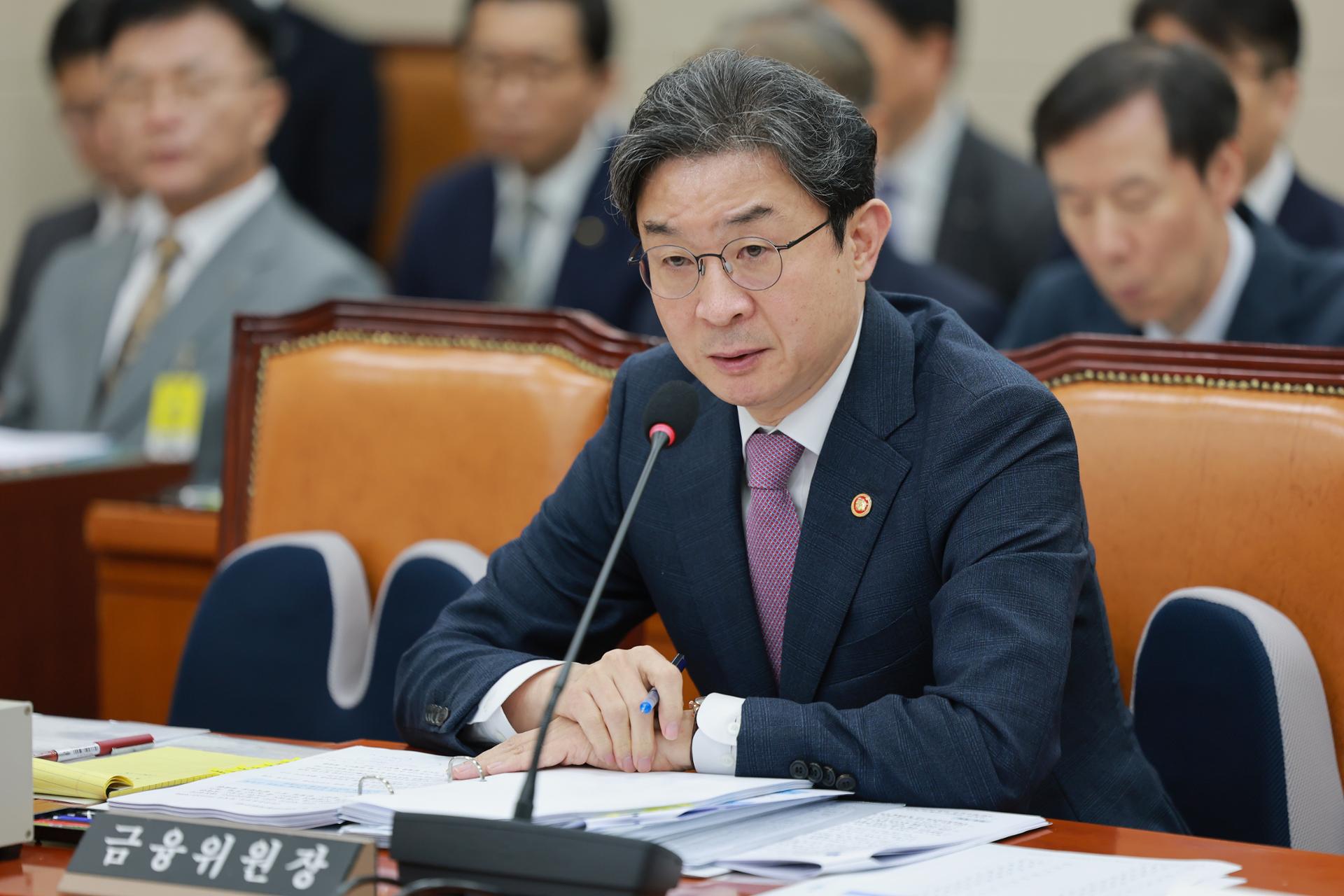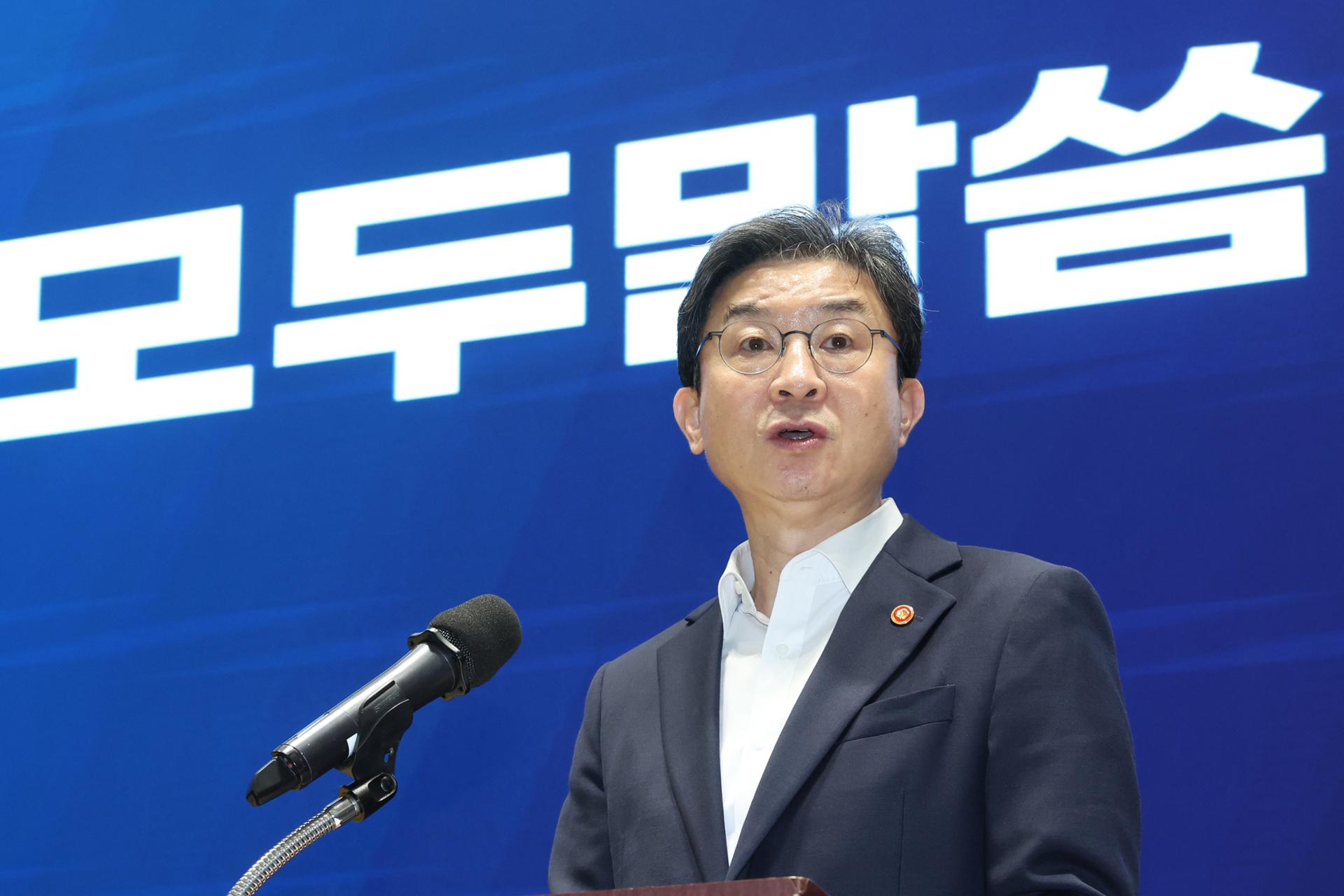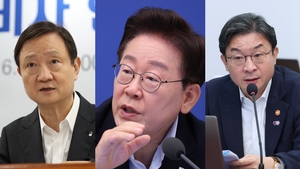
Analysts see little systemic risk but warn policy shifts could hinder market re-rating From left: Financial Supervisory Service Gov. Lee Chan-jin, President Lee Jae Myung and Financial services Commission Chair Lee Eog-weon (Yonhap) South Korea's abrupt reversal over single-stock leveraged funds has revived a broader question for global investors: whether unpredictable policymaking itself contributes to the country's long-standing equity market discount.The speed with which authorities moved from approving the products to tightening the rules — amid conflicting comments from senior officials — has turned the episode into a test of regulatory credibility.The concern is not that regulators strengthened safeguards for high-risk products, but that investors had little visibility over what would trigger intervention, how severe the response might be or whether the measures announced would be final."The market itself was already uncertain, and when a regulator says it will take action without indicating whether that action will be strong or limited, the uncertainty can only grow," an executive at an overseas ETF manager said.A single reversal may have little bearing on Korea's long-term investment case. Repeated policy shifts, however, could raise the premium that investors demand for holding Korean assets, even when the fundamentals remain intact.From rollout to clampdownKorea allowed domestically listed leveraged products tied to Samsung Electronics and SK hynix in late May, arguing that Korean investors were already buying comparable instruments overseas. Within weeks, however, concerns that the products were amplifying swings in the country's two index heavyweights prompted calls for tighter safeguards.A Seoul-based equity strategist at a foreign brokerage said the products had aggravated short-term volatility but were unlikely to pose systemic risks."The selling makes others sell further. That drags down the market, which has happened recently a few times," the strategist said.The policy tone shifted sharply on June 22, when Financial Supervisory Service Gov. Lee Chan-jin said the launch had been prepared too hastily and had done little to curb capital outflows."Perhaps I should have gone so far as to lie down and block it," Lee said, expressing regret that he had not done more to prevent the launch.Four days later, the Financial Services Commission defended the original rationale, saying the launch had diverted some trading away from Hong Kong-listed products. President Lee Jae Myung later called for follow-up measures, while presidential policy chief Kim Yong-beom said the instruction did not signal another package.Authorities then suspended new listings and promotions, raised the minimum retail deposit from 10 million won ($6,922) to 30 million won and moved to increase the minimum trading unit. At a meeting Tuesday, the FSC said it was also preparing tighter investor eligibility rules and caps on individual investments if demand failed to cool.The positions were not necessarily irreconcilable. But the sequence left investors unsure of whether the latest restrictions marked the final policy stance or another interim step.From volatility to valuationThe problem was not necessarily that the rules changed, but that investors had little visibility over what would trigger intervention or how far it might go.A Korea equity research head at a global brokerage cautioned against blaming the products for heavy foreign selling, saying the outflow was tied more closely to mechanical factors, including limits on how much of an individual stock global funds can hold.Foreign investors were monitoring the products but did not regard them as a fundamental driver of the Kospi, the senior analyst noted. "The product segment amplified market volatility and may be viewed by foreigners as a valuation discount factor," the analyst added.That makes the episode less a direct cause of Korea's valuation gap than a reminder of the risks that can keep the gap from closing. The products appear to have amplified rather than caused the market's swings, while the policy response exposed how quickly uncertainty can emerge when the rules and the conditions for intervention are unclear.Yan Wang, chief emerging markets strategist at Alpine Macro, said the controversy highlighted longer-term weaknesses in Korea's market structure, including a concentrated index, a relatively weak institutional investor base and strong speculative demand from retail investors."The leveraged ETF episode also highlights the regulatory challenge of adapting market-structure rules quickly enough to novel speculative products," Wang said.Seoul is seeking to narrow the "Korea discount" through corporate governance reforms, stronger shareholder returns and improved access for overseas investors. The episode does not establish policy unpredictability as a fundamental driver of that discount. But repeated reversals and conflicting public signals could make it harder to convince investors that Korea's regulatory risks are receding.Authorities need room to respond when new products create unforeseen risks. Yet flexibility can look like unpredictability when investors cannot tell who is setting policy, what will trigger intervention or whether announced measures are final.For global investors, the question is whether the episode remains an isolated correction or becomes another reason to hesitate over long-term holdings.The Seoul-based strategist, relaying feedback from foreign investors, put the concern more bluntly: "Although we really like all these AI stories in Korea, it makes it hard to convince ourselves that these stocks are for long-term investment."
Leveraged ETF reversal tests Korea’s regulatory credibility
South Korea's abrupt reversal over single-stock leveraged funds has revived a broader question for global investors: whether unpredictable policymaking itself c
832 words~4 min read