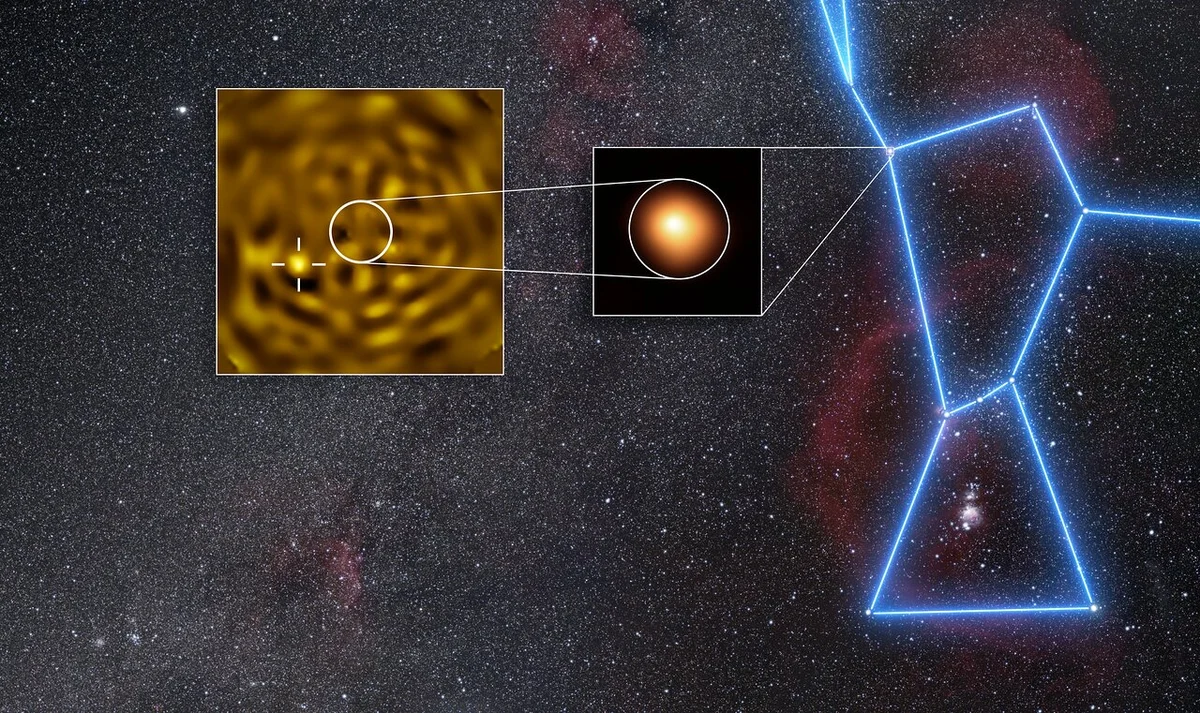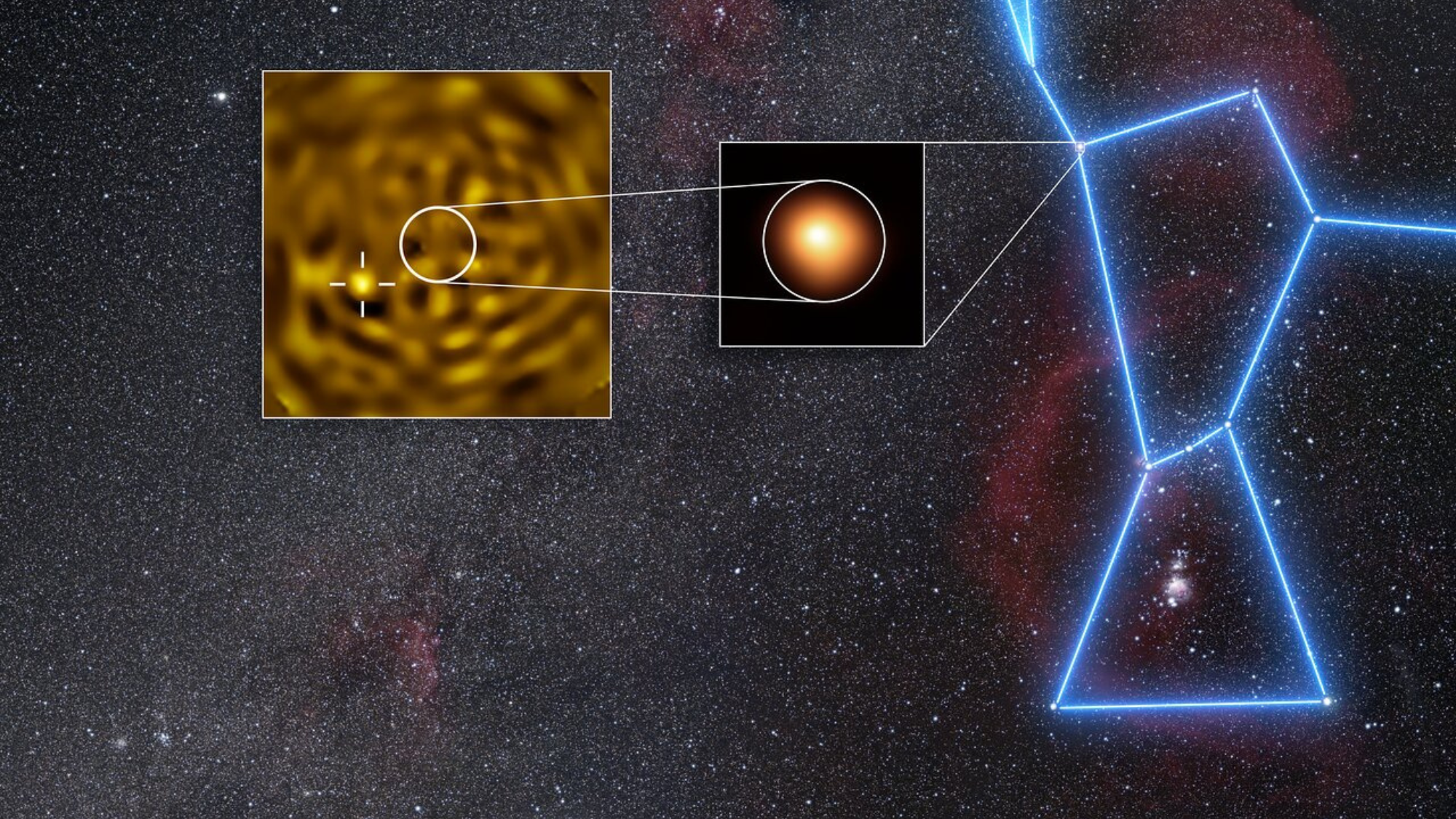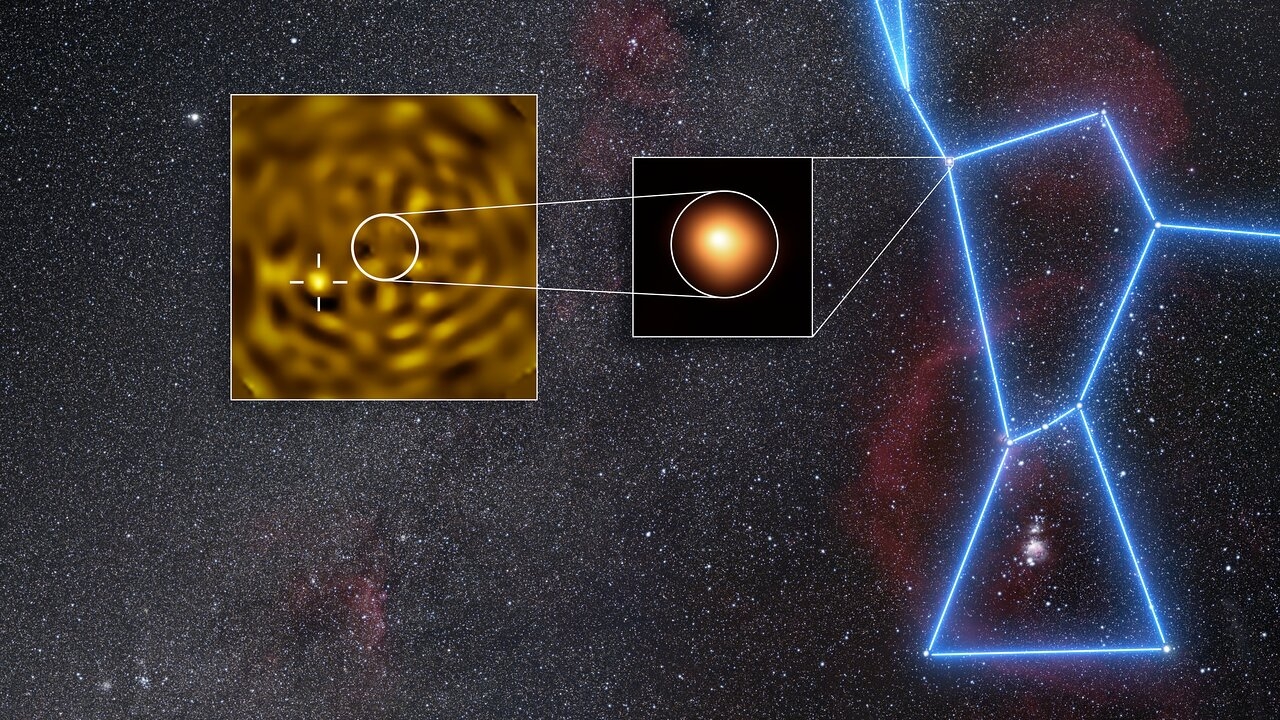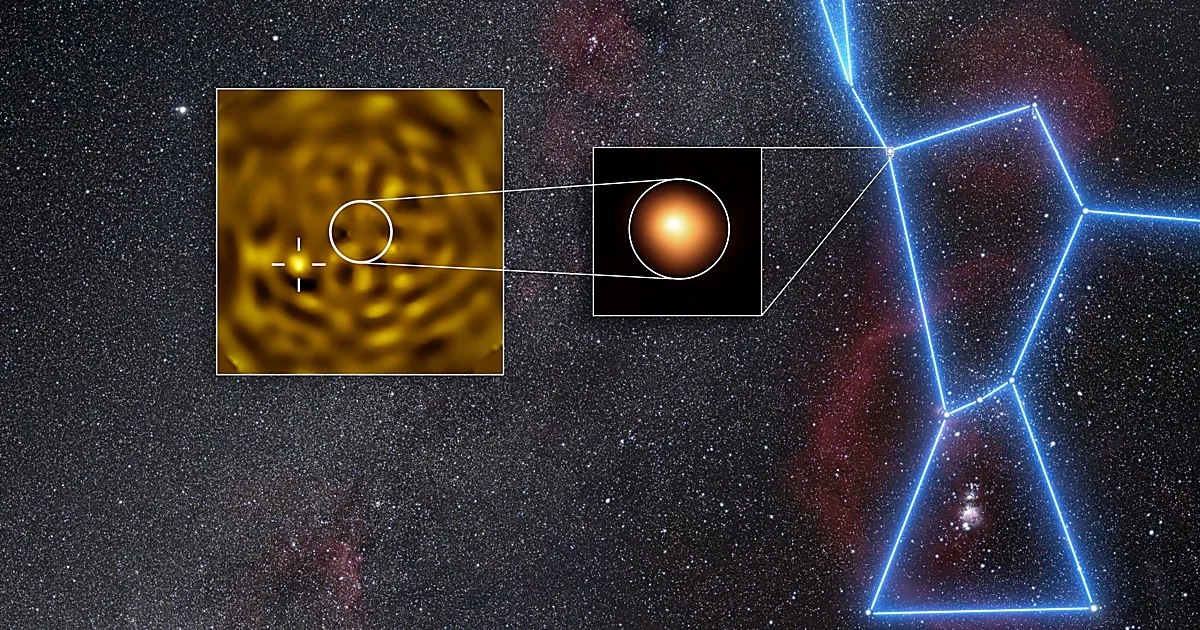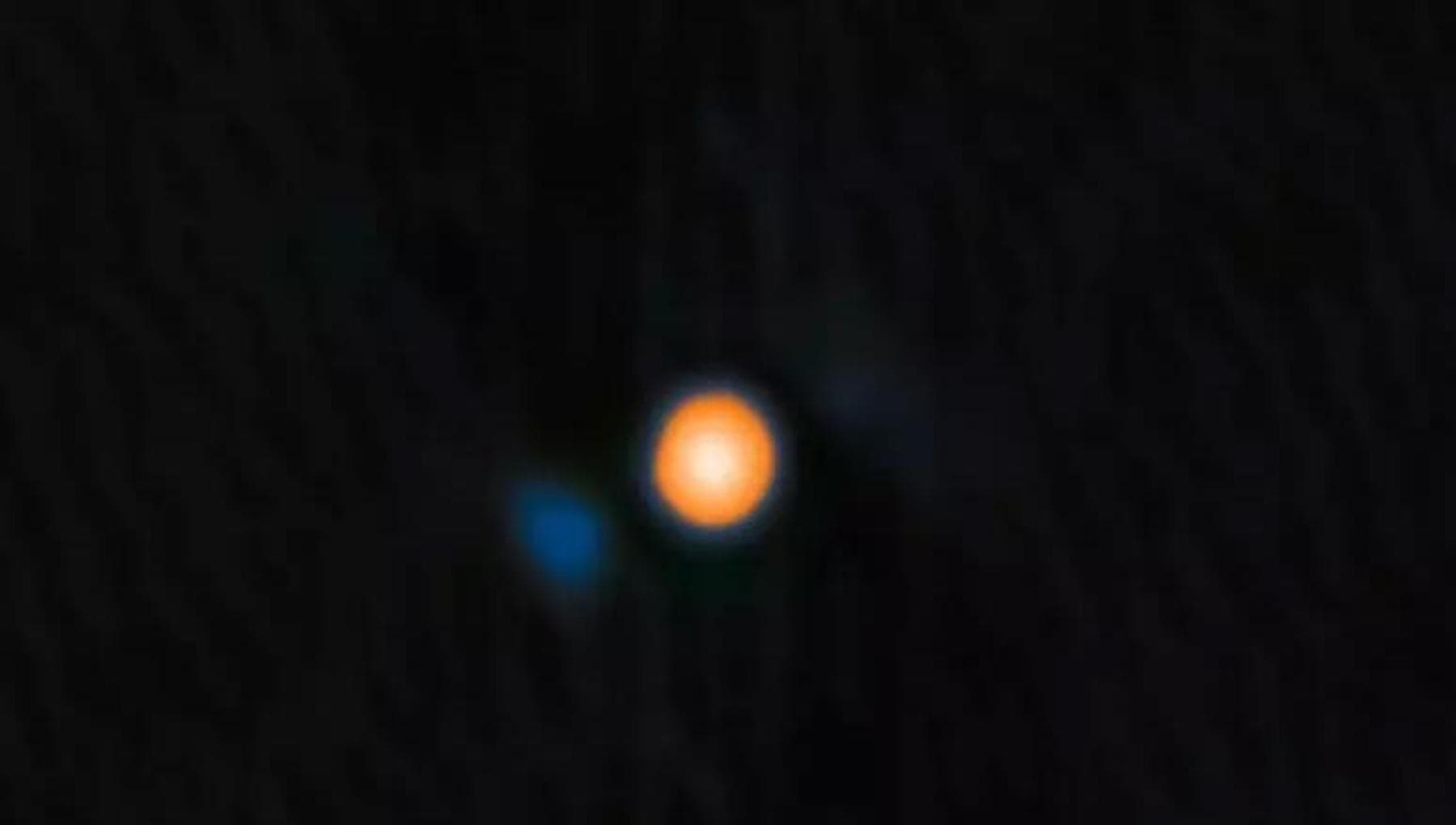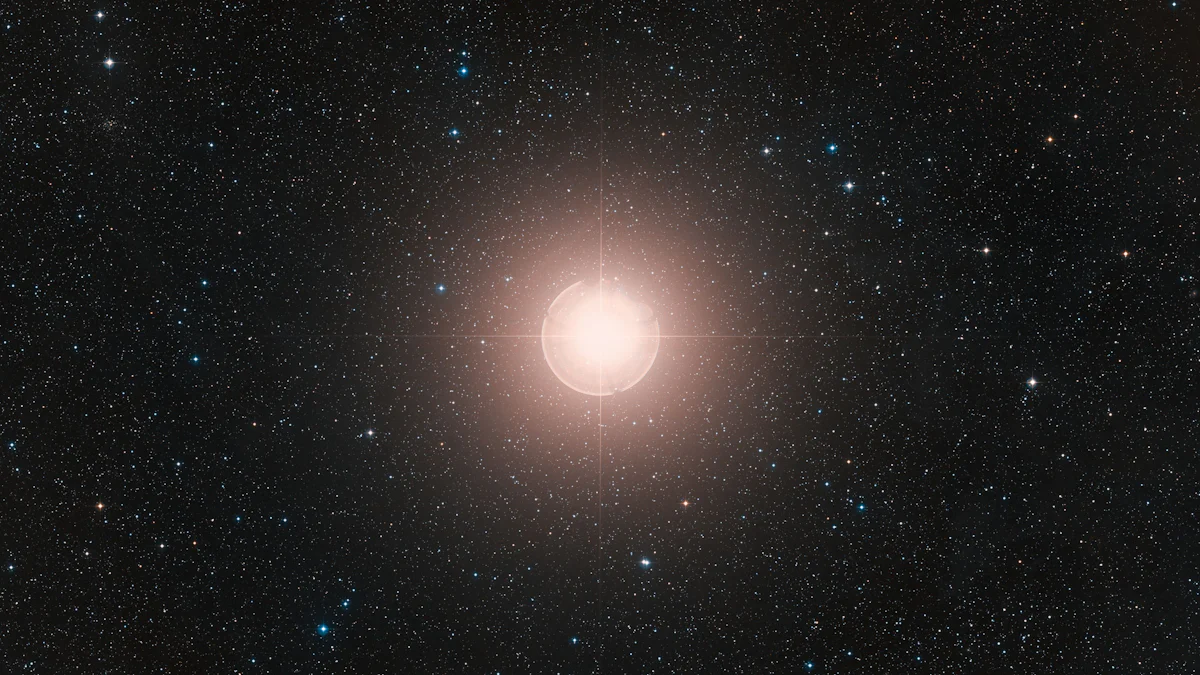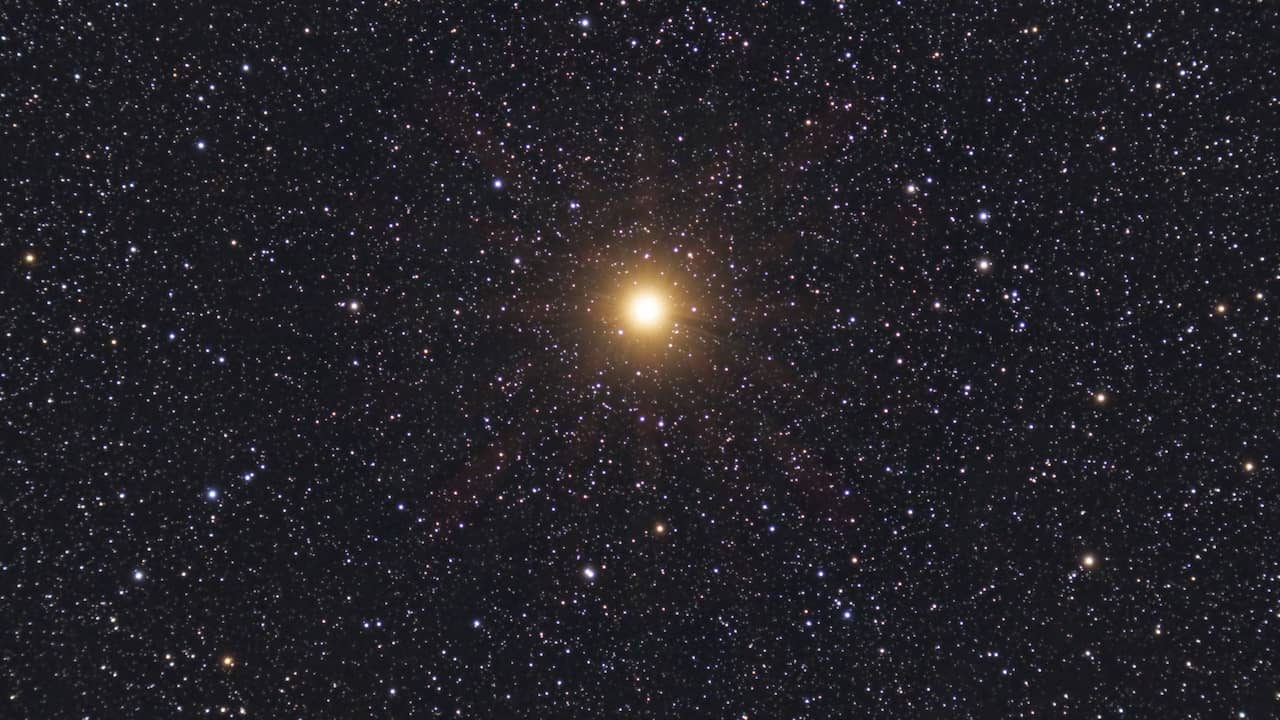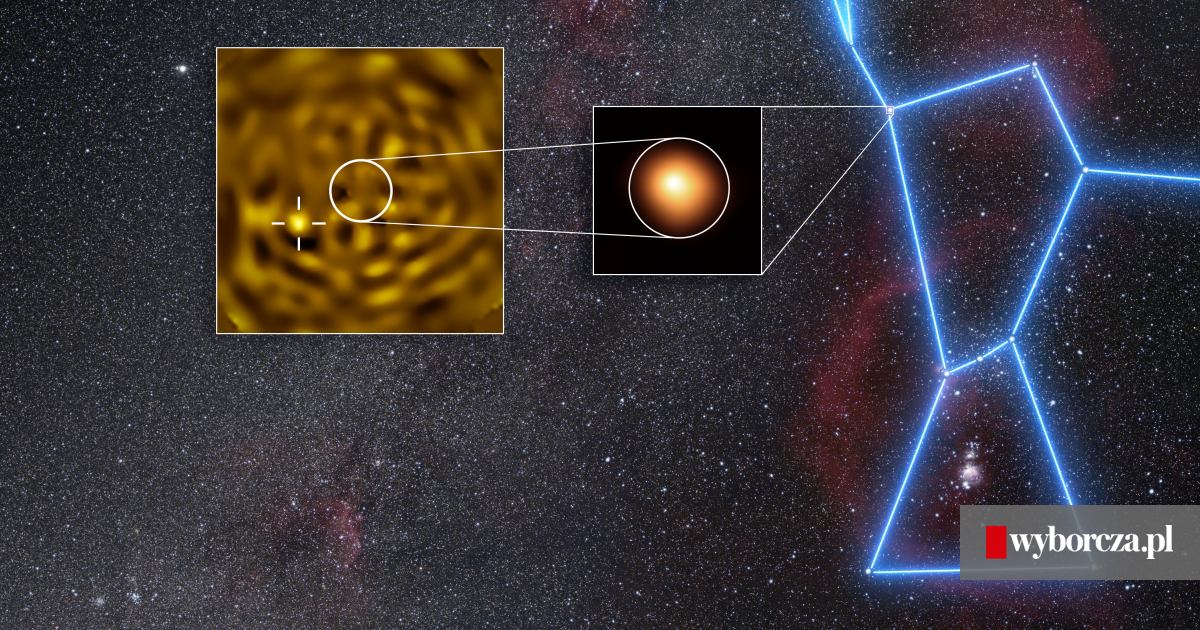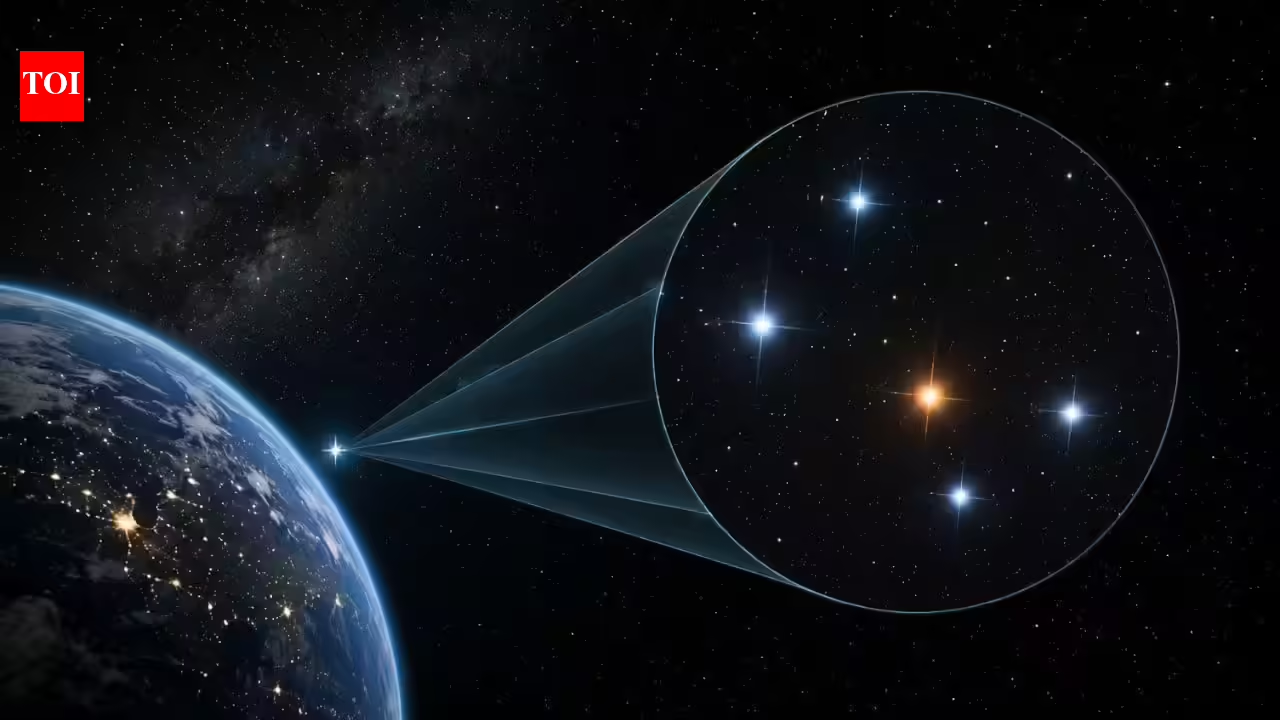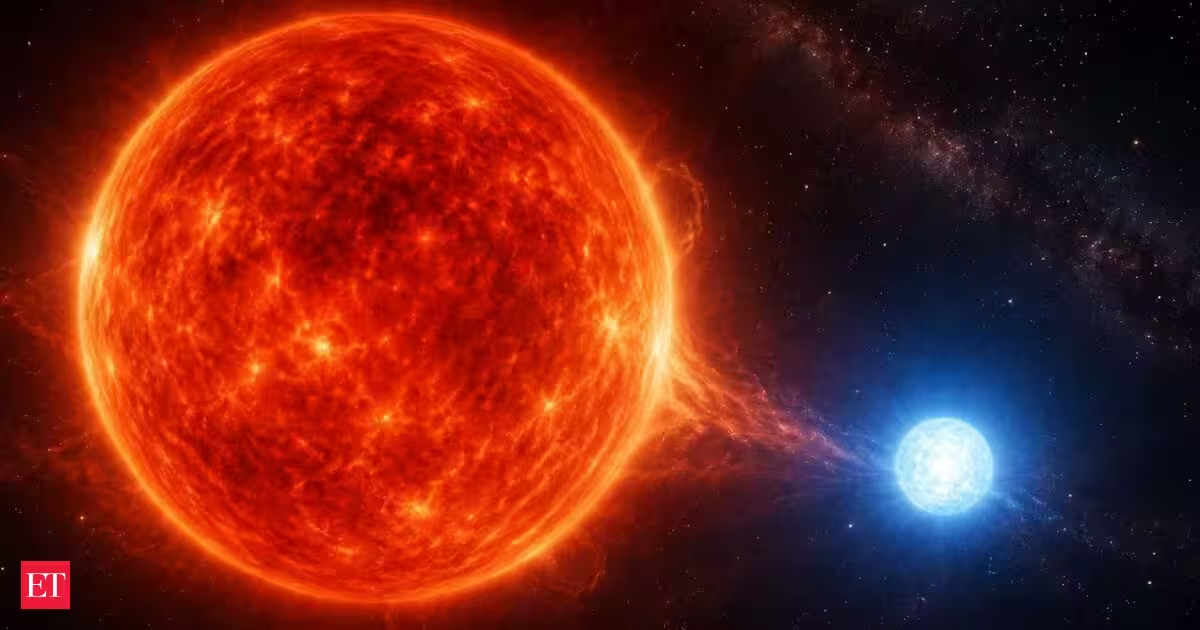
For more than a hundred years, one of the night sky's most famous stars kept a secret. Now astronomers say they've finally caught it out. Betelgeuse, the reddish, unmistakable star that marks the shoulder of Orion the Hunter, has a companion. A small, hot star has been circling it in tight, fast loops, hidden for generations inside Betelgeuse's glare. On July 28, a European team announced they had captured the sharpest image yet of that companion using the Very Large Telescope in Chile, effectively closing the book on a mystery that dates back to 1908.Also Read: Why people line cutlery drawers with aluminium foil: Does it really help keep utensils clean and protect against scratches? "This is the conclusion of a century-long quest," said Miguel Montargès, the Paris Observatory astronomer who led the study, published in the journal Astronomy & Astrophysics. Betelgeuse's companion star discovered explained its variable brightness Betelgeuse doesn't just twinkle, it breathes. Its surface swells and contracts every 400 days or so, a rhythm astronomers have long understood as ordinary convection in a star this size. But there was a second, slower pulse buried in its brightness data: a change that repeated roughly every five years and nine months. Nobody could pin down what was causing it. Some blamed pulsations deep in the star's interior. Others suspected something was orbiting it, tugging at its outer layers. That second theory has now won out. Two research groups, working independently and with different instruments, spent the past year building a case that the "long secondary period" was in fact evidence of a stellar companion, a much smaller, much younger star caught in Betelgeuse's gravitational pull, close enough to disturb the giant's swollen atmosphere every time it swings past. Catching the ghost in the glare Spotting anything next to Betelgeuse is notoriously hard. The star is nearly 700 times the width of the Sun, and it's roughly a million times brighter than the object suspected of orbiting it. Trying to see the companion is often compared to trying to spot a match flame beside a lighthouse. Montargès's team got around the problem with timing. Earlier modelling, published in 2024, predicted a narrow window in December of that year when the companion would swing to its widest possible distance from Betelgeuse as seen from Earth, its best chance of stepping out of the glare. The team pointed the VLT's SPHERE instrument at the system during that window and then spent months processing the data, digitally stripping away Betelgeuse's overwhelming light to see what remained. What emerged was a faint point of light exactly where theory said it should be. Montargès described the moment candidly: “I jumped from my chair when I saw the processed images.” The detection cleared the statistical bar astronomers use to call a result solid, and two separate analysis methods agreed on it independently. It wasn't the first hint. A year earlier, a NASA-led team using the Gemini North telescope in Hawaii had already caught a tentative glimpse of the same object using a rapid-imaging technique designed to freeze out atmospheric blur. And in January this year, Harvard-Smithsonian astronomers reported something even stranger: a dense trail of gas moving through Betelgeuse's outer atmosphere, the unmistakable wake left behind by something solid ploughing through it. One of the scientists behind that study likened it to a boat cutting through water, proof the companion wasn't just theoretical, but physically shoving material out of its way. Together, the three lines of evidence, the predicted timing, the direct image, and the gas wake, left little room for doubt.Meet Betelgeuse's companion star Siwarha, 'Her Bracelet' The companion star already has a name. It's called Siwarha, Arabic for "her bracelet", a nod to Betelgeuse's own historical Arabic name, which translates roughly to "hand of the giant." The name was formally approved last September by the International Astronomical Union's naming authority, well before the final confirmation came through.Also Read: In 1890, one man released 60 birds in New York Central park. 135 years later, there are 200 million of them across America Siwarha turns out to be more substantial than early estimates suggested, somewhere between two and three times the mass of the Sun, young, hot, and not yet fusing hydrogen in its core the way mature stars do. It orbits so close to Betelgeuse that it sits barely twice the giant's radius away, completing a full lap roughly once every six years. In cosmic terms, that's practically hugging its neighbour.Why astronomers are so curious about Betelgeuse Betelgeuse isn't just a pretty landmark in the winter sky. It's a red supergiant nearing the end of its life, and it will eventually die in a supernova explosion, one that, at around 700 light-years away, would be visible from Earth in broad daylight for weeks. Exactly when that happens is still unknown; estimates range from tomorrow to well over 100,000 years from now, so nobody should hold their breath waiting for it. What changes now is the picture of how Betelgeuse gets there. A close companion can steal material, stir up a dying star's outer layers, and reshape how it loses mass in its final stretch, all of which can influence the manner and timing of the eventual explosion. Montargès put it plainly: whether Siwarha will alter Betelgeuse's fate is now, in his words, a genuinely open question worth investigating. There's a darker footnote for Siwarha itself. Sitting this close to an ageing giant that continues to swell isn't a comfortable long-term arrangement, many astronomers expect Betelgeuse's outer atmosphere to eventually engulf its small companion altogether.What's next for Betelgeuse Even Montargès, by his own admission a cautious scientist, still calls Siwarha a "candidate" rather than a certainty. The final proof will come in late 2027, when orbital mechanics predict the companion should swing around to the opposite side of Betelgeuse, a second appearance exactly where the models say it must be, if the theory holds. Researchers are already planning to point their telescopes back at the system when that window opens. Until then, Orion's shoulder keeps its glow, and skywatchers can look up this winter knowing that the star they're seeing was never quite as alone as it appeared.Betelgeuse FAQsWhat is Betelgeuse? Betelgeuse is a red supergiant star marking the shoulder of the constellation Orion. It's one of the largest and most luminous stars visible to the naked eye, and it's in the final, unstable stretch of its life.Which constellation is Betelgeuse in? Betelgeuse sits in Orion, one of the most recognisable constellations in the night sky. It forms the "shoulder" of the hunter figure, opposite the blue star Rigel, which marks his foot.How big is Betelgeuse? Estimates vary, but Betelgeuse's radius is generally put at 700–750 times that of the Sun. If it replaced the Sun at the centre of our solar system, its surface would extend out to somewhere around the orbit of Jupiter.How far away is Betelgeuse from Earth?Somewhere between roughly 500 and 700 light-years, depending on which study you consult; a commonly cited figure is around 640 light-years. Measuring its exact distance has been unusually difficult because the star's own pulsations distort the standard techniques astronomers use.What is the Betelgeuse companion star discovery about? Astronomers had suspected since 1908 that an unexplained wobble in Betelgeuse's brightness pointed to a hidden object orbiting it. That suspicion was finally validated through a combination of predictive modelling, direct imaging attempts, and detection of the companion's physical effect on Betelgeuse's atmosphere.Is the Betelgeuse companion star confirmed? As of the July 2026 VLT image, evidence is very strong — the detection cleared standard statistical thresholds and was backed by two earlier, independent findings. Astronomers are still calling it a "candidate" in formal terms and expect final confirmation when the companion reappears on the opposite side of Betelgeuse in late 2027.What is the Betelgeuse companion star's name? It's named Siwarha, Arabic for "her bracelet," a reference to Betelgeuse's own Arabic-derived name, meaning roughly "hand of the giant." The name was formally adopted by the International Astronomical Union in September 2025.How was the Betelgeuse companion star imaged? Researchers used the European Southern Observatory's Very Large Telescope in Chile, fitted with a high-contrast imaging instrument called SPHERE, to photograph the system in December 2024 — a window when models predicted the companion would be at its widest apparent separation from Betelgeuse. It took months of image processing to isolate the companion's faint light from Betelgeuse's glare. Separately, NASA's Hubble Space Telescope and the Gemini North telescope contributed supporting detections.Will Betelgeuse explode? Yes, eventually, it's a massive star in the late stages of its life, and stars like this end as supernovae. That said, "eventually" in astronomy can mean a very long time.When will Betelgeuse go supernova? Nobody knows precisely. Estimates span an enormous range, from a possibility within the next few thousand years to as long as 100,000 years from now. There's no reliable way to predict an exact date with current science.Would a Betelgeuse supernova be dangerous to Earth? No. At its distance, an explosion would be a dazzling spectacle, potentially visible in daylight for weeks,but far too remote to pose any physical danger to Earth.
Betelgeuse has a companion star, Siwarha. Astronomers confirm the dying red giant isn't alone. Here's what it means
Betelgeuse's companion star discovered explained its variable brightness. Astronomers have confirmed Betelgeuse, a famous night sky star, has a hidden companion. This small, hot star, named Siwarha, has been orbiting Betelgeuse for generations. Using advanced telescopes, scientists captured the sharpest image of Siwarha, confirming its existence. Siwarha's presence may influence Betelgeuse's eventual supernova explosion. Further observations are planned to solidify the findings in the coming years.
1,526 words~7 min read