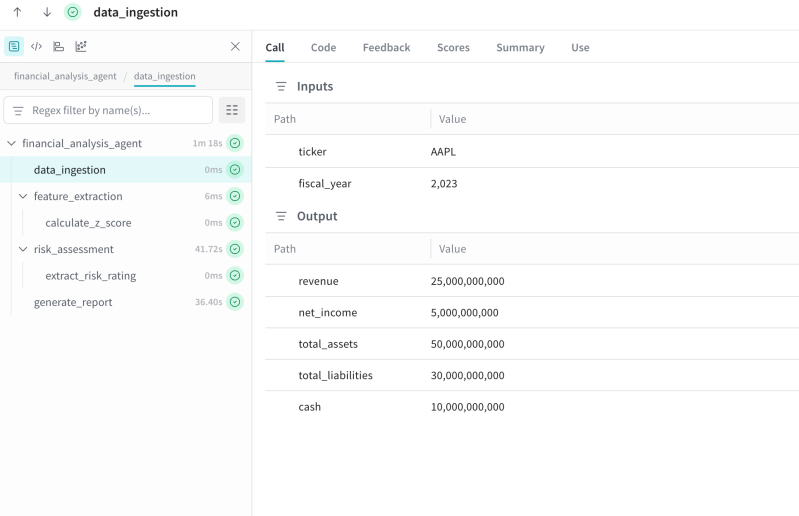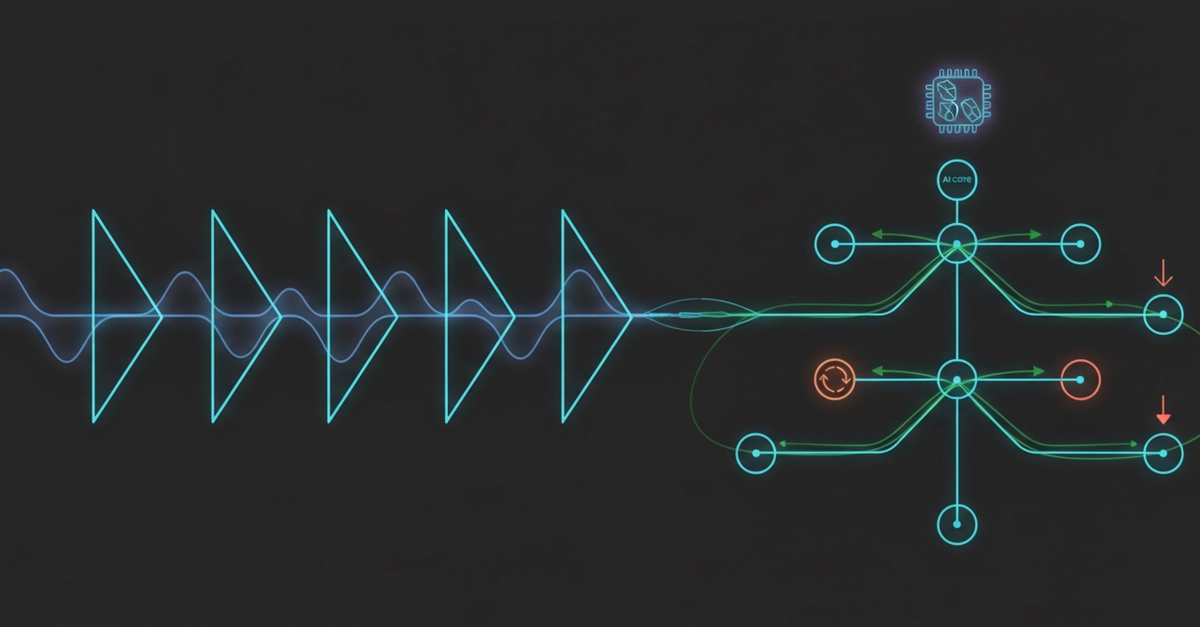
A useful agent trace is not a list of timestamps. It is a causal tree.
When a TypeScript agent retrieves documents in parallel, calls a model, retries a tool, and falls back to cached data, each operation needs a trace ID, its own span ID, and the correct parent span. Without those relationships, completion order is easily mistaken for execution structure.
This article builds a small Node.js tracer to demonstrate the core mechanics: immutable async context, parent-child spans, reliable finalization, and a pluggable sink. It is intentionally smaller than a production observability library, but the design avoids several common mistakes found in minimal examples.
Completion Order Is Not Causality
Imagine three tools running in parallel: