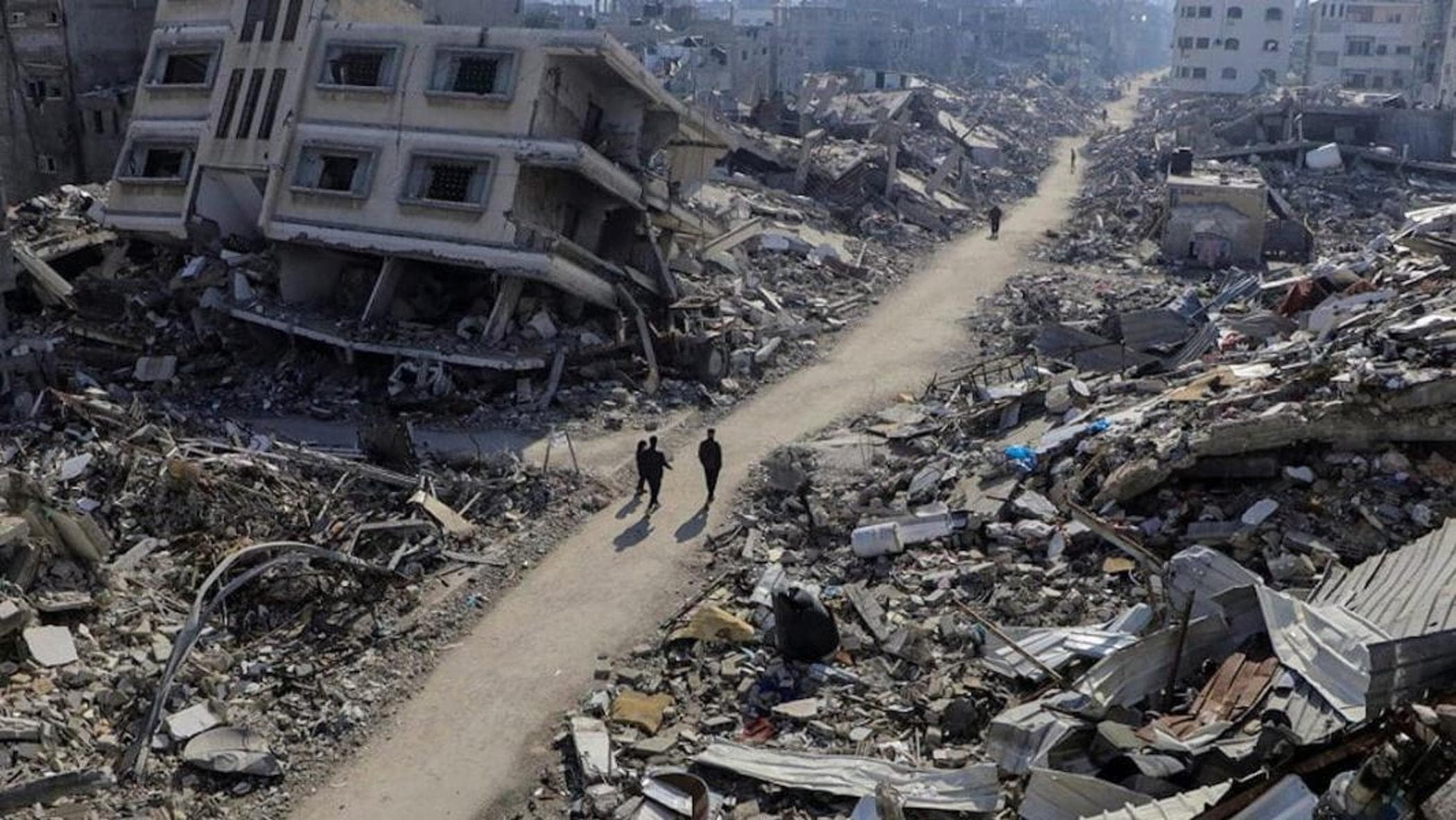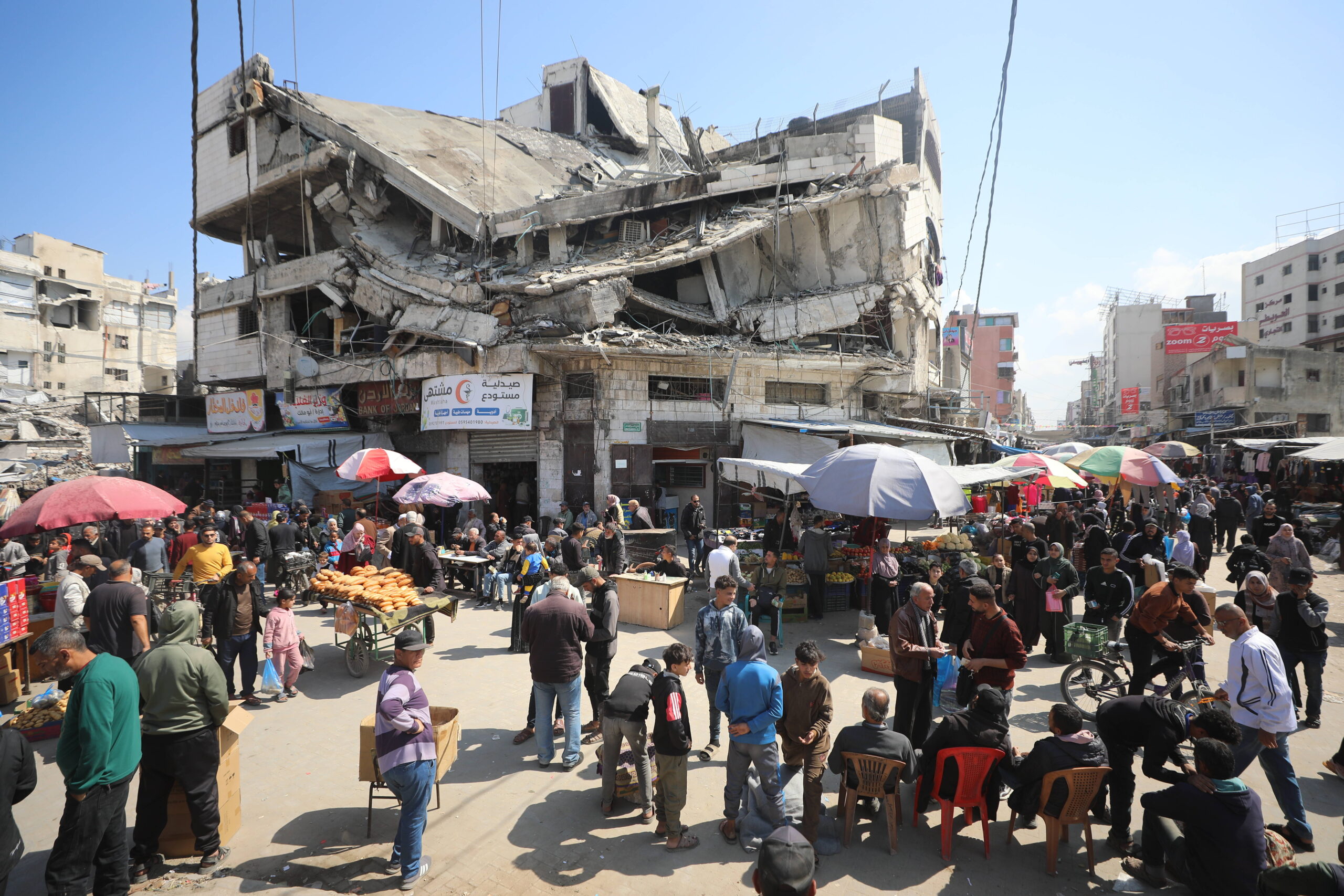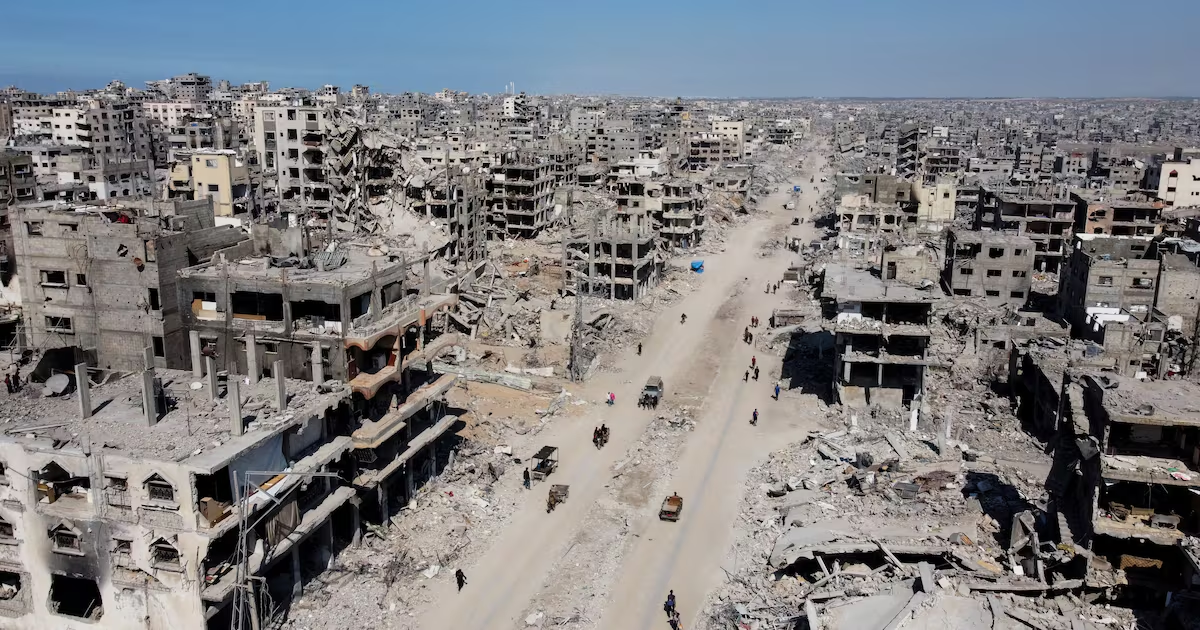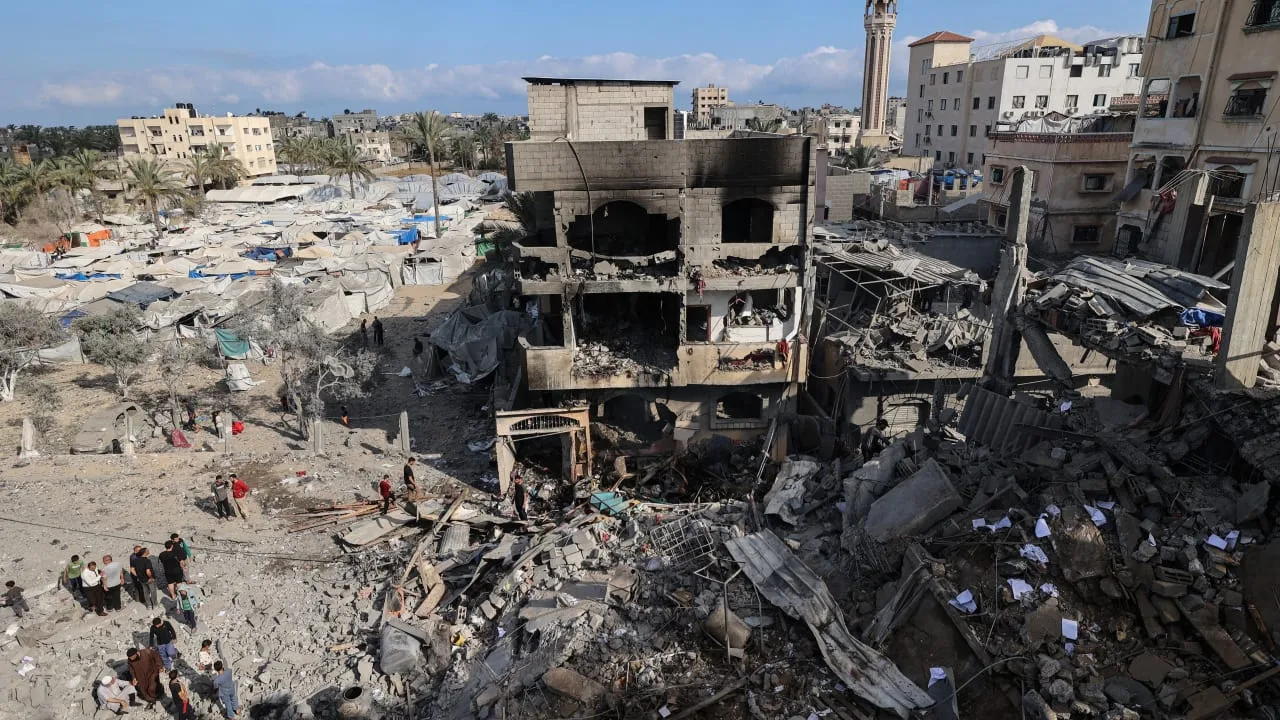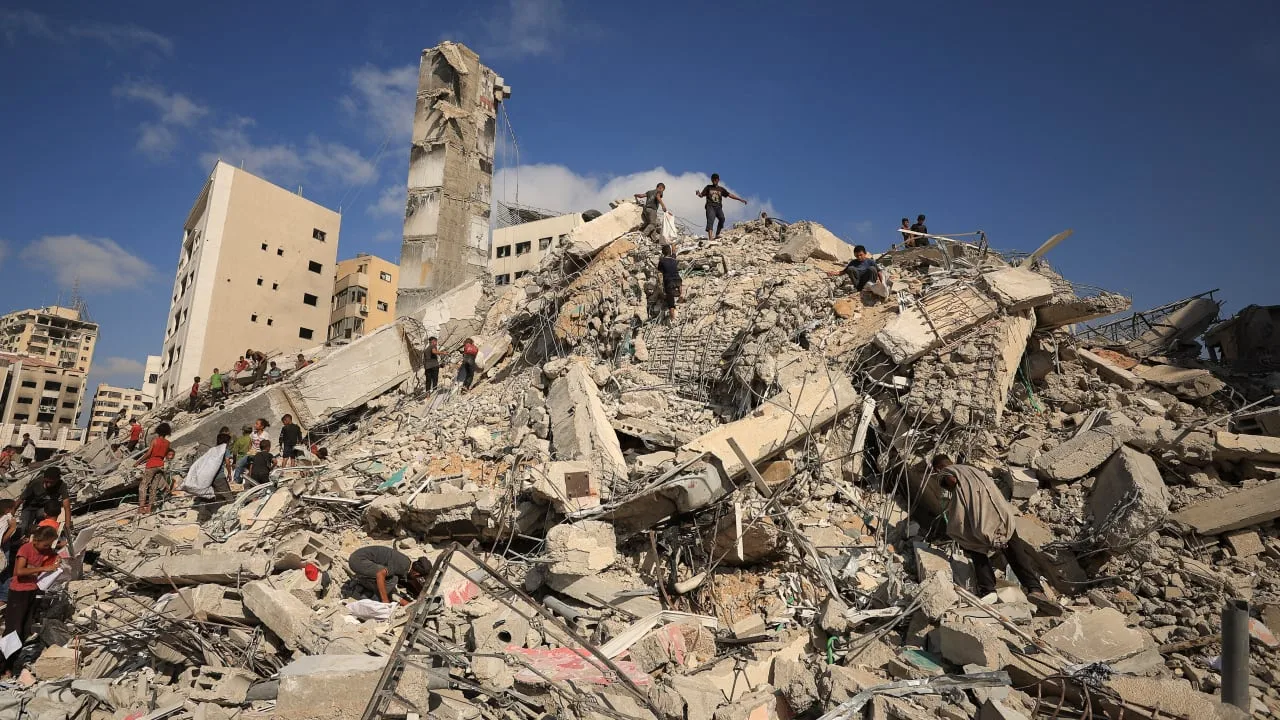
ByMATHILDA HELLERJULY 28, 2026 17:23The $71.4 billion needed to rebuild Gaza is seven times the combined cost of all previous reconstructions, and will fail without Palestinian leadership, a new report by Oxfam has warned.The report Building Gaza Anew – co-authored by Oxfam, the Palestine Economic Policy Research Institute (MAS) and the Palestine Trade Centre (PalTrade) – offers a blueprint that treats Gaza’s recovery as a "matter of rights and reparations, not charity."Oxfam estimates that recovery needs after the 2008-09, 2014 and 2021 wars were around $10 billion in today’s money. According to the UN-EU-World Bank Rapid Damage and Needs Assessment (RDNA) of April 2026, Gaza has suffered $57.9 billion in total damage and economic losses, with $71.4 billion required for recovery and reconstruction over the next decade, making it seven times that needed previously."Gaza has never been allowed to finish rebuilding," said Amitabh Behar, Oxfam International Executive Director. "A decade after Israel’s 2014 offensive on Gaza, families were still waiting for homes that never came, and then the bombs returned."The report sets out a five-year framework for recovery and rebuilding centered on "Palestinian ownership at every stage," underpinned by rights-based principles and a "single national vision linking Gaza, the West Bank and East Jerusalem." It vehemently rejects models that treat Gaza as a separate entity.Buildings lie in ruins amidst the rubble in Rafah in the southern Gaza Strip, December 8, 2025. (credit: REUTERS/NIR ELIAS)The report also discusses what it calls the costs of "that no damage assessment can calculate," such as "Gaza’s knowledge, care systems, environment, and the community bonds, mosques, churches, libraries, and cultural institutions where social life once lived."“What was destroyed in Gaza was not merely steel and concrete. Israel eradicated an entire social and economic world, built up over generations, and only Palestinians can rebuild it,” said Mohammad Skaik, Gaza Program Manager.“Reconstruction is not only a humanitarian task; it is a political one. A plan designed in foreign capitals, however well-funded, would be a cosmetic exercise – simply another form of control over Palestinian land and lives. Our consultations across Gaza carried one unmistakable message: nothing about our future without us,” adds Misyef Jamil, Senior Researcher at MAS.Israel as the obstacle to peaceThe report is framed around the statement - presented as an established truth - that Israel has been committing genocide in Gaza. As a subset of this, Oxfam also accuses Israel of domicide, sociocide, reprocide, scholasticide, and spatiocide. While these terms are not standalone crimes under international law, Oxfam says deploying such concepts provides a coherent analytical framework to comprehend "how the destruction of homes and infrastructure targets not only peopleʼs immediate survival and basic needs but also their collective future, social fabric, identity, knowledge transmission, spatial organization and environmental sustainability."Additionally to the crime of genocide, Oxfam asserts that "the war in Gaza cannot be understood in isolation from Israelʼs prolonged occupation and systematic policy of ethnic cleansing of the Gaza Strip and the West Bank, including East Jerusalem."It is worth noting that the word terror is mentioned only once in the entire 73-page report, and only in inverted commas."Hamas's popularity in the Gaza Strip has been reduced drastically by most metrics, owing to its governance record, its international designation as a “terrorist organization” by many governments, and the devastating consequences of the October 7 attack by Palestinian armed groups for the population it governed as well as for the legitimacy of Palestinian resistance to Israel," the report reads.Aside from this, there is no discussion of terror threats or considerations from Palestinians in Gaza or the West Bank, and no discussion of deradicalization or reforms as part of the five-year plan.In fact, Oxfam discredits the notion of Palestinian reform, saying that the fact that "international attention remains focused on the idea of 'reforming the PA' [...] is a backward-looking baseline reference at such an historical juncture."Israel is presented as the sole obstacle to peace.Oxfam also posits that Israel should pay reparations to Palestinians, and should cease fiscal counter-terrorism safeguards on PA accounts as it can "reproduce the surveillance logics of occupation, impose excessive administrative burden on local organizations, or make grassroots actors financially ineligible."Oxfam condemns Israelʼs withholding of PA fiscal revenues, estimated to reach approximately $6 billion accumulated by the end of 2026, and other measures imposed on PA finances, with no mention of why these were put in place to begin with (such as the matter of pay-for-slay).Palestinians are presented in the report as committed to peace, only unable to succeed due to Israeli actions."Yet the Palestinian people have demonstrated, through decades of struggle and resilience, their determination to rebuild their lives, their communities, and their institutions in the face of repeated adversity," the report reads. "Collectively, the Palestinian people emerged from the experience of the Gaza genocide ready for what comes next [with a] will to participate actively in shaping their own peaceful future."Follow us on Google
Oxfam report: Gaza reconstruction needs $71.4 billion | The Jerusalem Post
The Oxfam reconstruction blueprint calls for Palestinian leadership in Gaza’s recovery but faces questions over Hamas, terrorism, and future security arrangements.
814 words~4 min read