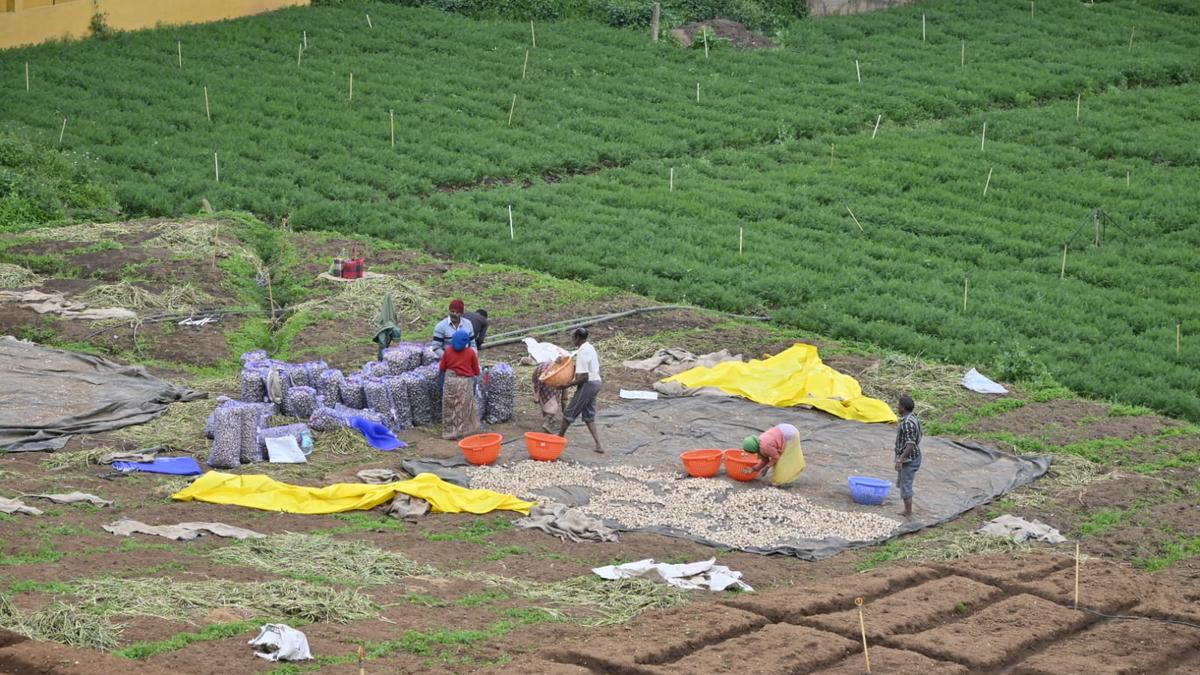
Garlic being harvested at a farm in Udhagamandalam. Due to poor rainfall, the yield has come down, say farmers.
| Photo Credit: M. Sathyamoorthy
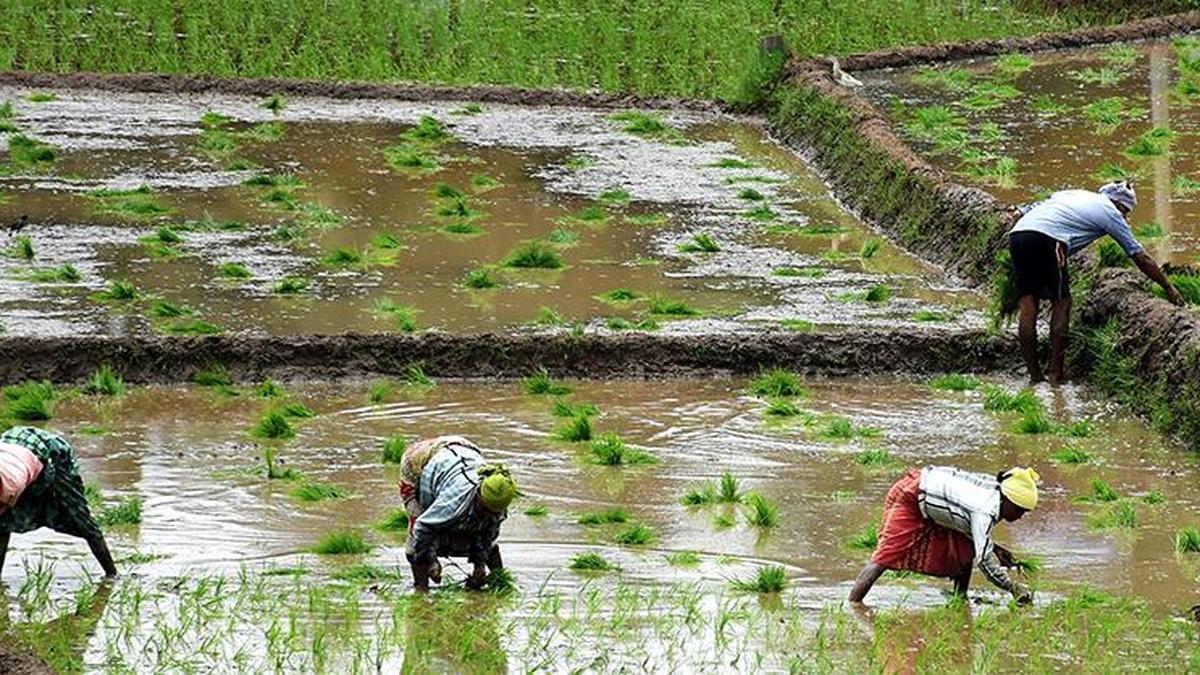
A lack of rainfall in the Nilgiris has begun severely affecting farmers in the district.According to officials, a rainfall deficit of anywhere between 30% and 70% has been recorded in regions across the Nilgiris, with an average deficit of 50%. Speaking to The Hindu, P. Raja, scientist and head of the Krishi Vigyan Kendra (KVK), Horticulture Research Station in the Nilgiris, said that the deficit in rainfall was alarming. The Horticulture Department stated that the Nilgiris has received only 283 millimetres of rain in 2026, as opposed to the average of 874 millimetres it receives every year — a 47% decrease. The rainfall deficit is even more stark when compared with 2025, when the district received 1,038 millimetres of rain during the Southwest monsoon.“In other deficit years, the rainfall deficit during the Southwest monsoon rarely exceeded 10%. The rains in the Nilgiris usually begin around June 10 and continue till August 20. However, this year, there were rains for a week in June, and there have been no rains since,” Dr. Raja said.El Niño effectDr. Raja said that the very strong effects of the El Niño climate pattern could potentially be causing a deficit in rainfall in the district. He said that the KVK in the Nilgiris was advising farmers on crop selection and other methods to mitigate the economic impacts of the lack of rainfall on their farms. As the Nilgiris and other districts in the Western Ghats receive the majority of their annual rainfall during the Southwest monsoon, experts believe that the lack of rainfall could lead to a drought this year.R. Hariharan, a farmer from Ketti Palada in the Nilgiris, said that they had already begun witnessing the impacts of the lack of rain, with many farms suffering losses due to a shortage of rainfall. “We have been witnessing farms growing garlic and other English vegetables being particularly impacted,” he said. Other affected areas include Gudalur, where the lack of rains has resulted in a delay in the paddy sowing season.Crop advisoryThe KVK in the Nilgiris is advising farmers on crop selection, urging them not to use hybrid seeds to cultivate carrots, garlic, and beetroot. Instead, farmers have been advised to use non-hybrid seed varieties, which are known to be more resilient. They can also opt to grow potatoes, as well as medicinal and aromatic herbs, this year.Joint Director of Horticulture (Nilgiris district) P. Maragathamani said that the government had issued advisories to farmers on steps they could take to mitigate the effects of a lack of water available for farming. She said that the Horticulture Department would hold village-level meetings in affected areas with local farmers and guide them on measures they could take to mitigate the effects.“We are also promoting sprinkler irrigation and organic farming of tea by increasing the use of organic manure, and providing subsidies to farmers to construct rainwater harvesting structures to minimise water usage and maximise water saving,” said Ms. Maragathamani. She added that farmers were being advised to adopt mulching, either using biodegradable plastic or stubble mulching in their fields for all crops. Published - July 28, 2026 04:36 pm IST