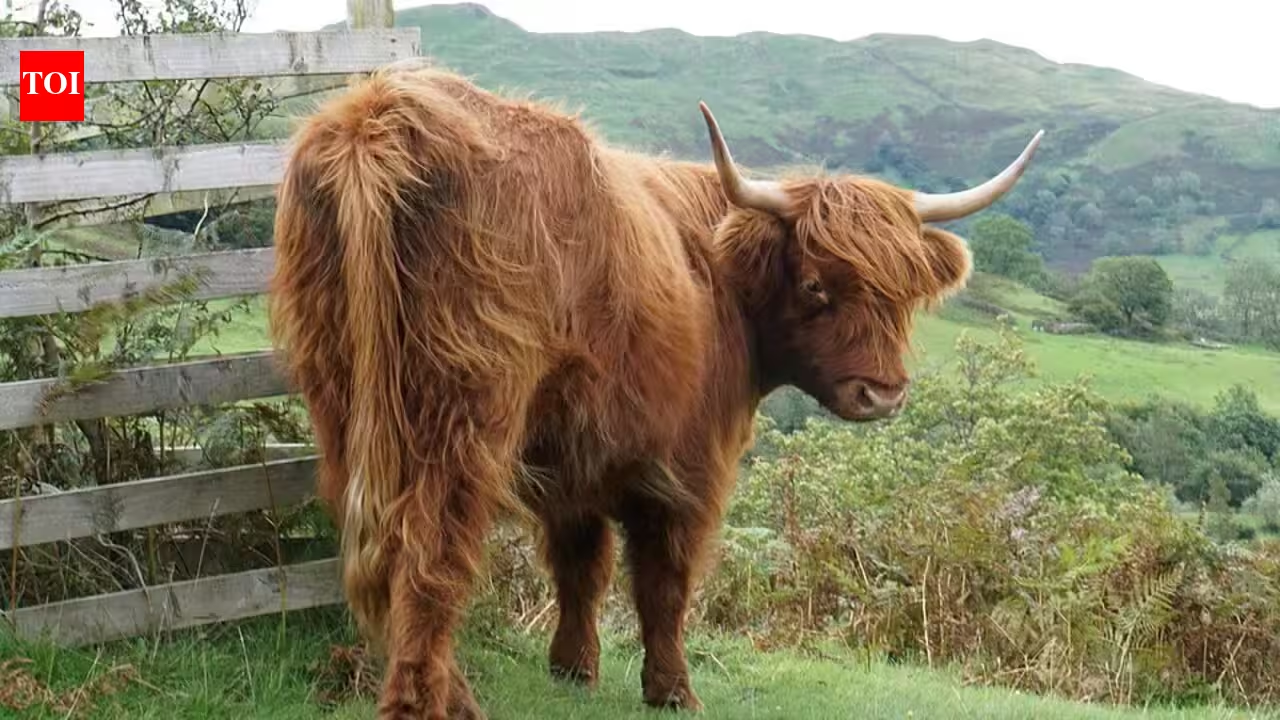
A single cow on a Swedish island has split her neighbours in two; she is grazing anyway, and ecologists say she is exactly what Amundön needs. Image credits: Wikimedia Commons.On the Swedish island of Amundön, one cow has become an unlikely source of controversy. Some neighbours have objected to the animal grazing near a popular bathing area, while others have embraced her presence. But behind the dispute is a larger ecological question: what happens to a landscape when the animals that once shaped it disappear?Ecologists say the cow is doing more than eating grass. Grazing can help keep open landscapes from gradually becoming overgrown with shrubs and trees, preserving the semi-natural habitats that support a range of plants and animals. The cow’s presence on Amundön has turned ordinary grazing into a local debate about land management.The controversy began with one grazing cowThe dispute centres on a cow grazing on Amundön, a popular recreational area near Gothenburg. According to Göteborgs-Posten, the animal has attracted attention after neighbours objected to its presence near a bathing area. At the same time, the cow has also gained a following among people who enjoy seeing it there.At first glance, the conflict may seem like a simple clash between residents and an animal. But the question of whether cattle should graze in such places is also tied to how Sweden manages its semi-natural grasslands. Many of these landscapes are not maintained by nature alone. Grazing animals can prevent vegetation from becoming too dense, creating a changing mixture of shorter grass, taller plants and open ground. That variety can be important for biodiversity.Without grazing, open grasslands can gradually become dominated by taller vegetation and eventually scrub or woodland. The exact outcome depends on the soil, climate, plant community and management history, but the basic ecological role of grazing is well established in the management of many semi-natural grasslands.Why ecologists see value in grazingAccording to research published in Agronomy, cattle and sheep play an important role in maintaining semi-natural grasslands and the biodiversity associated with them. The researchers noted that many such grasslands deteriorate or disappear when grazing becomes insufficient, and examined how grazing practices can help preserve habitat quality. Cattle do not simply remove vegetation evenly. They graze some plants more heavily than others, trample parts of the ground and leave behind dung that can influence nutrient cycling. Their movements can therefore create a patchwork of conditions across a landscape.This unevenness may prove advantageous. While some species thrive in low vegetation, others require tall vegetation or soil patches. An area with a homogeneous cover of vegetation can offer less variety of these habitats. This is why ecologists may see grazing animals as part of a broader management strategy rather than simply livestock on a patch of land. Of course, this advantage will depend on how the grazing is managed. Overgrazing will negatively affect vegetation and soil, while insufficient grazing may allow vegetation to grow too much. This means that a cow may not always be useful in certain areas.On the Swedish island of Amundön, one cow has become an unlikely source of controversy. Some neighbours have objected to the animal grazing near a popular bathing area, while others have embraced her presence. Image Credits: Wikimedia Commons.A local argument with a wider ecological lessonThe Amundön case highlights a tension between what people want in a recreational area and what conservationists aim to preserve. For example, an observer may see the presence of an animal close to the beach as an inconvenience or a disturbance. Meanwhile, an ecologist may regard it as one of the means of maintaining the openness of the habitat, which would otherwise become too overgrown. Both views may coexist at the same time.The controversy also reflects a shift in how people think environmental management should be done. Many landscapes considered to be natural have been managed for hundreds of years through farming and grazing. Stopping these practices does not restore ecosystems to a former untouched state. Instead, they make habitats formed due to long-term grazing alter or even vanish.Agronomy also notes that the conservation value of grazing depends on matching the right animals and management practices to the right grasslands. It also warns against treating all grasslands as identical, since their ecological value and grazing needs can vary considerably.For now, the cow on Amundön remains a very visible symbol of that debate. The question is whether a landscape shaped by grazing can stay open when grazing stops. It is whether a landscape that evolved under regular grazing can remain the same when the grazers disappear. Sometimes, maintaining a seemingly natural landscape requires grazing animals to keep eating.
A single cow on a Swedish island has split her neighbours in two; she is grazing anyway, and ecologists say she is exactly what Amundön needs
On the Swedish island of Amundön, one cow has become an unlikely source of controversy. Some neighbours have objected to the animal grazing near a popular bathing area, while others have embraced her presence.
772 words~4 min read