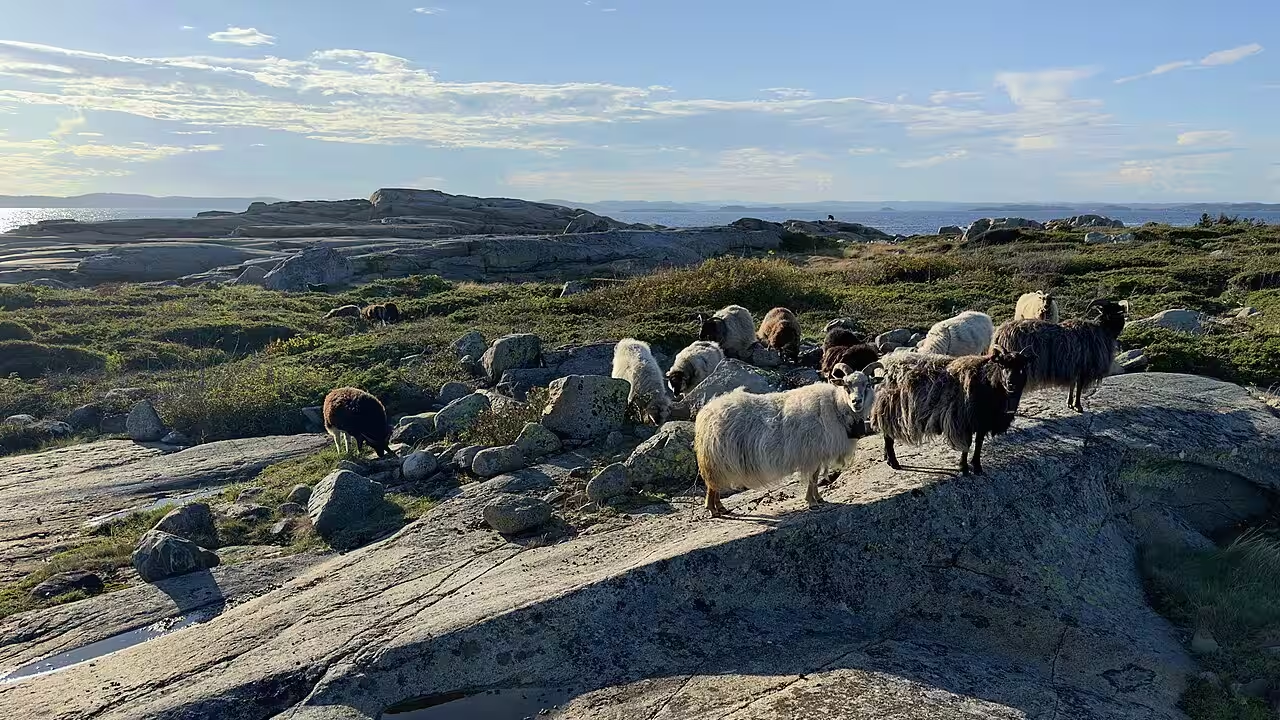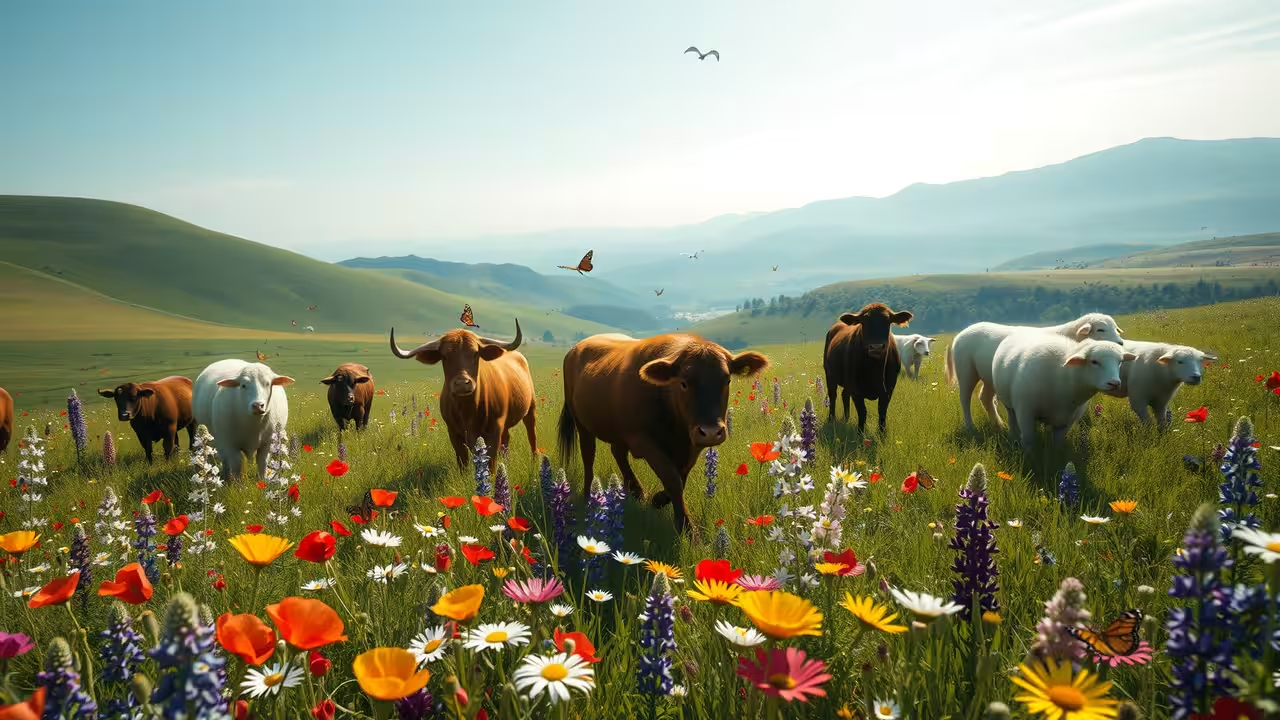
For years, sheep have been the default grazing animal across Britain's uplands, quietly shaping the landscape without anyone really questioning it. But a new set of studies from the Yorkshire Dales suggests cows might actually be doing a much better job, at least if you care about butterflies. Researchers at the University of Leeds studied what happened when a large stretch of land at Ingleborough switched from sheep to cattle grazing, and the results were striking. Not only did wildflowers bounce back in a big way, butterfly numbers shot up too, including some genuinely rare species that had been struggling for years. It turns out the simple choice of which animal grazes a field can make a huge difference to what survives in it.Why cattle grazing is helping butterfly populations recoverThe research took place at Wild Ingleborough, a large-scale restoration project spread across 1500 hectares in the Yorkshire Dales, run jointly by Natural England and the Yorkshire Wildlife Trust. Nearly the entire site used to be grazed by sheep, but in 2004 conservationists began switching things over to native cattle breeds like red polls, shorthorns and belted galloways. Almost two decades later, that decision seems to be paying off. According to a study published in the journal Ecological Solutions and Evidence, cattle-grazed areas of the site ended up with nearly five times more butterflies compared to areas grazed by sheep.How do cows graze differently from sheepPart of the reason for this difference comes down to how these two animals actually eat. Cattle wrap their tongues around taller vegetation and pull it out, which naturally thins out dominant grasses and gives wildflowers more room and light to grow. Sheep, on the other hand, graze in a much more targeted way, using their narrow jaws to pick out specific plants they prefer, often nibbling away at the very wildflowers that butterflies depend on. Cattle also help in another way too, spreading seeds around a site through their thick coats and their dung, while their heavier footsteps and trampling help create better conditions for new plants to take root.Rare butterflies benefiting from the switch to cattleOne of the standout success stories from this shift has been the Northern Brown Argus, a small, fairly rare butterfly that has struggled across much of Britain due to changing land use. Researchers found this species is now doing noticeably better in the parts of Ingleborough where cattle graze, largely because the vegetation there has recovered enough to support the plants its caterpillars rely on. The wider butterfly community on the site also became more diverse overall, benefiting from a much richer mix of wildflowers than what sheep grazing had allowed for.Plant diversity jumps after 18 years of cattle grazingAlongside the butterfly research, a separate study looked specifically at how the vegetation itself changed after the switch from sheep to cattle. According to the findings, plant diversity across the site increased by 41 percent over 18 years, with wildflowers like eyebrights, bird's foot trefoil and fairy flax becoming noticeably more common. This second study, also published in Ecological Solutions and Evidence. The improvements were not limited to just a handful of species either; the overall grassland structure became far more varied, creating exactly the kind of patchy, uneven habitat that many wild plants and insects tend to prefer.Why has sheep grazing dominated British uplandsSheep have long been the default choice for grazing across most of Britain's upland landscapes, and the numbers explain why. Sheep populations across the country rose from roughly 18 million in 1950 to about 41 million by 1990, and even though numbers have dropped since then, they remain far higher than they were before intensive farming took hold. This long-term dominance of sheep grazing, researchers say, has quietly reshaped huge areas of upland Britain into fairly uniform grassland, leaving little space for trees, shrubs or the kind of wildflower-rich habitat that many butterflies and other insects rely on to survive.What this means for future conservation effortsAccording to Robyn Wrigley from the University of Leeds School of Earth and Environment, who worked on both studies, grazing management in the uplands is a genuinely complex and sensitive topic, but this research adds solid, long-term evidence about how different grazing choices shape biodiversity over time. The findings are already being used to support the case for agri-environment payments, essentially funding that would encourage farmers and land managers to consider switching parts of their land from sheep to cattle grazing where it makes sense. With butterfly populations continuing to decline across much of the UK due to habitat loss and intensified farming, these results offer a rare bit of good news, and importantly, one that seems to work well for both nature and the farmers managing the land.
How replacing sheep with cows is helping one of Britain's rarest butterflies make an unexpected comeback
For years, sheep have been the default grazing animal across Britain's uplands, quietly shaping the landscape without anyone really questioning it. But a new set of studies from the Yorkshire Dales suggests cows might actually be doing a much better job, at least if you care about butterflies.
789 words~4 min read