Michael A. Skinnider. Foto: Sameer A. Khan / fotobuddy
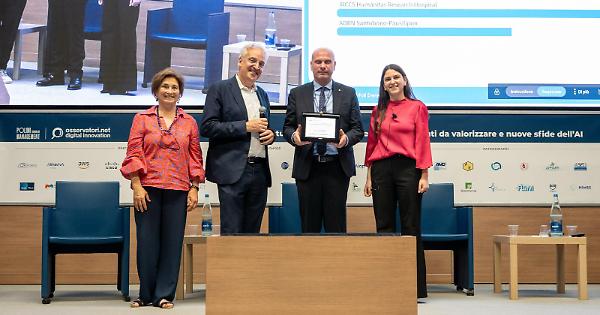
“For pioneering the application of artificial intelligence to biomedical discovery, and for developing transformative AI methods that reveal previously unknown chemistry, accelerate metabolite discovery, advance neuroscience, and address major challenges in human health”, Michael Skinnider, a computational biologist at Princeton University, has been awarded the ICTP-IBM Brahmagupta Prize for Artificial Intelligence. The prize was presented on Thursday, July 23rd, during a ceremony at the Abdus Salam International Centre for Theoretical Physics (ICTP) in Trieste.
The prize – named after the Indian mathematician and astronomer Brahmagupta – was established in 2024 to recognise young researchers who have achieved outstanding results with promising benefits for society in the field of Artificial Intelligence.
Skinnider came to computational biology after studying medicine, and is now a professor at Princeton University, where he applies machine learning methods to the study of biochemical processes. In particular, he uses artificial intelligence to study special molecules found in our bodies – known as metabolites – and the ways they influence human health. The lab he directs at Princeton's Lewis-Sigler Institute aims to shed light on the so-called “dark matter” of the metabolome (the full set of metabolites present in the human body) which current techniques can detect but not yet identify in detail.