“Without our traditions, our lives would be as shaky as . . . as . . . as a fiddler on the roof!” Tevye the milkman famously declares. More than 60 years after it premiered on Broadway, Fiddler on the Roof continues to resonate through its exploration of tradition and its wisdom about how we keep our balance when the world is in turmoil.
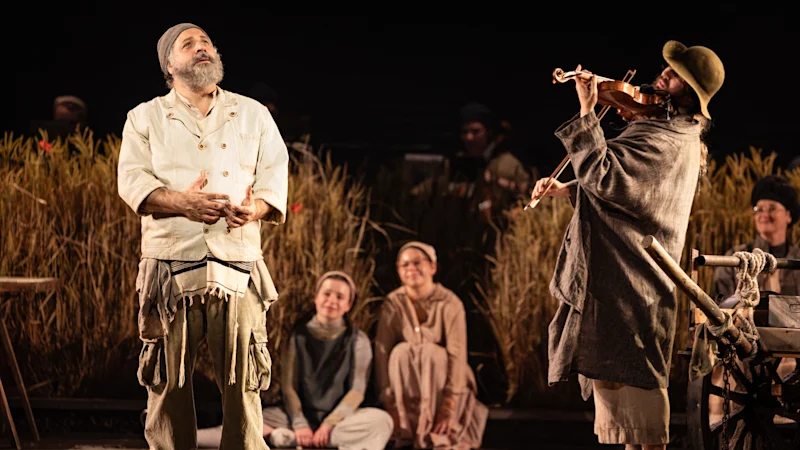
Fein’s production finds its emotional nuance most powerfully through its music and movement. Photograph: Marc Brenner
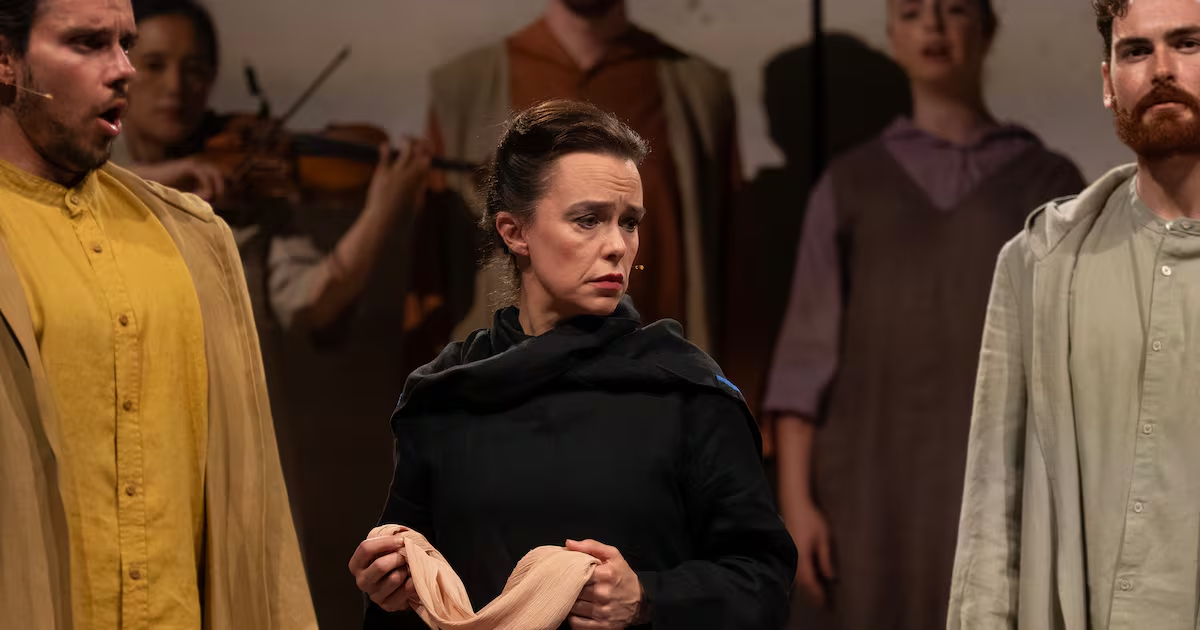
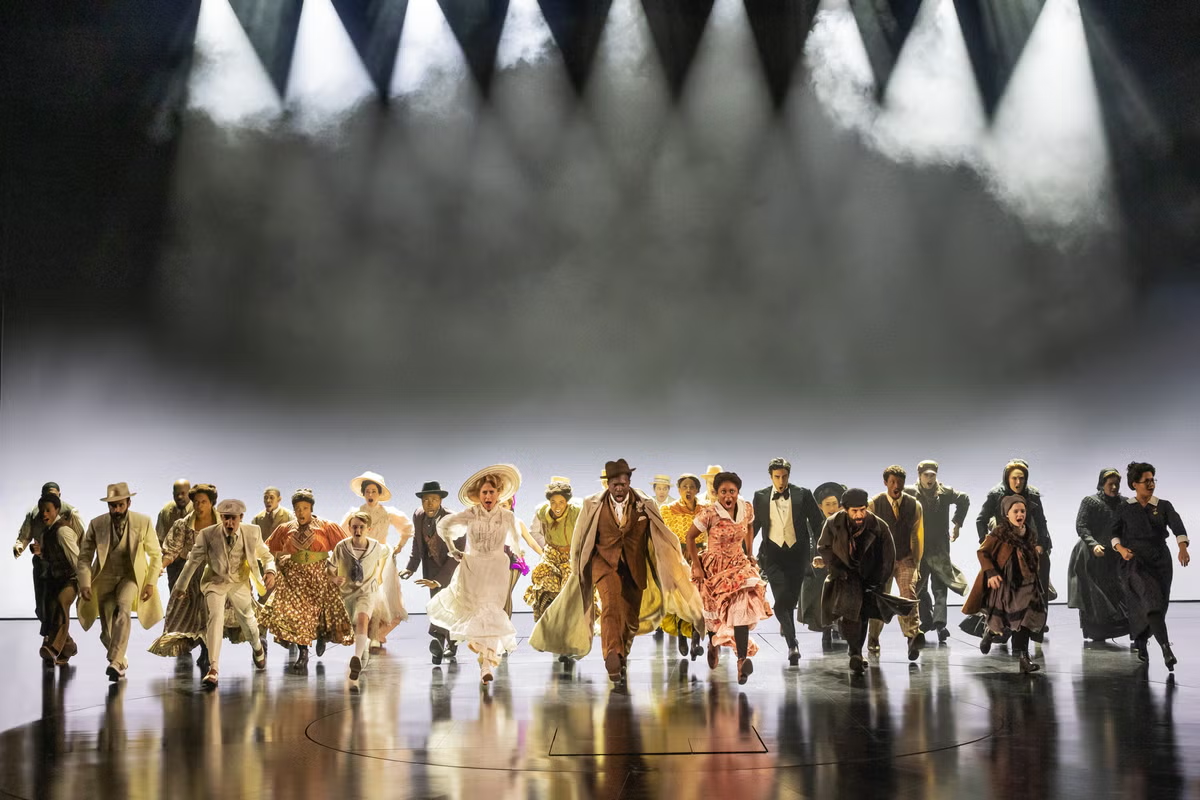
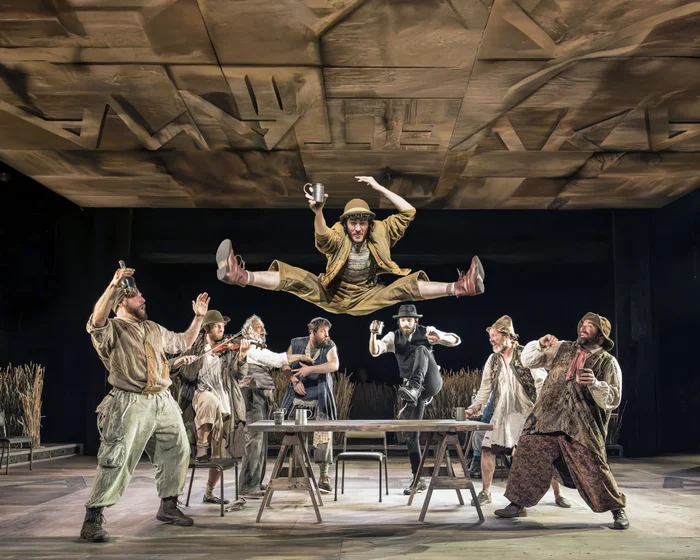
Opening in Sydney this July before touring nationally, Jordan Fein’s revival arrives in Australia following a record-breaking London season during which it was given five stars by the Guardian, and nominated for 13 Olivier Awards. Retaining the music, humour and heart that have made the musical a classic, Fein’s production of Fiddler on the Roof also aligns the spectacular with the story’s grittier emotional undercurrents.Iconic moments, reimaginedAudiences will still revel in the iconic score, from the vibrancy of klezmer Jewish folk music to the heartbreaking strains of the fiddler, but they will also encounter the familiar story through a new lens. Leading the cast is the Australian and West End veteran Troy Sussman as Tevye. “People who love Fiddler will love it more,” Sussman says. “But people who don’t know Fiddler might think: ‘Wow. Was this written last year?’”For a musical about courage in the face of change, it is perhaps no surprise that Fiddler on the Roof has continually reinvented itself. From Sholem Aleichem’s original stories to Broadway, Hollywood and now Fein’s production on the Australian stage, each incarnation has found new ways to illuminate its concerns.Sigrid Thornton, who will play the irrepressible matchmaker Yente, believes this production “sharpens its focus on broad humanist themes: the global scourge of dispossession and, of course, family, love and connection”.This production promises to find its emotional nuance through the things that have always made Fiddler on the Roof unforgettable: its music and movement. But this time, every song and step has deeper emotional weight that will allow classic numbers such as If I Were a Rich Man, Sunrise, Sunset and the iconic Bottle Dance to be heard and seen with renewed poignancy. Sussman says: “If it’s too important to speak, you sing. And if it’s too important to sing, you dance.”The emotional force extends beyond Tevye to the life of the shtetl, or community. While Tevye guides us through the story, Fiddler on the Roof is ultimately about an entire community enduring the upheavals of change. Sussman says: “In the first five minutes, Tevye introduces [the community] Anatevka and says: ‘This is how we’ve survived, because of our traditions’, and then we spend the next few hours whittling that down.”