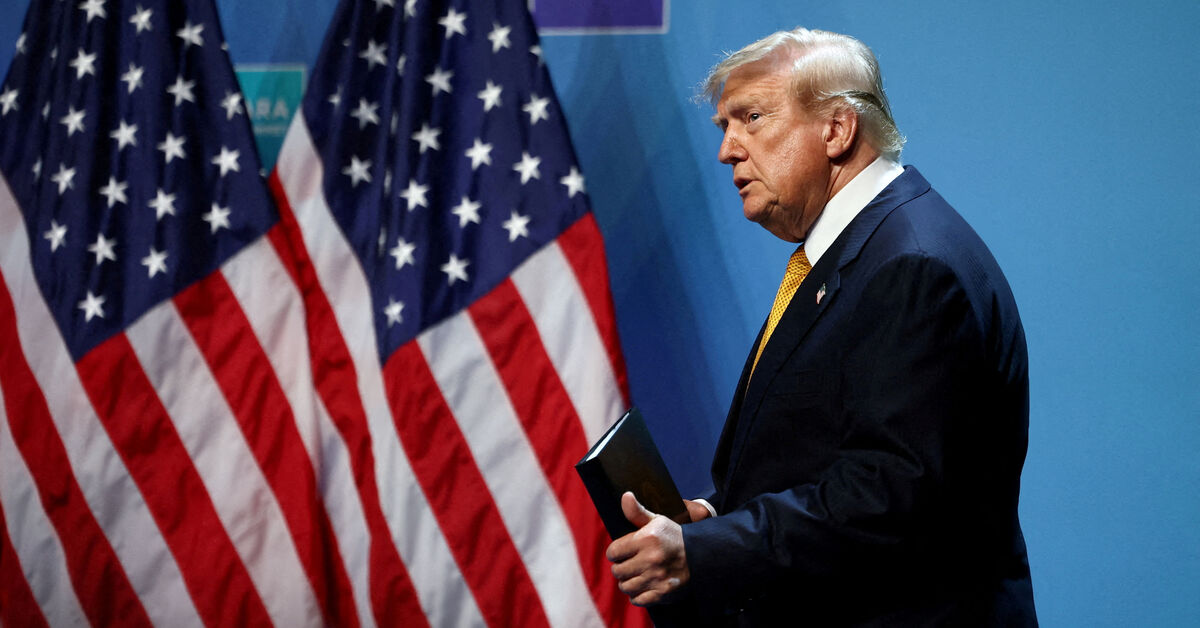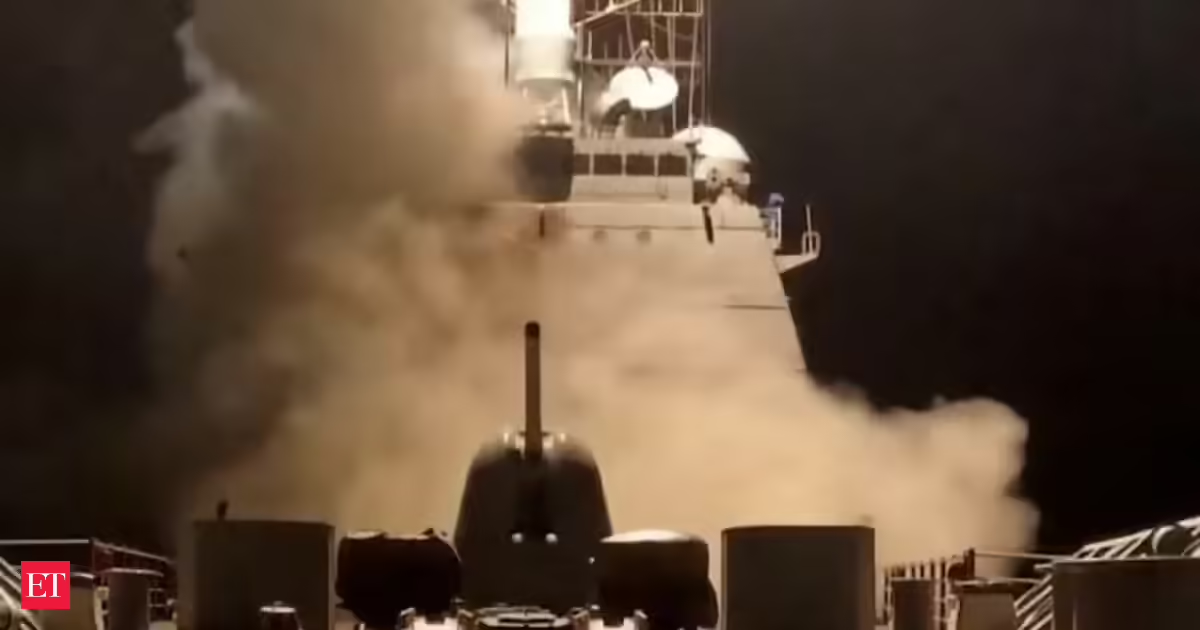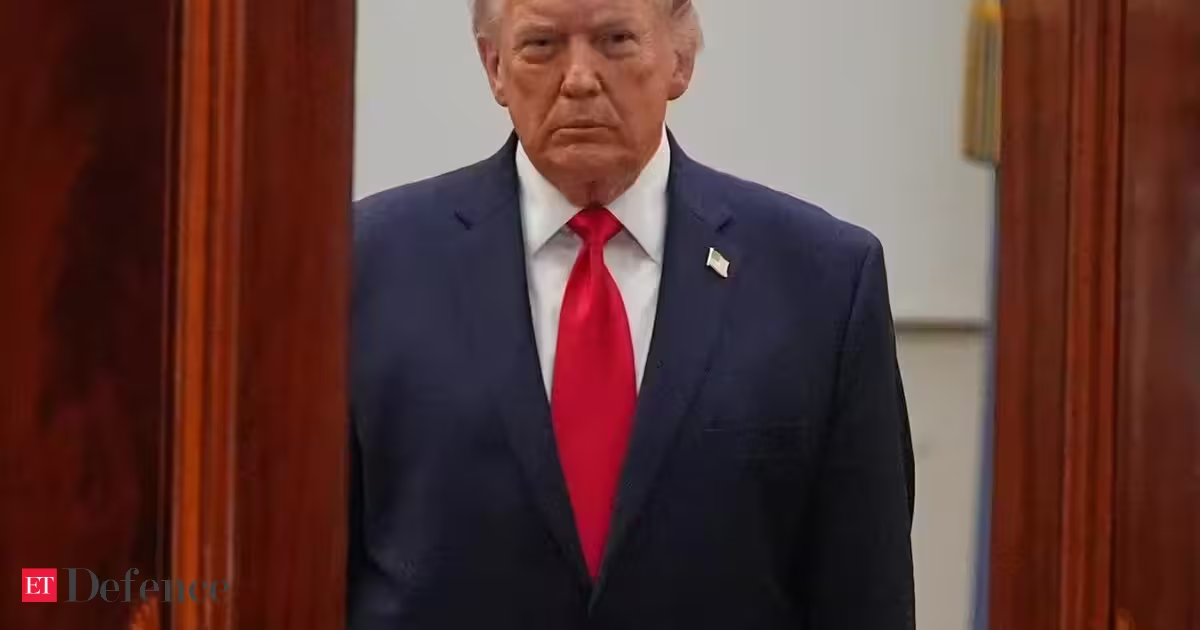
Not for the first time since he began a six-week war with Iran five months ago, US President Donald Trump finds himself stuck. He told the world last week he would unleash a hell yet unseen on Tehran, because Iran’s leaders clearly hadn’t been hit hard enough to understand the futility of resistance. Now, he has stood down, apparently after being advised he has no good military options.Two questions arise. First, why can’t US can’t impose its will on Iran, a vastly weaker military power, even after obliterating its conventional naval and air defenses? And second, how can Trump fail to understand this incapacity to the extent that he’s having to be restrained from fulfilling one popular definition of insanity — doing the same thing over and over in the expectation of a different result?Also Read: America weighs ground raid to grab Iran's buried uranium stockpileThe answer to both puzzles is that Trump and several key figures around him arrived in office having drawn the wrong conclusion from America’s growing incapacity to impose the geopolitical outcomes it wants through the threat or use of force. They blamed weak previous administrations, misguided attachment to a “rules-based order” that didn’t serve US interests, a woke approach to the armed forces, a misallocation of resources to Europe and a focus on do-gooding such as aid and nation-building, rather than war-fighting.No doubt indecisive leadership has played a role in past US foreign policy failures, but the administration’s diagnosis is otherwise fundamentally wrong. The US is failing and is likely to go on failing in Iran because technology has changed the nature of war and, with it, the balance between greater and lesser powers. Trump’s belief in the omnipotence of the US military is simply out of date.Also Read: Donald Trump dismisses concerns over US missile stockpiles amid Iran conflictAs Robert A. Pape, a University of Chicago professor and author of Bombing to Win: Air Power and Coercion in War, argues in a Foreign Affairs magazine article published last week, the same globalized economy that America’s post-Cold-War dominance made possible since 1991 has also democratized the spread of new technologies of war — from satellite imaging to chips and drones.So, unlike Saddam Hussein’s Iraq during the 1991 Gulf War, or Serbia as it tried to withstand NATO air strikes in 1999, so-called rogue states that dare defy US power now have both the means to fight back, albeit asymmetrically, and near-US-peers to help them do it. The result is that Washington can no longer count on winning always or cheaply as it tries to assert its interests.Iran has demonstrated already that, should Trump fulfill his threats to destroy the nation’s physical and energy infrastructure, it has the capacity to do the same to America’s Gulf allies and is highly unlikely to cry uncle, no matter how much damage it suffers. So, the US would expend stockpiles of vital and hard-to-replace weapons in the attempt, ultimately to no purpose. Tehran has shown, too, that it can draw on foreign partners, including China for economic support and Russia for targeting data. Proximity to a major choke point for the global oil industry, the Strait of Hormuz, has allowed it to supersize the impact of its array of missiles, cheap drones and fast boats. Where Trump is correct is in his belief that the diplomatic track he was on with Iran has run out of road. That happened some time back and was reflected in the extraordinarily vague ceasefire deal that’s now falling apart. Its language embraced incompatible US and Iranian understandings of how the war should end, a tension that was always unsustainable. Something will have to give.A recent article by Mohammad Javad Zarif, a former vice president and foreign minister of Iran, is indicative of how the Iranian side sees this standoff. The two countries can at this point never be friends, but they can manage their differences through a kind of Cold War detente, says Zarif, a relative moderate within Iran’s regime who negotiated the 2015 nuclear deal so despised by hardliners in his own country, as well as by Trump and Israel’s Prime Minister Benjamin Netanyahu.The rest of what Zarif writes makes clear just how hard this detente would be to achieve. For example, he explains Tehran’s need to control the Strait of Hormuz as existential, because the US weaponized it over decades to supply Gulf military bases that eventually were used to attack Iran. In his telling, lack of Iranian control over the waterway also allowed US allies to go on exporting their oil, even as the US blocked Iranian sales under Trump’s first-term “maximum pressure” sanctions. Free passage, says the former diplomat, proved a peace-time luxury the Islamic Republic can no longer afford to allow.Zarif’s suggested solution is a new security arrangement between regional powers, excluding the US and Israel. He proposes a separate truce with Washington that requires lifting sanctions and war reparations on the US side, with only a stated commitment not to build nuclear weapons from Tehran. No US president could accept such an outcome, which entirely fails to recognize the destabilizing regional role Iran has played by maintaining non-state militias in countries such as Iraq, Lebanon and Yemen, and by embracing the Oct. 7, 2023 terrorist attack on Israel in ways that contributed to the US-Israeli decision to attack.Trump now has no option but to find a way to end the war that acknowledges the limits of US power and gets a lot more creative about the sticks-and-carrots on offer to cajole Iran into an acceptable deal. This will require a python-like approach that takes a lot longer to reach its goal than Trump would prefer. For this kind of long squeeze he should enlist the participation of US allies in the Gulf and Europe, which have more at stake than the US, while also involving China and a post-Netanyahu Israel. He can start that effort now, or he can begin after another round of military escalation fails — further depleting US arsenals and creating new problems to solve along the way.(Disclaimer: The opinions expressed in this column are that of the writer. The facts and opinions expressed here do not reflect the views of www.economictimes.com.)
A misdiagnosis of US failings leaves Donald Trump stuck in Iran
Donald Trumps Iran strategy has reached a dead end despite repeated military threats, exposing the limits of US power. Americas inability to force Iran into submission stems from a technological shift in modern warfare, where drones, satellites and precision weapons have empowered weaker nations, making traditional US military dominance increasingly ineffective.
1,038 words~5 min read