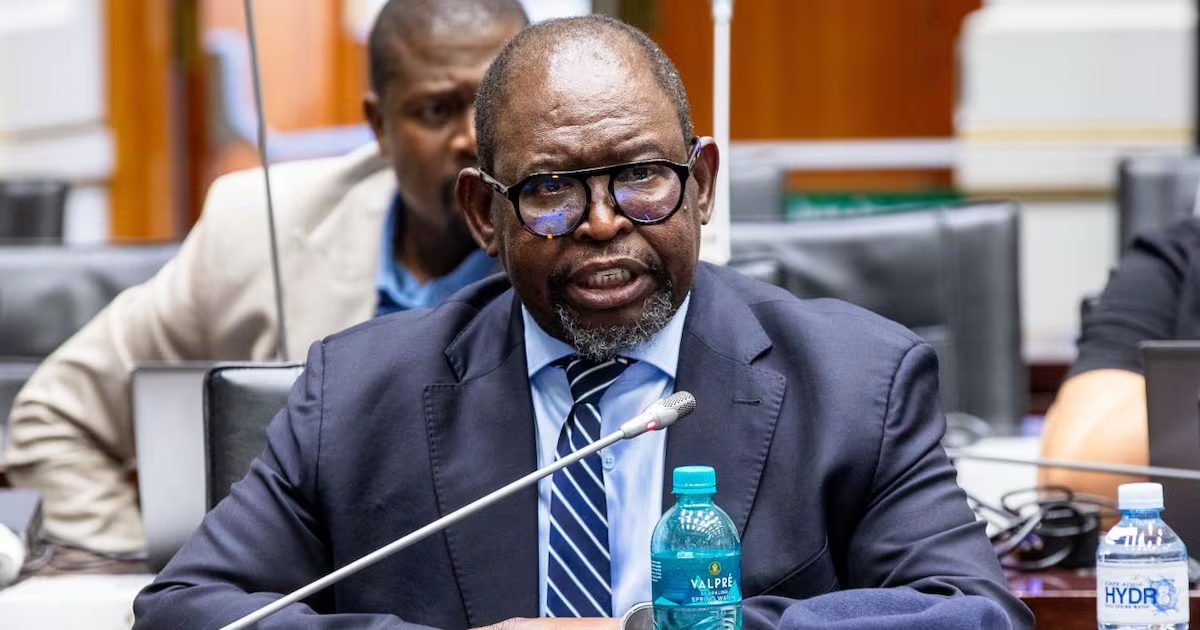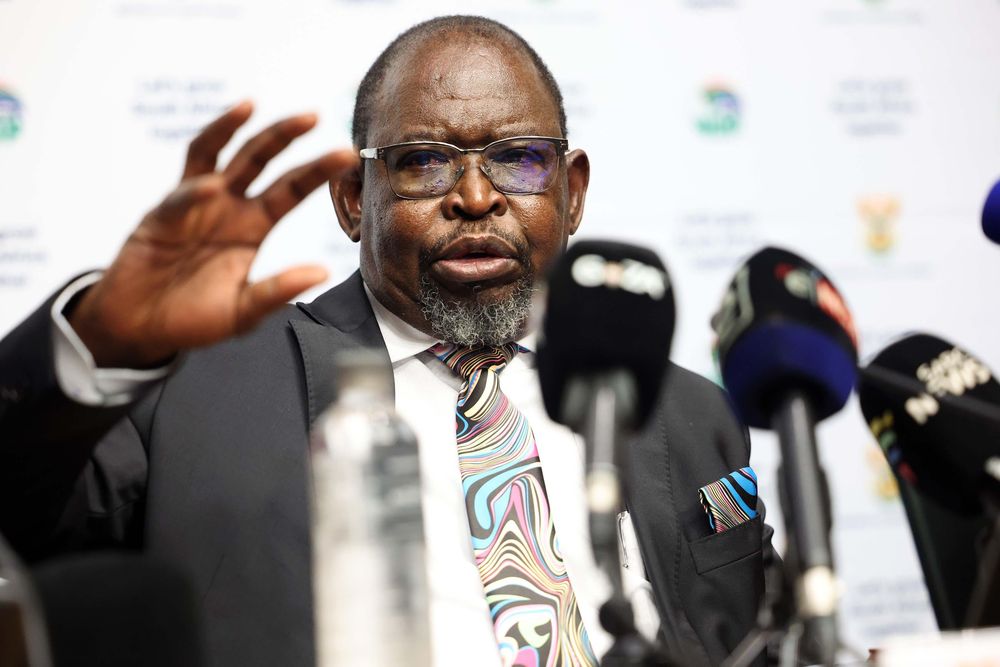
The wealth tax debate has become a tiresome binary: tax the rich or leave capital alone. Finance minister Enoch Godongwana is right to reject that framing. South Africa already taxes wealth through estate duty, donations tax, transfer duty and securities transfer tax ― collectively 1.15% of GDP, more than double the Organisation for Economic Co-operation and Development (OECD) average of 0.5%. Taxpayers earning above R750,000 are just 12% of the base yet contribute more than 60% of personal income tax. If 10% of high earners emigrate in response to a new levy, South Africa could lose R49bn annually in personal income tax alone.Only four countries still levy annual wealth taxes: Spain’s yielded just 0.04% of GDP in 2023. A blunt wealth tax is administratively noisy, politically fraught, and potentially self-defeating.But rejecting a bad idea is not the same as endorsing the status quo.South African non-financial companies held a record R1.8-trillion in bank deposits since July 2025 — up R700bn since 2019, with R186.1bn added in 2024 alone. The Reserve Bank notes that deposit growth has outpaced GDP growth since mid-2022, a sign of excess cash hoarding amid uncertainty. Meanwhile, the Government Employees Pension Fund (GEPF) manages R2.7-trillion and the broader pension landscape exceeds R3-trillion excluding the GEPF. South Africa has close to R5-trillion in institutional savings and corporate cash — yet unemployment exceeds 32%, infrastructure crumbles and 21% of children under five suffer malnutrition. As Stanlib chief economist Kevin Lings has observed, big corporates have strong balance sheets and are “waiting for opportunities”. The question is how to make those opportunities visible, viable and valuable.Reward productive capitalThis is not about forcing pension funds into politically selected projects — that would be a recipe for cronyism and capital flight. The logic is simple: if your capital builds factories, logistics hubs, renewable energy plants, export capacity or agro-processing facilities — if it creates jobs and generates new tax revenues — the tax system should recognise that. If your capital remains parked in cash, bonds or speculative instruments while benefiting from South Africa’s infrastructure and consumer base, the state is entitled to ask whether that arrangement is mutually beneficial.Consider two investments of equal value. Buying existing JSE shares provides liquidity and price discovery — useful, but it does not create a single new factory floor. Financing a manufacturing expansion creates jobs, generates corporate tax and multiplies through local supply chains. Their broader economic impact is not remotely comparable. A smart framework would not punish the first; it would simply make the second more attractive.South Africa already has some machinery for this. The 2022 Regulation 28 amendments to the Pension Funds Act set a 45% upper limit for pension fund infrastructure investment. The 12I tax allowance offers enhanced deductions for manufacturing and greenfield projects. The renewable energy 125% deduction is in place. The challenge is scale, visibility and the perceived risk-return profile of productive assets.Derisking, not dictatingThe single biggest obstacle to mobilising the R1.8-trillion cash pile is not greed — it is fear. Business confidence remains subdued, with the RMB/BER index at 39. Companies cite rising electricity costs, logistics bottlenecks and competition from imports. As Lumkile Mondi of Wits University notes, infrastructure disintegration and the absence of a clear developmental agenda are pushing firms to hold cash.Government action matters most not in threatening capital but in derisking productive investment. Better project preparation, standardised contracts, credit enhancements, blended finance and first-loss guarantees can narrow the gap between South African yields and global alternatives without resorting to subsidies.Infrastructure offers long-duration, inflation-linked cash flows that match pension liabilities — attractive if execution risks are managed. The key is to make productive investment not an act of patriotism, but a superior risk-adjusted choice.Wealthy individuals and institutions do not move capital merely because tax incentives change. They move capital when better risk-adjusted opportunities exist elsewhere. South African bonds have offered attractive nominal yields, sometimes in double digits, but currency risk, policy volatility and infrastructure failures have eroded the appeal. The challenge is to make South Africa competitive on global terms. If productive investments can deliver competitive returns while contributing to growth, many investors will choose them voluntarily. Capital is not ideological — it chases opportunity.Ethiopia’s investment incentivesIn February 2026 Ethiopia abandoned its 20-year-old “industry access equals tax exemption” model and adopted Regulation 586/2026, a performance-based incentive framework. Instead of blanket tax holidays that delivered “full incentives, empty industries”, the new system ties benefits to measurable outcomes: capital, job creation (with gender targets), local procurement, technology transfer, production volumes and compliance. Investors must sign performance agreements with the Ethiopian Investment Commission; those failing to reach targets lose incentives or must repay tax breaks. Corporate tax rates now range from 5% to 25% depending on strategic priority, with a $10m minimum investment threshold for most incentives. Accelerated depreciation allows 50% of capital expenditure to be written off in year one. The reform directly addresses the “empty industries” problem that plagues South Africa’s own incentive regime — a lesson in making tax foregone conditional on tangible economic delivery.Godongwana is right that a wealth tax would be a blunt instrument. But the status quo — R1.8-trillion in idle cash, R5-trillion in institutional savings under-deployed and a real economy starved of patient capital — is not a defence of market principles; it is a market failure. Wealth is welcome, but productive wealth should be treated better than dormant wealth. Not through compulsion but through a tax system that makes the most rewarding investments also the ones that build South Africa’s future. That is not redistribution. That is regeneration.• Mafinyani is senior partner in financial engineering & AI at specialised finance, risk and applied technology firm Intellica Analytics.
RUFARO MAFINYANI | Rewarding productive wealth and taxing idleness
Finance minister rejects wealth tax, wants incentives to unlock productive investment
943 words~4 min read