Thursday 16 July 2026 7:37 am
| Updated:
Thursday 16 July 2026 8:07 am
Wealth taxes are popular because other people have to pay them
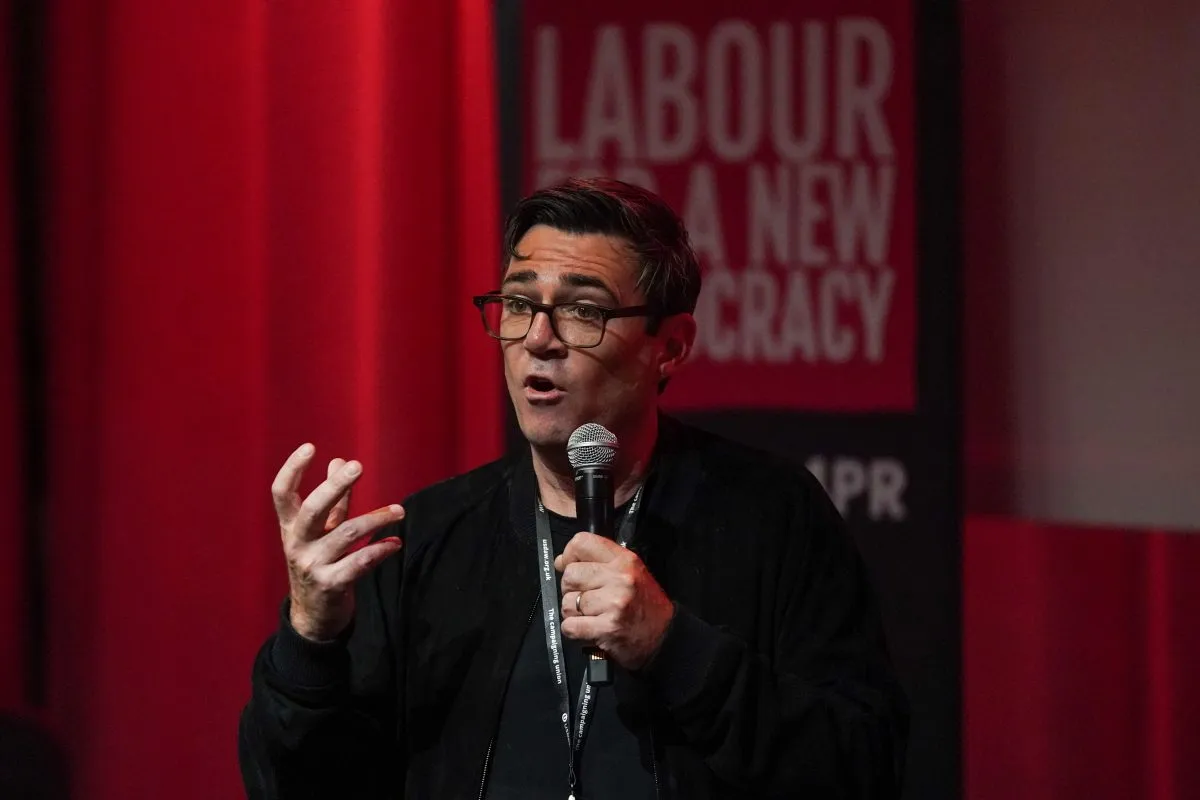
A wealth tax is once again rising up the agenda as Andy Burnham prepares to enter Downing Street.The tax is remarkably popular. YouGov polling last year found 75 per cent of Brits would be in favour of the introduction of a wealth tax, with only 13 per cent opposed. There are three clear reasons why this is the case. The first is that the British public love taxes paid by other people. See: taxes on banks and banker bonuses.The second, championed by City trader-turned-Youtuber Gary Stevenson, is an intuitive sense of unfairness and societal decay. The rich are getting richer, buying up more and more assets and eroding our middle classes, goes the theory, and we must stop them.The third is the distinction, popularised in the mid-twentieth century, between earned and unearned wealth. Income from labour is inherently more deserved than from the appreciation of asset values, common wisdom dictates, so a rebalancing of the tax system from labour to wealth – cutting income tax and upping capital taxes – better rewards hard work.Some of this is persuasive – in theory. But in practice, they simply don’t work, which is why most advocates focus on the moral case over the economic one. Countries that attempt a wealth tax end up scrapping them or massively watering them down. Tax the rich till the pips squeak and they will leave, taking their wealth with them. And that is before you get to the bureaucratic headache of having to value everyone’s assets every year (how much is my 19th century Russian doll collection worth, et cetera).But there is one narrower wealth tax I could get behind. One that has broad support among policymakers across the political spectrum and one which, crucially, might work.This is the proposal to scrap stamp duty and council tax and replace them with a land value tax – a tax on the land (not buildings) owned by individuals.There are lots of reasons to like this. First, it swerves the two main challenges to a wider wealth tax. Valuing land is easy because of the abundance of market data (ever been on Zoopla?) and, obviously, people can’t dig up their land and move it to Bermuda.Second, it encourages housebuilding and densification. Because the tax is on land and not buildings, there is a strong incentive to build more homes to reduce the tax bill on each one. This could help reverse our sluggish rate of housebuilding.Third, it would make the property market function better and allocate resources more efficiently. Our current stamp duty system punishes people for moving homes. It leaves us in a situation, such as in London, where young couples are raising families in small flats while older people don’t downsize from big houses because both would face steep charges for moving. That is a terrible use of our housing stock (yes mum and dad, you don’t need that five bedroom house anymore) and it makes the property market much less liquid. It also means people are less likely to move home for a good job opportunity, damaging our labour market.Fourth and finally, it is progressive. It beggars belief that a two-up, two-down in Blackpool could pay more council tax than Buckingham Palace. A system that ties taxes more closely to the value of what they are taxing is just common sense (it would also mean homeowners in the south pay a bit more than in the north, a reason Andy Burnham has thrown his weight behind the idea).Softening the blowSo what’s the catch? The biggest one is the sheer scale of this transformation. This is not a case of tinkering around the edges of rates and bands, a la Reeves. It would be the biggest tax change this century. Is Burnham really prepared to blow so much political capital on one policy? Thatcher learnt the hard way that meddling with council tax isn’t straightforward.The tax change will have winners and losers, and the losers will be the most vocal. Think of the poor old lady forced out of her million-pound home, they will say. Think of the poor man who just forked out £50k on stamp duty and now has to pay property tax all over again.There are ways to soften the blow. A new report by Roger Bootle and Ben Ramanauskas at Policy Exchange explores several helpful remedies, including a gentle, phased implementation of the tax, and the option for the elderly to defer the payment till death.None of the challenges are insurmountable, the authors write. If well-designed it could create “a system which is less distortionary, less complex to administer and enforce, more progressive, and fiscally neutral.” In other words, it would be better. Finally, a wealth tax we can all get behind.