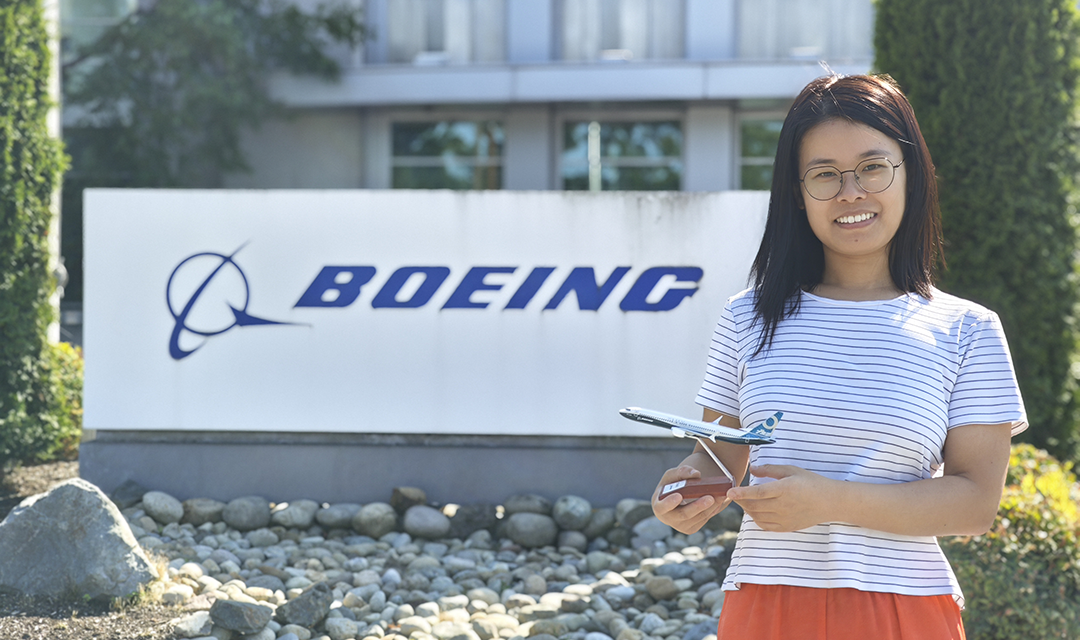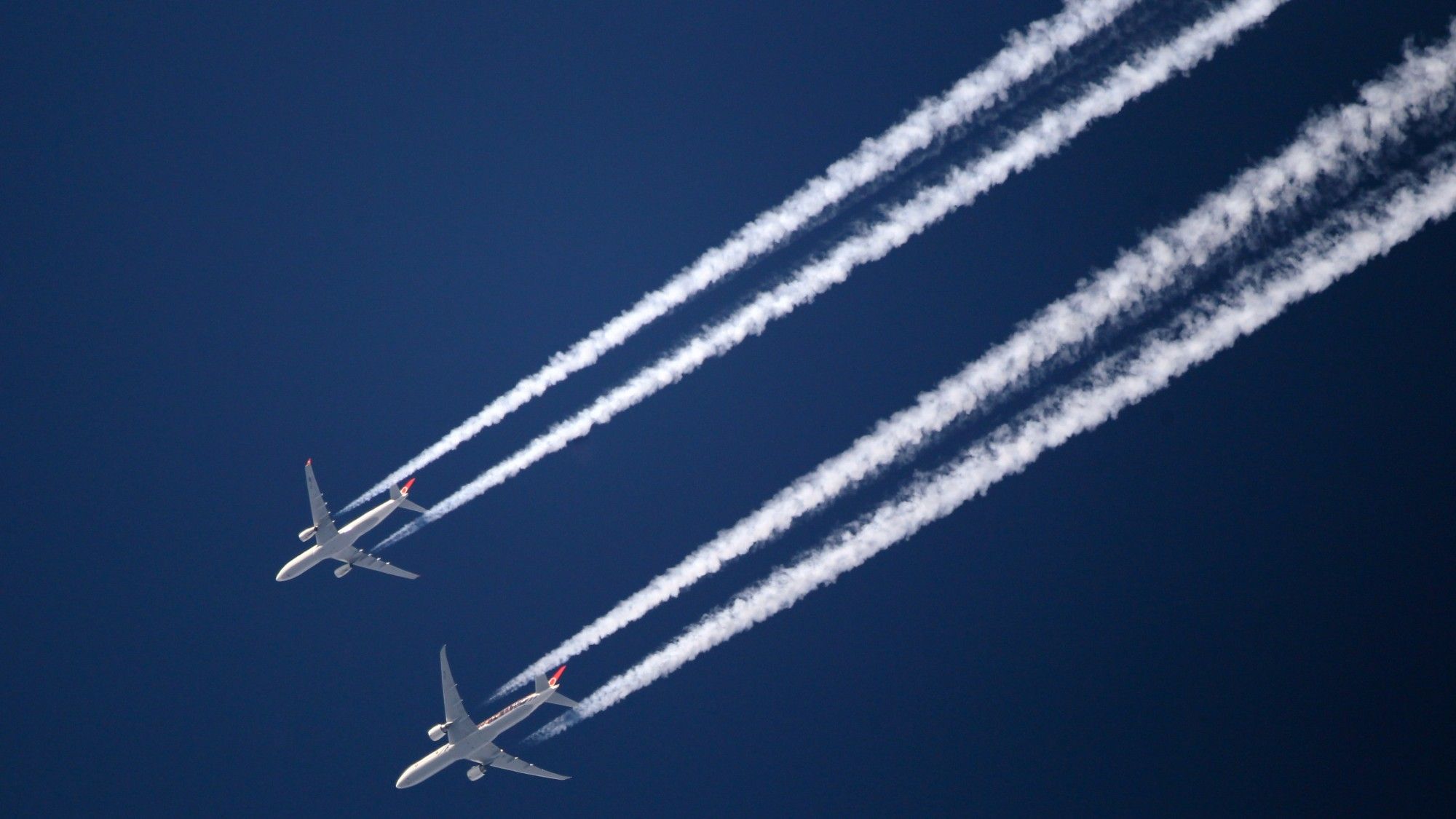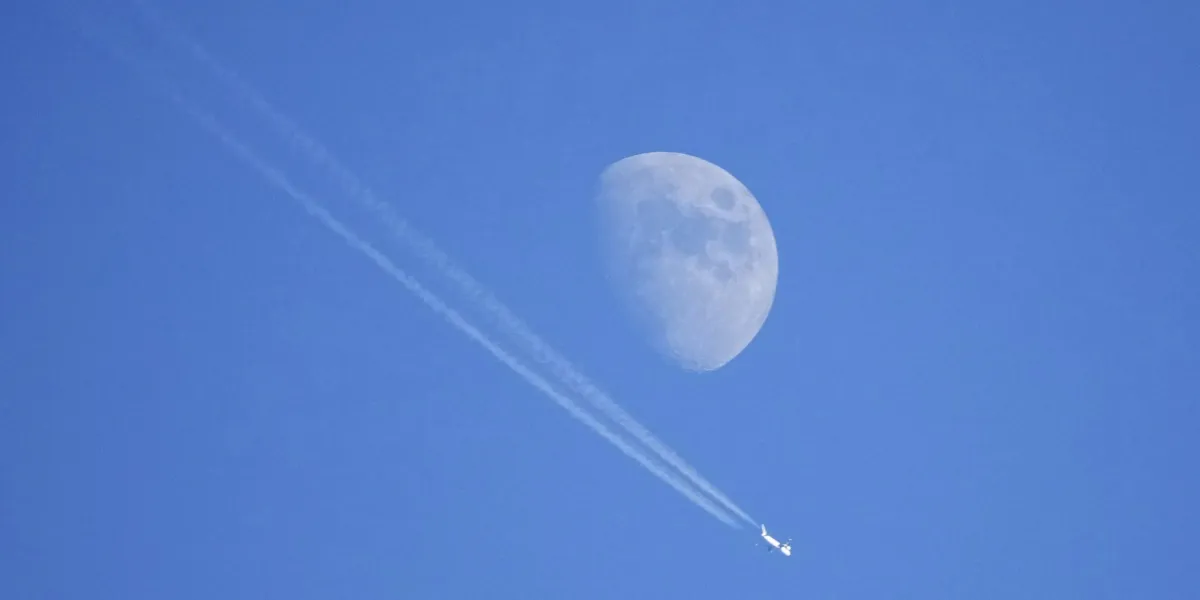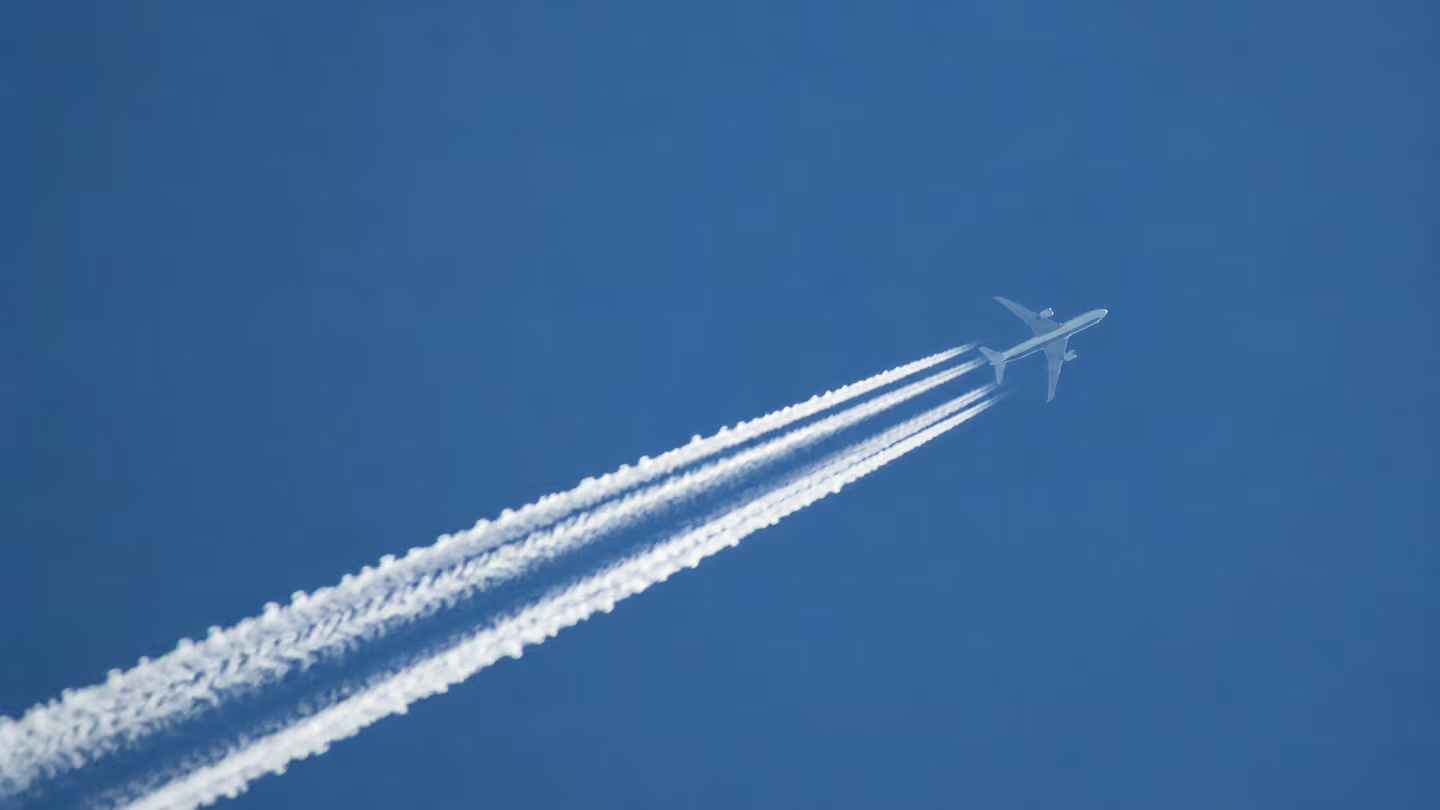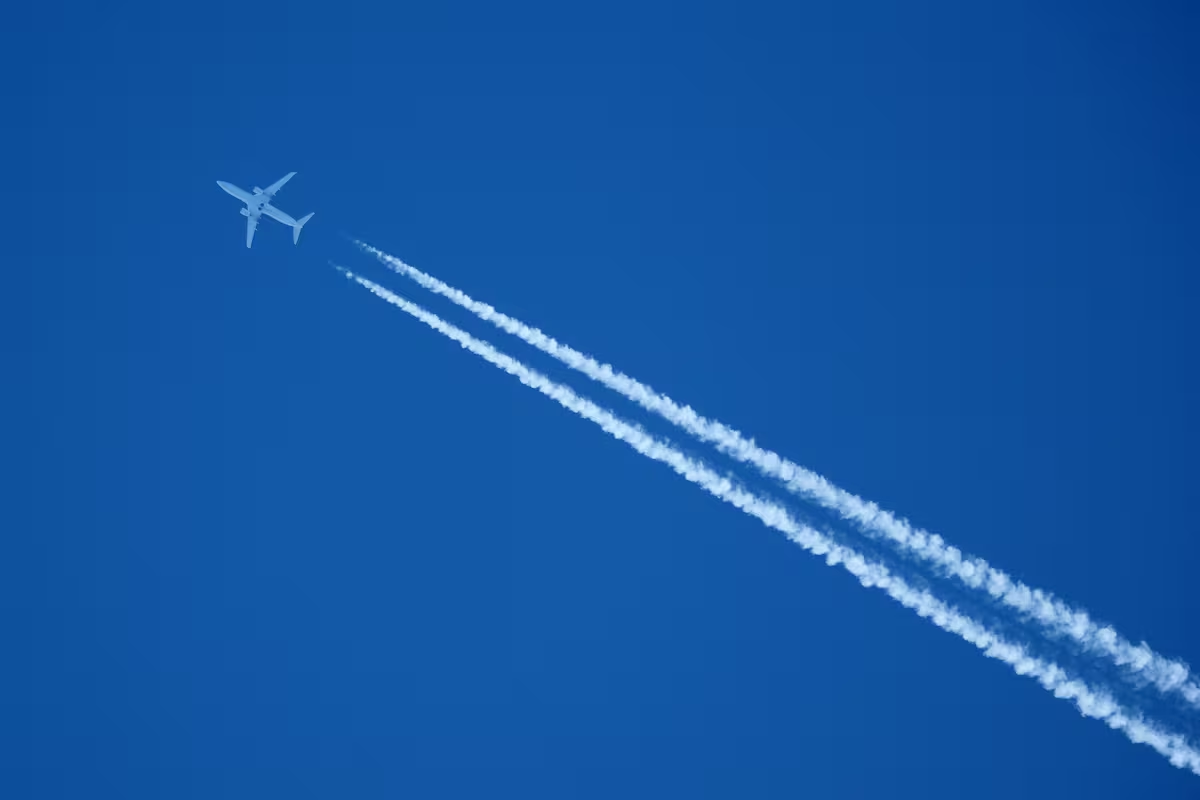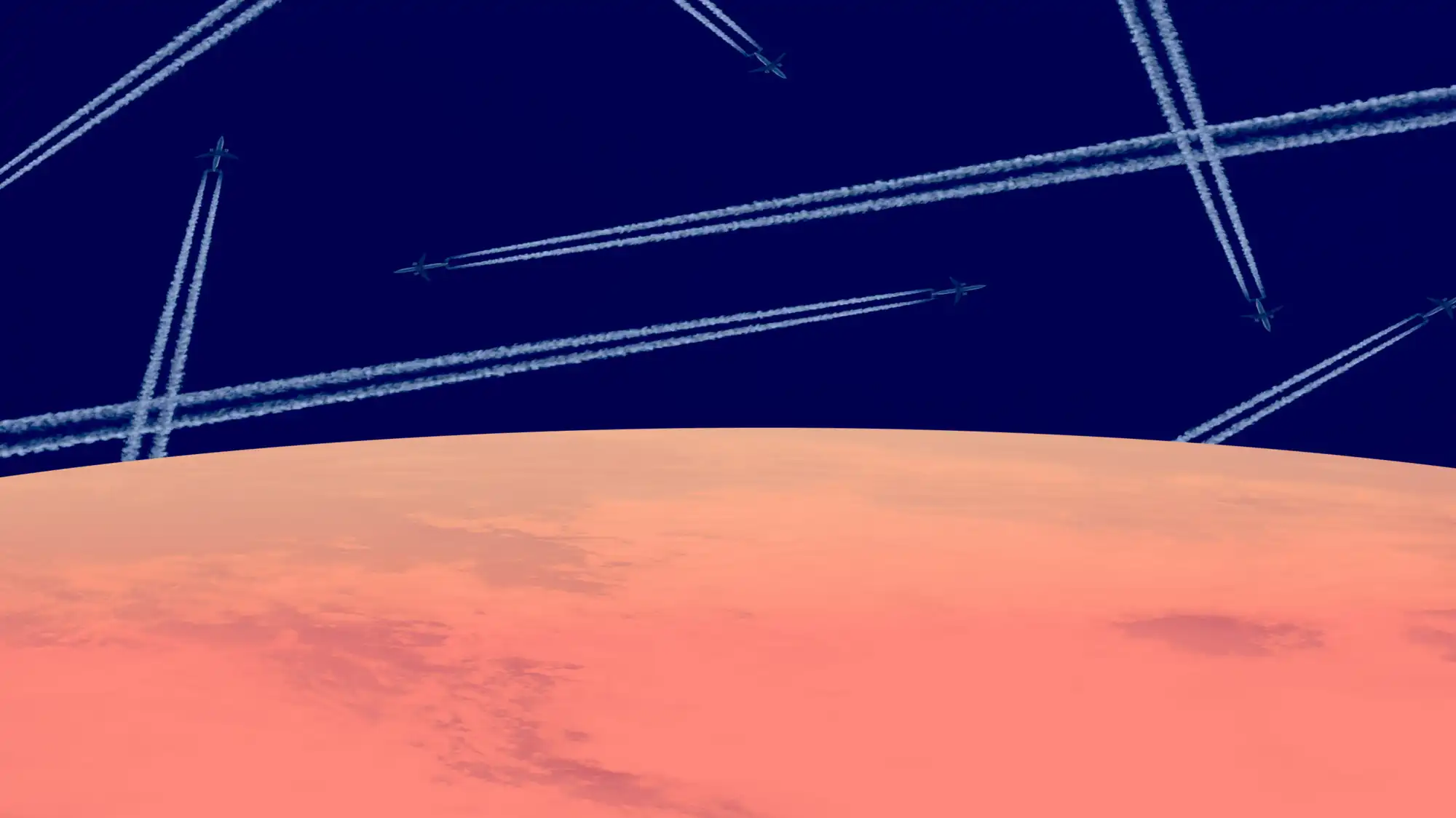
On a recent morning at Denver International Airport, retired Air Force pilot Tyler Robarge watched as jet after jet took off, bound for San Jose, California; Chicago, Illinois; and Casper, Wyoming, each one spewing planet-warming carbon dioxide into the atmosphere. But that’s not all.“We only get about half the picture of aviation's impact if we only focus on the CO2,” said Robarge, now with the nonprofit Contrails.org, a group focused on reducing the climate impact of condensation trails.When those jets get up to cruising altitudes, and the hot, humid exhaust from their engines hits cold air, ice crystals can form around the soot and other particles, creating those white plumes we see in the sky. Typically contrails dissipate quickly, but in especially humid conditions they can persist for hours, spreading into a layer of artificial cirrus clouds that can trap heat. Researchers estimate contrails account for 1-2% of all human-caused global warming.The good news is that contrails can be avoided.“I had spent my whole career trying to avoid contrails from the sense of not being seen in the air,” said Robarge, who spent 21 years flying and then testing fighter jets in the U.S. Air Force. “Fundamentally, what you need to do is be able to predict where they're going to form and then intelligently route around them.”Tyler Robarge, a retired U.S. Air Force test pilot, now works with commercial airlines to reduce the climate impact of condensation trails. Amy Scott/MarketplaceToday, Robarge runs trials with commercial airlines using AI-driven forecasts. The areas in the atmosphere where long-lasting contrails tend to form are sort of pancake shaped — broad, but thin — so pilots can adjust their altitude by just a few thousand feet to avoid them. Passengers may not even notice.“These are deviations on the order of what pilots do every day on every flight to avoid turbulence, to get better tailwinds, to find — to avoid — traffic conflicts, and so forth,” said Robarge. Last year, American Airlines teamed up with Contrails.org and Google for a trial involving hundreds of flights from the United States to Europe.“We had a treatment group and a control group,” said Jill Blickstein, American’s chief sustainability officer. “We asked the pilots, if they were presented with a contrail avoidance plan, to fly it.”Using satellite imagery and other data, researchers found that the flights that followed a contrail avoidance plan had a 62% reduction in contrail formation, compared to the control group, with an estimated 69% reduction in warming.Eventually researchers plan to expand testing to all flights in an airspace. A big question they need to answer is how much more fuel this might take. If, say a pilot flies a little lower to avoid contrails and then climbs back up, Blickstein said, “we will be burning a little more jet fuel; we will be emitting a little bit more CO2.”Not enough, researchers say, to offset the climate benefits, “but that does have a financial impact on the airline,” Blickstein said.That’s enough of a concern that American paused its trials this year, after President Trump’s war in Iran sent jet fuel prices soaring.But as climate solutions go, contrail management could be relatively affordable, said Andrew Chen with the clean energy research group RMI. Sustainable aviation fuel can cost between $200 and $400 per ton of carbon abated, he said. The equivalent impact of contrail avoidance is much cheaper.“When you even it all out, you're now talking about a mitigation that could come out to something like $5 U.S. per ton of carbon abated,” he said. Airlines may have other incentives to manage contrails. Last year, the European Union began requiring airlines to monitor and report their non-CO2 climate impacts, laying the groundwork for potential future regulations.“Right now, we are focused on advancing the science and ensure that if there is a future where regulation happens, that it happens in a smart and informed and effective way,” Robarge said. “If regulation comes to pass, the airlines that have been more involved will likely be at a competitive advantage.”
To reduce their climate impact, airlines target contrails
Contrails, those white lines that form behind airplanes in certain atmospheric conditions, can have a significant climate impact. The good news? They can be avoided.
672 words~3 min read