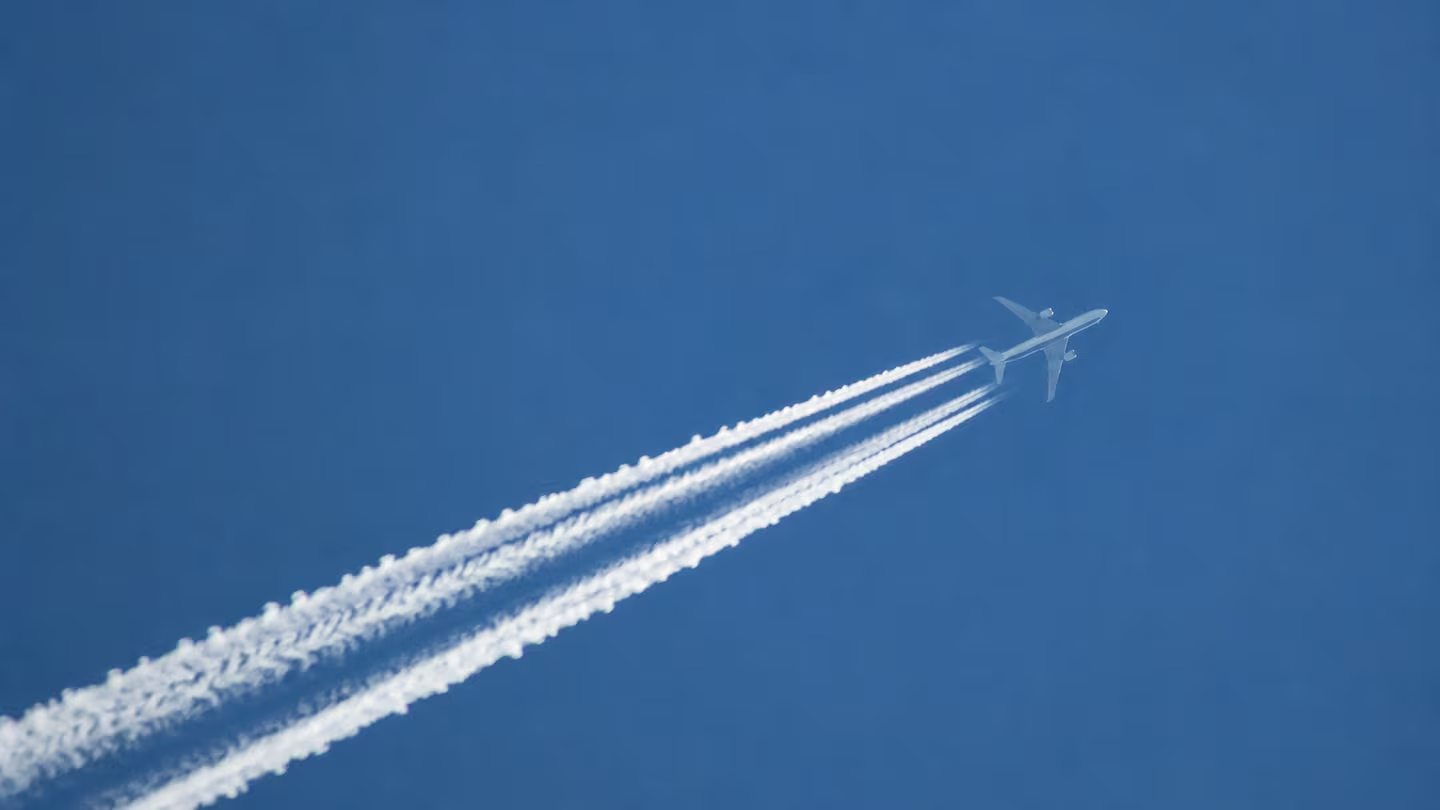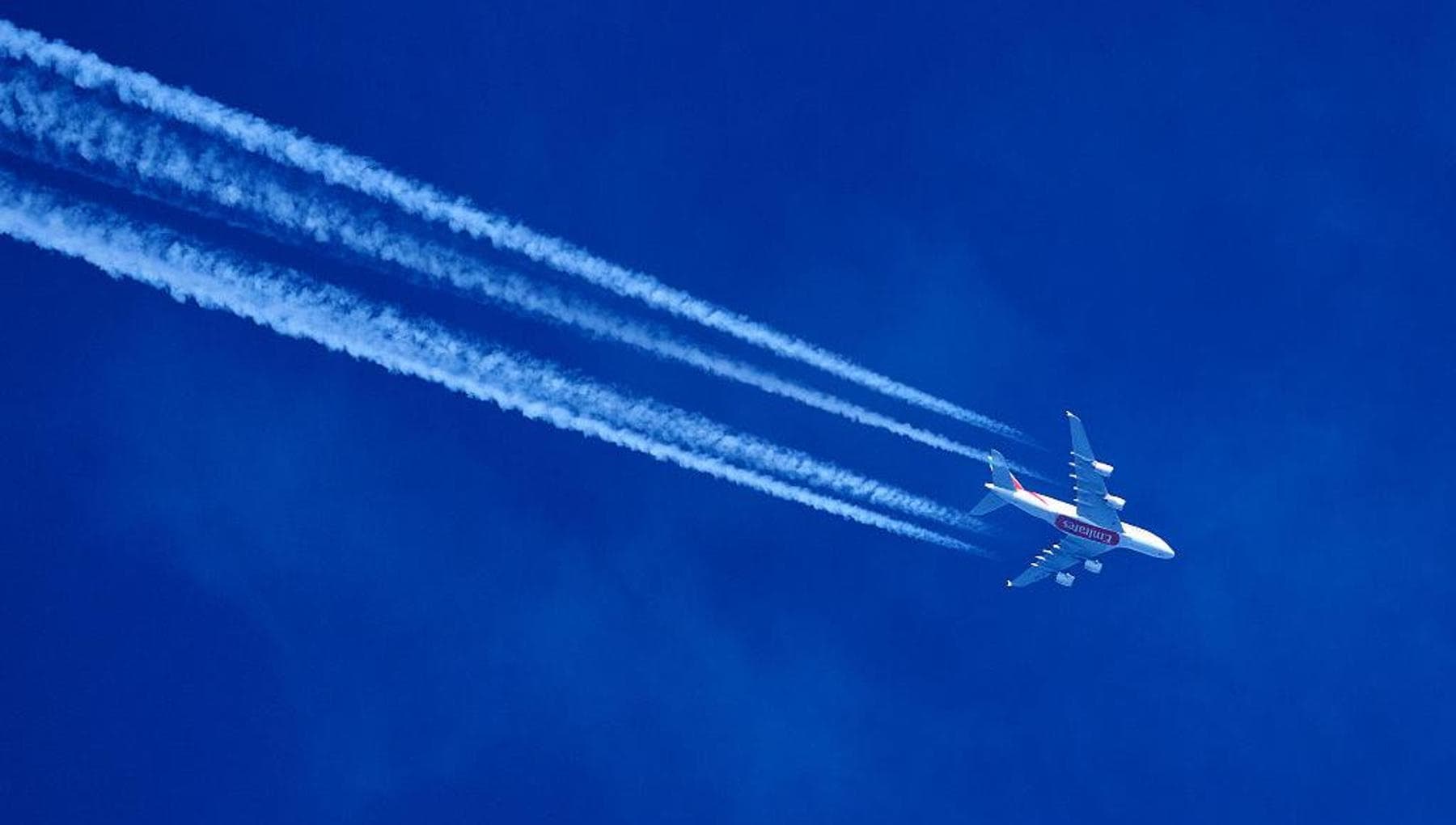
Aviation accounts for 10 percent of U.S. transportation greenhouse gas (GHG) emissions and roughly three percent of the nation’s total GHG production, including carbon dioxide (CO2). But the effects of airplane travel on the environment extend to more than just CO2. These non-CO2 effects known as contrails—the long, white streaks behind airplanes in the sky—have historically received far less attention than decarbonization efforts. But Han Ding is hoping to change that.
Ding, a mechanical engineering graduate student in Hamish Gordon’s group, has worked as an intern at Boeing for the past two summers. As a member of Boeing’s Graduate Researcher Program (GRP), Ding contributed to advanced modeling and sustainable aviation research, including the development of high-resolution weather simulation workflows for contrail forecasting and mitigation. Her work supported Boeing’s efforts to reduce aviation’s environmental impacts while building cross-functional bridges between research, data engineering, and real-world applications in the global aviation industry.
Contrails (also known as condensation trails) form when hot, moist exhaust from aircraft engines mixes with the cold, ambient air at cruising altitudes, typically about 20,000–30,000 feet. When the air is cold enough, typically below minus 40 degrees Celsius, water vapor condenses on small soot and sulfate particles from engines to form supercooled liquid droplets, which rapidly freeze into ice crystals and form line-shaped ice clouds.