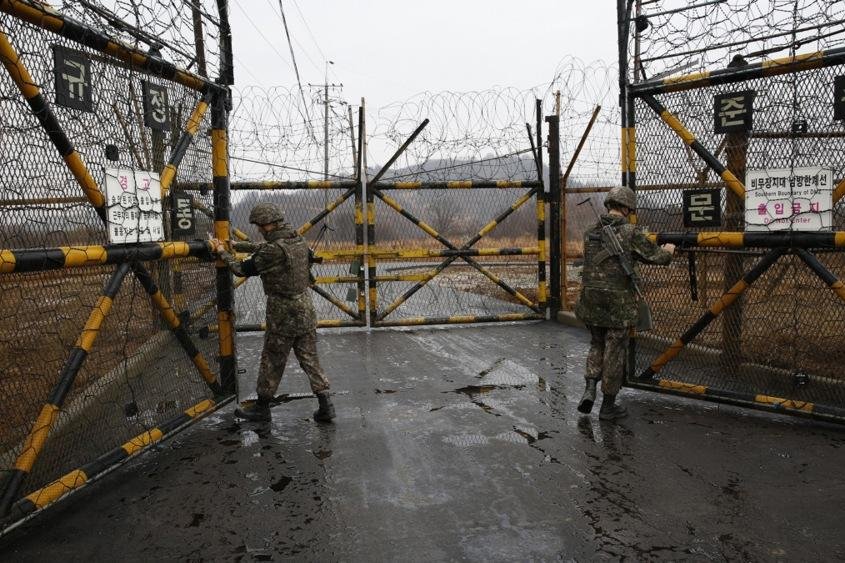
South Korean soldiers open the gate of the Demilitarized Zone, a site of fierce battles in the 1950-53 Korean War, in the central section of the inter-Korean border in Cheorwon, Gangwon Province, South Korea, in December 2018. File Photo by Jeon Heon-kyun/EPA
July 24 (UPI) -- "What's your background?"
When faced with such a loaded question, often filled with political implications that signaled national allegiances, the answer that every person from South Korea, North Korea or the diaspora gives is the same: "I'm Korean."
The weight attached to this common answer isn't political, but historical. Throughout the history of Korea, its people survived countless invasions by forming a united front. In even simpler terms, Koreans became defined by a collective moral compass that served as a spiritual guide whenever state structures failed to protect them.
Hongik Ingan, which means "to broadly benefit all humanity," is a moral principle that strives to improve the social welfare of the world rather than the individual. Koreans, no matter their origin, live with a deep, historic grief that can be rectified by supporting one another through turmoil.