This audio is auto-generated. Please let us know if you have feedback.
Editor’s note: This story is part of a series highlighting takeaways from a Supply Chain Outlook event hosted by Supply Chain Dive, Trucking Dive, Manufacturing Dive and Packaging Dive. Event sponsors had no influence over editorial sessions or coverage. Register here to watch a replay of the event.
Shippers must monitor and understand ongoing discussions around the United States-Mexico-Canada Agreement to react quickly to changes and help plan ahead, James Kim, ArentFox Schiff international trade partner, said during Supply Chain Dive’s July 15 event, “Supply Chain Outlook: Trends and Risks to Watch in 2026.”
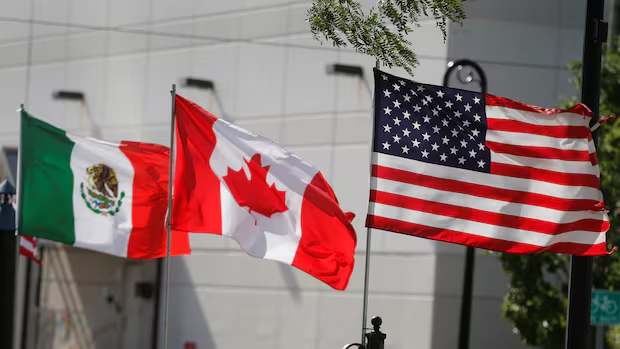
Leaders from the three countries met earlier this month to kick off the joint review process of the trilateral trade agreement currently set to expire in 2036. The U.S., Mexico and Canada did not immediately extend the agreement for another 16 years, instead opting to launch an annual review process.
The U.S. is currently driving most of the negotiations, according to National Security and Global Trade Partner at DLA Piper Brian Janovitz. The U.S.-Mexico negotiations have been ongoing in a “relatively intense format,” he said, further noting that there is a “lot of work left ahead.” Meanwhile, conversations between the U.S. and Canada have “basically been nonexistent to this point” besides check-ins.