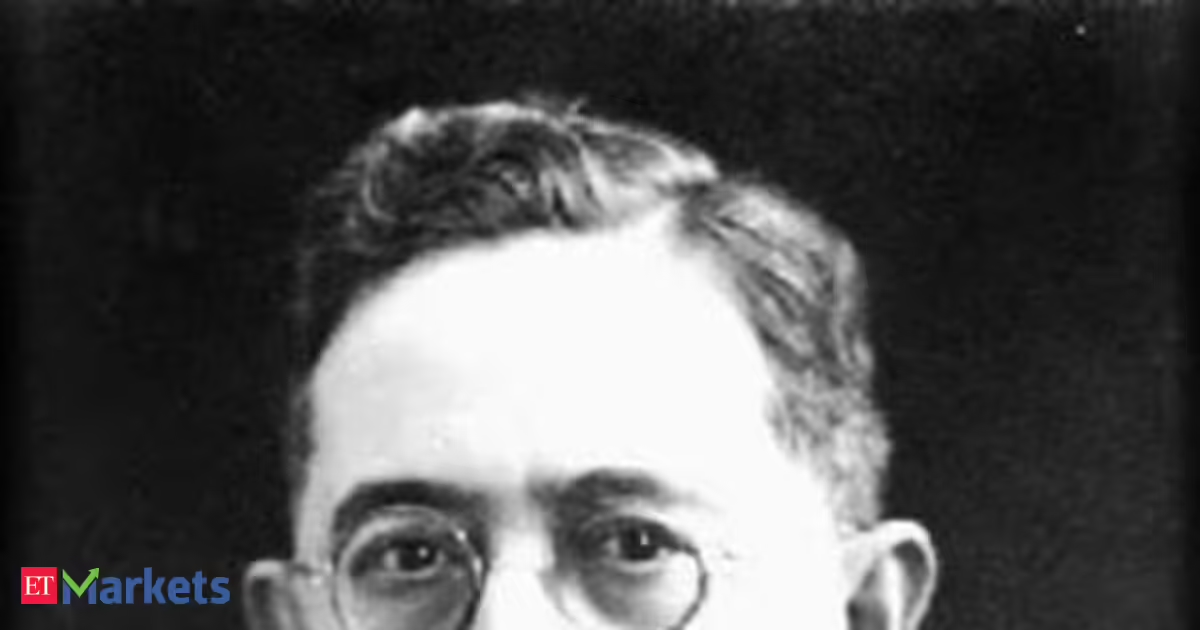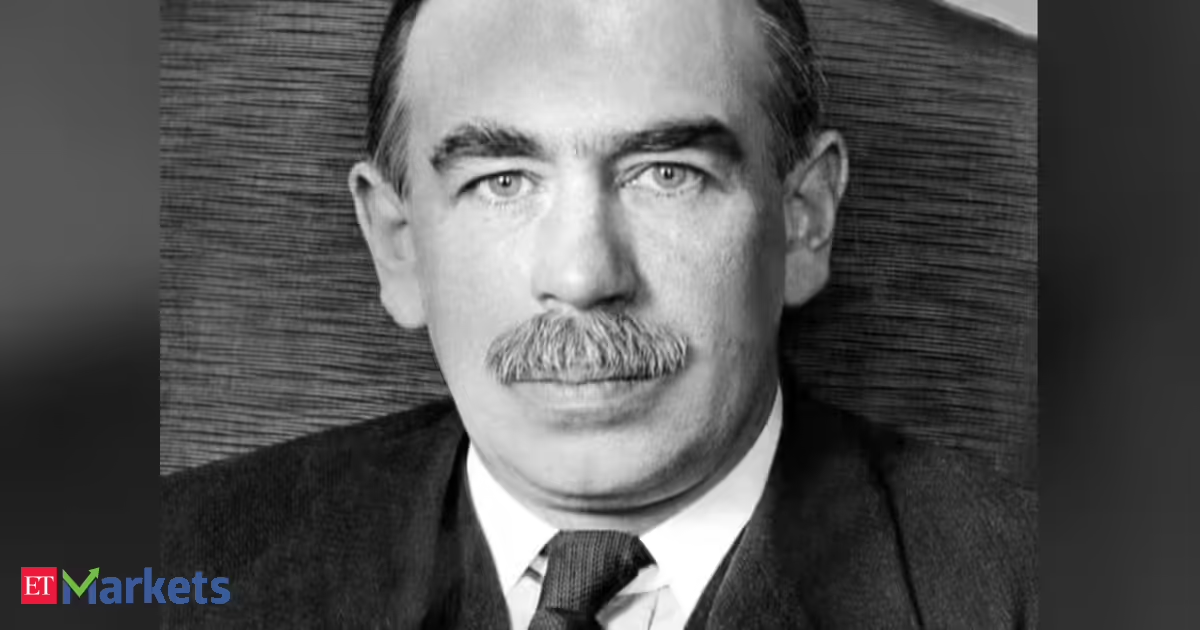
Financial markets have always been prone to bouts of fear, but 19th-century economist and philosopher John Stuart Mill offered a perspective that remains strikingly relevant for investors today."As a rule, Panics do not destroy capital; they merely reveal the extent to which it has been previously destroyed by its betrayal into hopelessly unproductive works." John Stuart MillPanics expose, they do not create lossesAt its core, the quote suggests that market crashes or panics are rarely the true cause of financial destruction. Instead, they expose weaknesses that had been building long before the crisis erupted.During periods of optimism, investors often pour money into speculative ventures, overvalued assets or businesses with weak fundamentals. As long as liquidity remains abundant and confidence stays intact, these investments may appear successful. However, when sentiment turns and markets correct, the underlying flaws become impossible to ignore.The cost of poor capital allocationMill's observation underscores that panic acts more like a spotlight than a wrecking ball. It reveals where capital has already been misallocated rather than creating the losses itself. History offers several examples, from the dot-com bubble to the global financial crisis, where excessive risk-taking and poor capital allocation were masked during bull markets before being laid bare in downturns.This highlights the importance of directing capital towards productive businesses and investments that generate sustainable value rather than speculative assets driven solely by market enthusiasm.A lesson for long-term investorsFor investors, the quote serves as a reminder that sustainable wealth creation depends on disciplined capital allocation rather than chasing speculative gains. Companies with strong balance sheets, durable earnings and productive investments are generally better equipped to withstand periods of market stress.In today's environment of elevated valuations in certain sectors, rapid technological disruption and shifting macroeconomic conditions, Mill's words reinforce the importance of focusing on fundamentals over market euphoria. While volatility is inevitable, long-term investment success often depends less on avoiding panics and more on avoiding unproductive investments that panics eventually expose.
Quote of the day by John Stuart Mill: "As a rule, Panics do not destroy capital; they merely reveal the extent to which it has been previously destroyed by its betrayal into hopelessly unproductive works
John Stuart Mills quote highlights that market panics do not create losses but reveal prior misallocation of capital. The piece explains how speculative excesses built during bull markets surface during downturns, offering a lesson for investors to prioritise fundamentals, disciplined capital allocation and sustainable long-term value creation.
322 words~1 min read