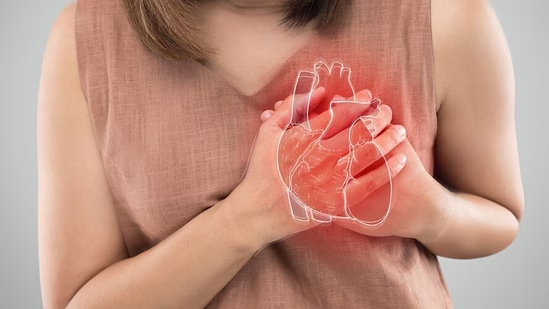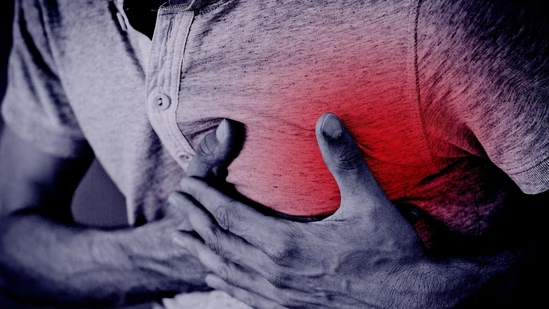
Some heart disease signs are subtle. (Picture credit: Pixabay ) From low energy levels to swollen ankles, expert shares why young people should not ignore some subtle signs. Heart disease does not unfold dramatically. Before it becomes an urgent, life-threatening condition marked by severe chest pain, it may first manifest through signs and symptoms. You may easily misinterpret them as exhaustion, insufficient sleep or excessive stress. However, if you notice an unexplained or recurring change, it warrants closer attention so that you can seek a timely diagnosis and potentially avoid serious complications.ALSO READ: Can poor sleep increase hypertension risk? Cardiologist shares 5 bedtime habits to manage blood pressureDr Ajeet Bana, chairman of cardiac sciences at EHCC Hospital and a senior cardiothoracic surgeon, shared five symptoms he never ignores, even in those people who otherwise appear healthy. He stated that while chest pain is a heart-related symptom, it is not the only symptom.Before discussing the signs, he first addressed a ‘shift’ in heart diseases.Has heart disease changed?We first asked whether heart disease has changed over the years. The cardiologist agreed, observing that the age profile of people being diagnosed is gradually changing. But which age group was traditionally considered most at risk, and which demography is also now at risk?He answered, “Heart disease has changed significantly over the past two decades. Although heart disease remains most common in older adults, it is increasingly being diagnosed in people in their thirties and forties due to changing lifestyle and metabolic risk factors.”This means that, since heart disease is usually viewed as an ailment affecting older people, young and seemingly healthy individuals may have a ‘false sense of security’. The cardiologist stated the risk is because of long working hours, prolonged sitting and irregular sleep, along with metabolic risk factors such as diabetes, hypertension, obesity and elevated cholesterol.However, Dr Bana also took a moment to address the advances in diagnosis and treatment that have made it possible to detect and manage heart disease much earlier. The key is to recognise the early warning signs and seek a timely medical evaluation.What are the early signs of heart disease?Don't confuse the chest pain with acid reflux. (Picture credit: Shutterstock)While heart disease encompasses several different conditions, certain early warning signs may indicate that something is wrong with the heart. These symptoms are not always dramatic or immediately recognisable. They may appear as subtle changes in energy levels and breathing.Dr Bana shared five signs which he would observe often:1. A noticeable decline in staminaSomeone who comfortably managed a brisk walk or a busy workday suddenly begins slowing down, avoiding physical activity or taking frequent breaks.A gradual reduction in exercise capacity reflects an underlying change in heart function and needs medical evaluation.2. Chest discomfort that follows a patternChest pain is not always sharp or severe. It may feel like heaviness, pressure or tightness that appears during physical activity and settles with rest.Some people experience the discomfort in the jaw, shoulders, upper back or arms instead of the chest.Recognising this pattern early often leads to timely diagnosis.3. Swelling that keeps returningShoes becoming tighter by evening or deep marks left by socks are frequently dismissed as the result of travel or long hours of sitting.Persistent swelling around the ankles and feet, particularly when accompanied by reduced exercise capacity or breathlessness, may indicate that the heart is struggling to pump efficiently.4. Fatigue that changes your routineFeeling tired after a demanding day is expected. Fatigue deserves attention when it begins affecting everyday activities despite adequate rest.Women, in particular, may experience persistent fatigue, nausea or discomfort in the jaw or back instead of the classic presentation of chest pain, making early recognition especially important.5. An irregular heartbeatA fluttering sensation, skipped beats or episodes of rapid pounding should never be dismissed simply as stress or excess caffeine, particularly when accompanied by dizziness or fainting.While many rhythm disturbances are benign, some require timely treatment because they increase the risk of stroke and heart failure.How to protect your heart before symptoms become severe?Go on runs regularly. (Picture credit: Unsplash)One of the effective ways to protect your heart is to actively take preventive action before your warning signs become severe. First begins with recognising the symptoms, which the cardiologist listed above. Moreover, you also need to understand your personal risk, which Dr Bana outlined could be based on age, family history and existing health conditions.The other precautionary measures mentioned, as recommended by the cardiologist, are: “Adults should also avoid smoking, limit alcohol intake and discuss cardiovascular risk with their physician based on age, family history and existing medical conditions. For most healthy adults, annual health screening from the age of 40 is a practical starting point. Those living with diabetes, hypertension, obesity or a family history of heart disease should discuss earlier and more frequent cardiovascular assessments with their physician."Everyday habits also strongly influence your cardiovascular health. Dr Bana suggested:Breaking long periods of sitting with short walksAiming for 30 to 45 minutes of brisk walking or equivalent activity on most daysMaintaining a healthy body weightSleeping seven to eight hours regularly.The expert's parting advice offered reassurance: when recognised and treated promptly, many forms of heart disease are highly manageable.More about the expertDr Ajeet Bana has over 30 years of experience. His areas of special interest include small-incision coronary artery bypass grafting (CABG), minimally invasive coronary artery bypass surgery, bypass surgery, heart failure treatment, left ventricular assist devices (LVADs) and heart transplants, off-pump CABG, minimally invasive valve replacement and atrial septal defect (ASD) closure, mitral valve repair, and thoracic aortic aneurysm surgery.Note to readers: This article is for informational purposes only and not a substitute for professional medical advice. Always seek the advice of your doctor with any questions about a medical condition.Adrija Dey’s proclivity for observation fuels her storytelling instinct. As a lifestyle journalist, she crafts compelling, relatable narratives across diverse touchpoints of the human experience, including wellness, mental health, relationships, interior design, home decor, food, travel, and fashion that gently nudge readers toward living a little better. For her, stories exist in flesh and bones, carried by human vessels and shaped through everyday endeavours. It is the small stories we live and share that make us human. After all, humans and their lores are the most natural and raw repositories of stories, and uncovering them, for her, is akin to peeling an orange under a winter afternoon sun. Always up for a chat, she believes the best stories come from unfiltered yapping, where "too much information" is kind of the point. A graduate of Indraprastha College for Women, University of Delhi, and an alumna of the Indian Institute of Mass Communication (IIMC), Delhi, Adrija spends her idle hours cocooned with herbal tea and a gripping thriller, scribbling inner monologues she loosely calls poetic pieces, often with her succulents in attendance. On lazier days, she can be found binge-watching, for the nth time, one from her comfort-show holy trinity: The Office (US), Brooklyn Nine-Nine, or Modern Family. Dancing by herself to her peppy playlists, however, is an everyday ritual she swears by religiously.Read MoreHeart DiseaseCatch every big hit, every wicket with Crick-it, a one stop destination for Live Scores, Match Stats, Quizzes, Polls & much more. Explore now!.Catch your daily dose of Fashion, Taylor Swift, Health, Festivals, Travel, Relationship, Recipe and all the other Latest Lifestyle News on Hindustan Times Website and APPs.See Less
Cardiologist Dr Ajeet Bana reveals the 5 heart disease symptoms he never ignores, even in healthy-looking patients
From low energy levels to swollen ankles, expert shares why young people should not ignore some subtle signs. | Health
1,225 words~6 min read