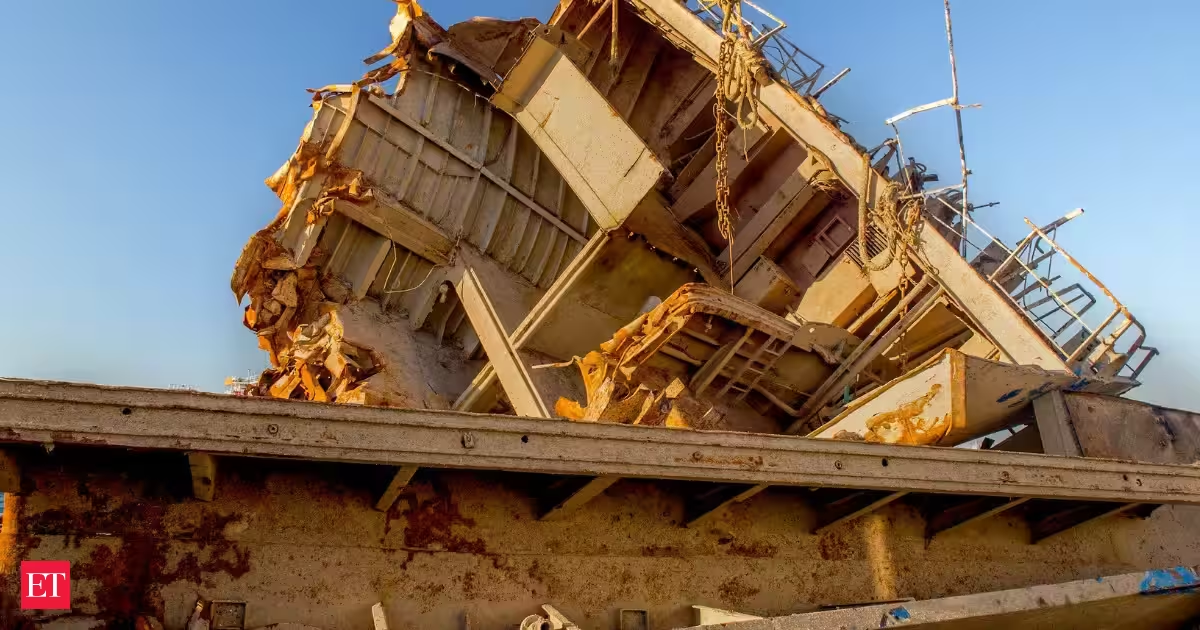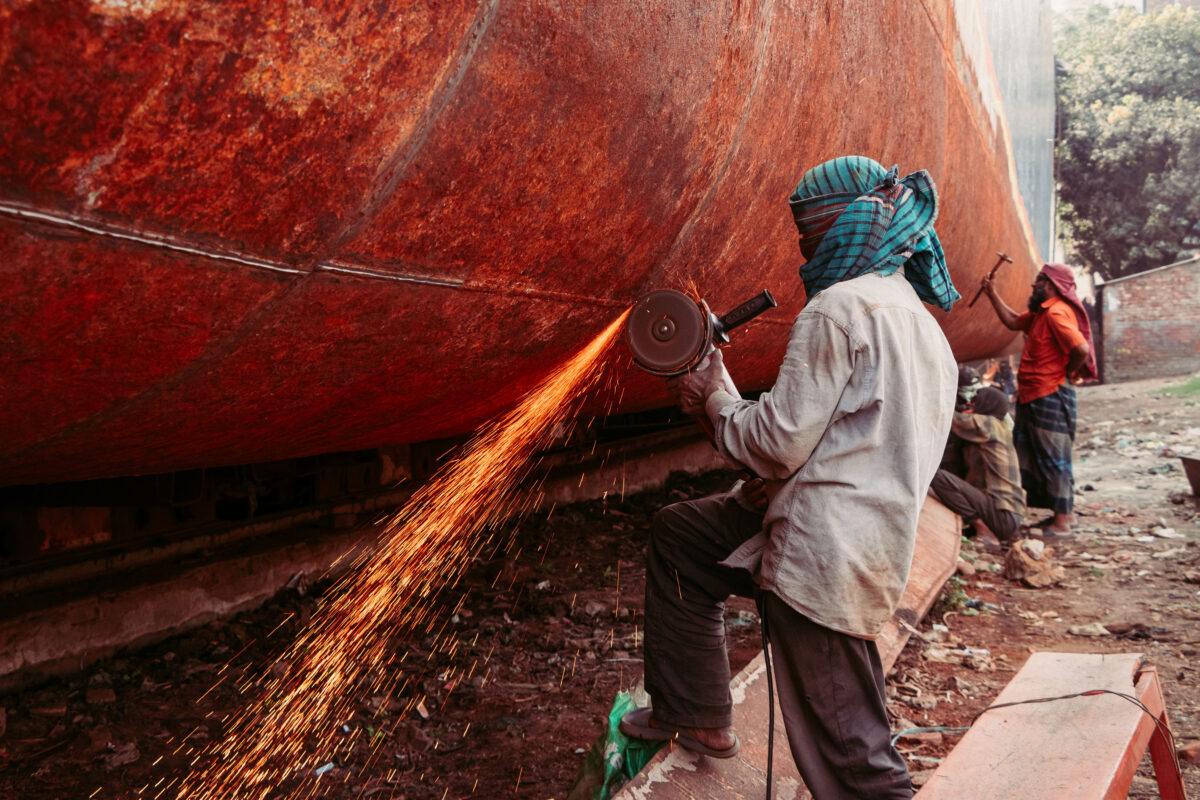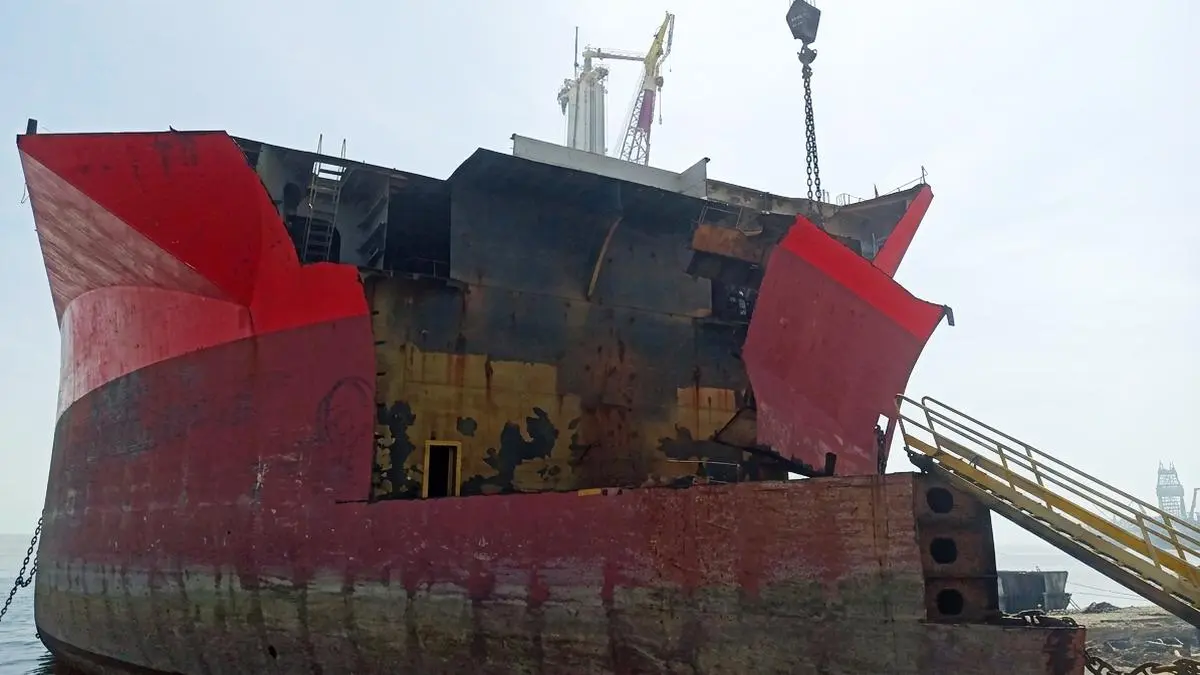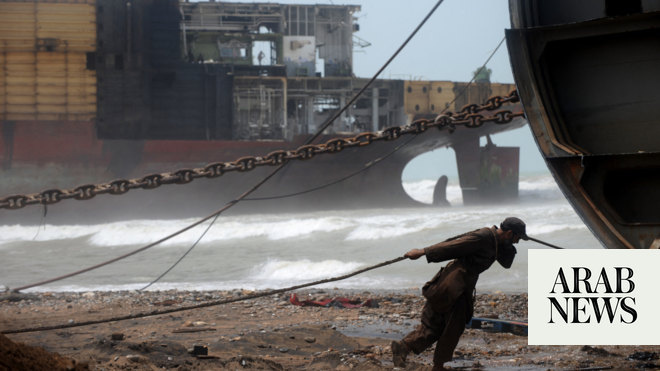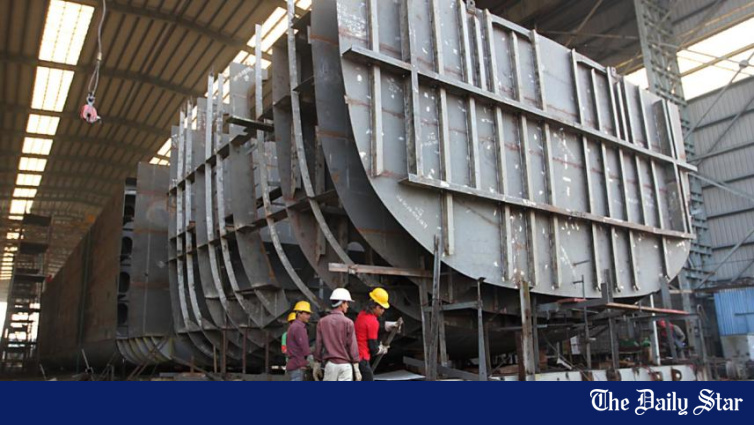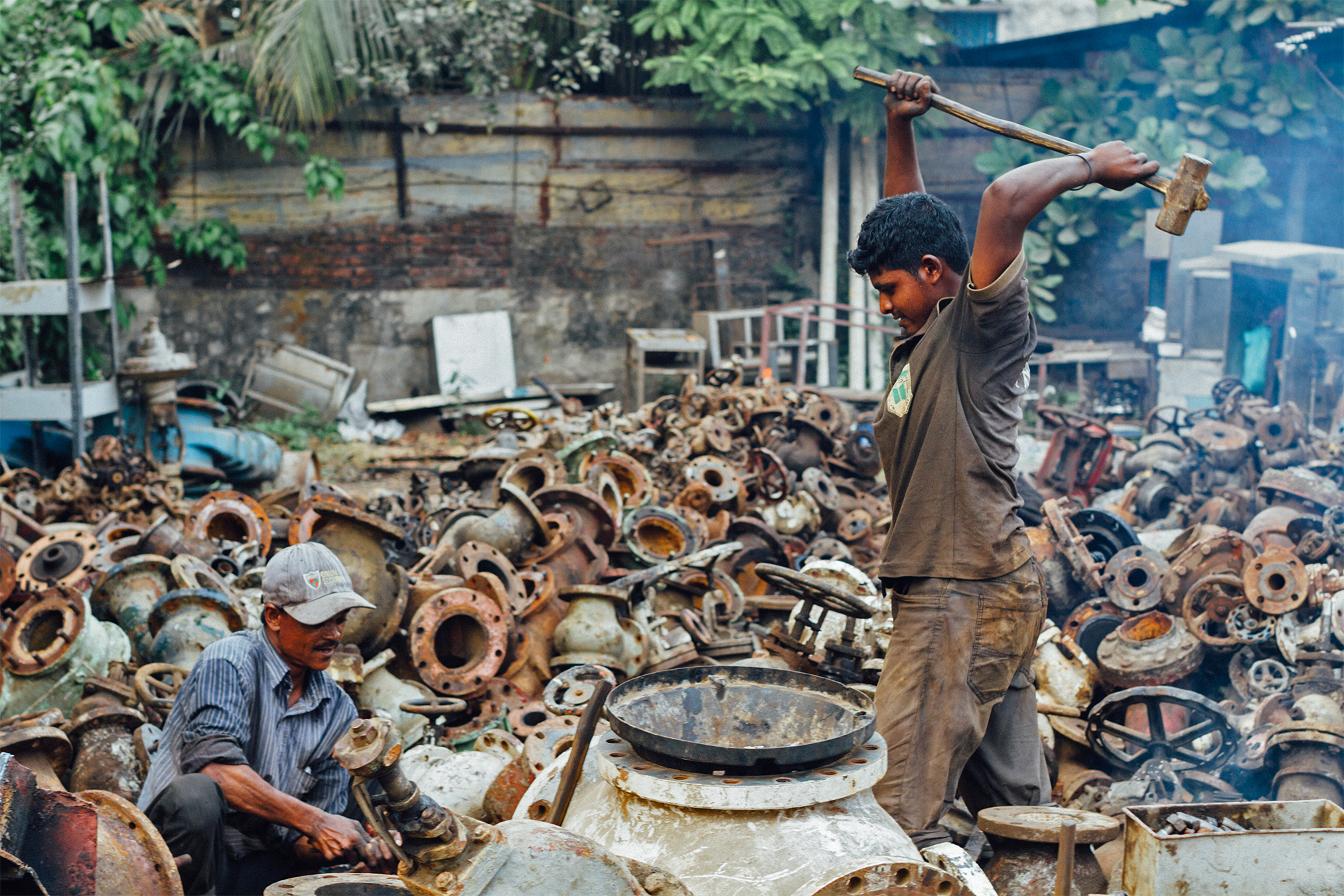
Bangladesh’s shipbreaking industry faces a pivotal treaty dispute. The country’s interim government last year decided that both Basel Convention and the Hong Kong Convention (HKC) will apply simultaneously to the local shipbreaking operations.However, shipbreakers say that applying Basel rules would make ship imports more expensive and legally complex, potentially forcing many shipbreaking yards to close due to their inability to meet Basel standards.Basel strictly controls transboundary movement of toxic waste, and requires dismantling ships on impermeable surfaces that contain hazardous waste, effectively ruling out the conventional method used in Bangladesh, of grounding a ship onto a beach.The Hong Kong Convention permits the beaching method, but environmental activists say it doesn’t provide sufficient environmental protection and reflects shipping industry interests.
DHAKA — Ships sail oceans all over the world, yet as they reach the end of their lives, they mostly go to die on the beaches of Bangladesh, India and Pakistan.
Around 85% of the world’s end-of-life ships are dismantled and recycled in these three South Asian countries, an industry that has long relied on low-cost manual labor but has also been criticized for its high disregard for worker safety and severe environmental pollution.