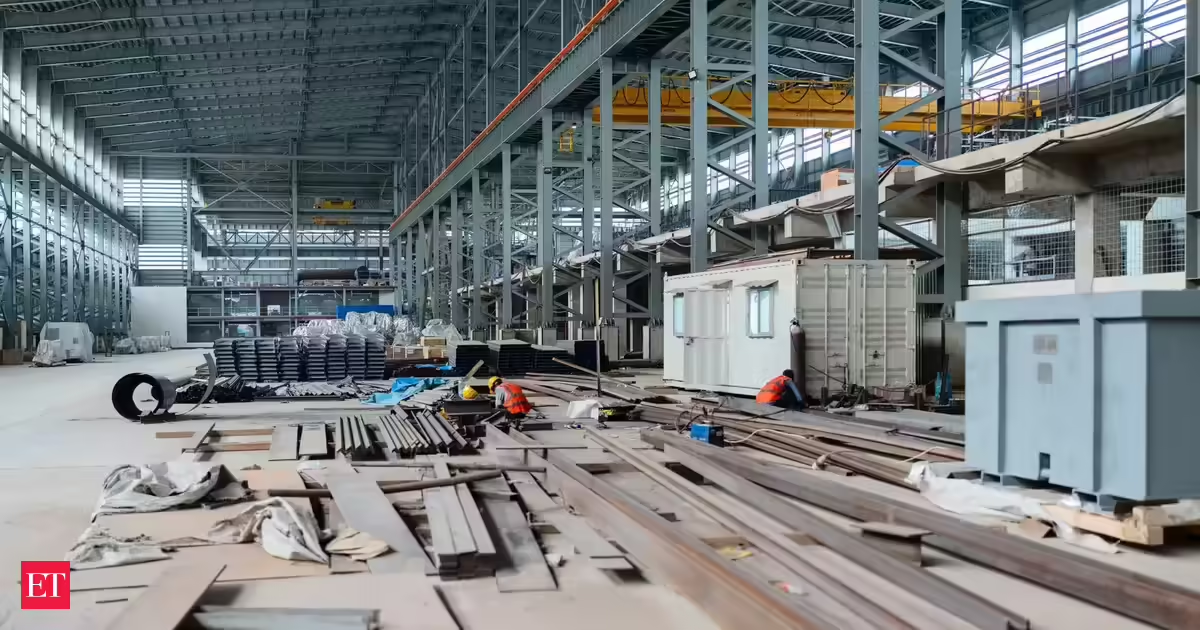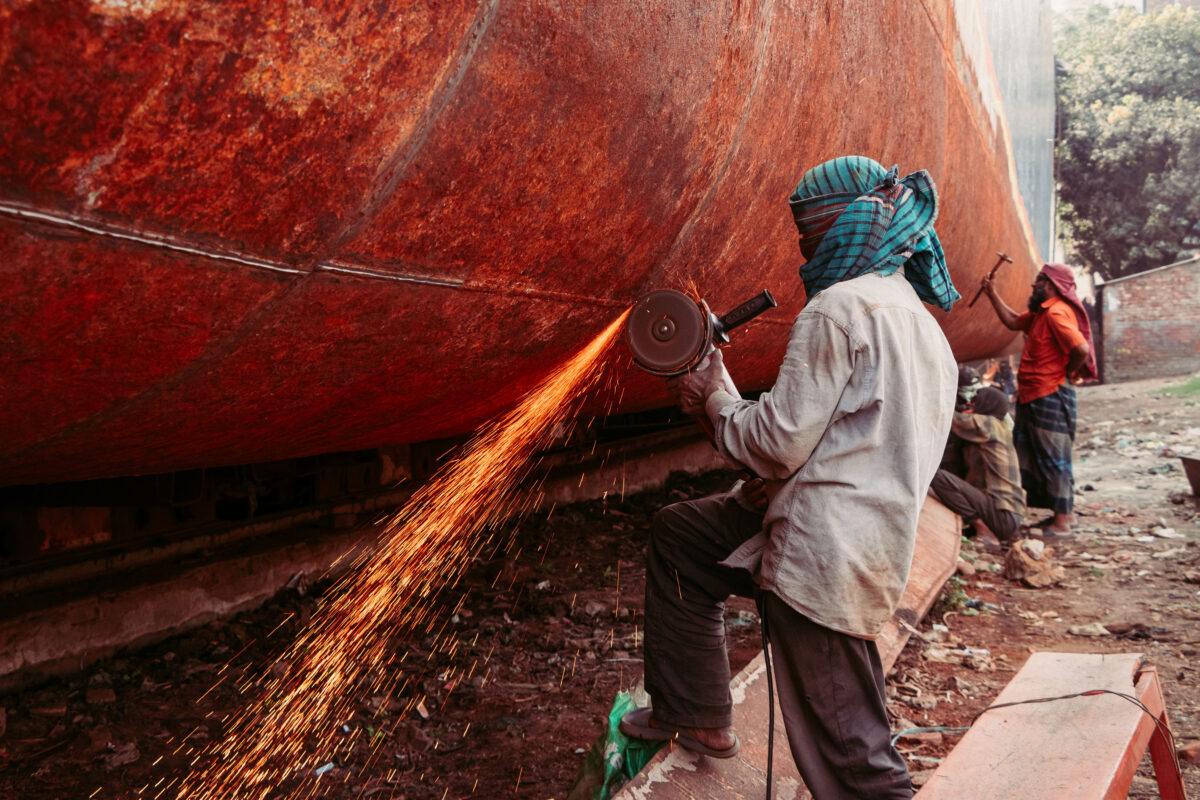
In the Indo-Pacific, maritime supply chains are under mounting strain from geopolitical friction, port congestion and climate-driven disruptions. These pressures are testing resilience and exposing how concentrated global shipbuilding capacity has become. Beneath these headline pressures, a shift is underway — Bangladesh, long known for garments rather than steel, is building a niche in exporting mid-sized vessels.
Global shipbuilding remains concentrated in a small number of high-capacity producers, particularly in East Asia, where yards have progressively shifted toward larger, more complex and higher-margin vessels — from ultra-large container ships to LNG carriers and cruise liners. Order books are filled years in advance with capital-intensive projects, leaving little room for smaller, lower-margin orders. As a result, a market gap has emerged in mid-sized vessels.
Bangladesh is steadily moving into the mid-sized vessel space, aiming to diversify industrial capabilities as it approaches graduation from least developed country status in November 2026, which will erode its preferential trade access. Bangladesh’s growing mid-sized vessel exports signals a shift towards more metal- and capital-intensive industries. Shipbuilding is part of Bangladesh’s wider industrial transition.