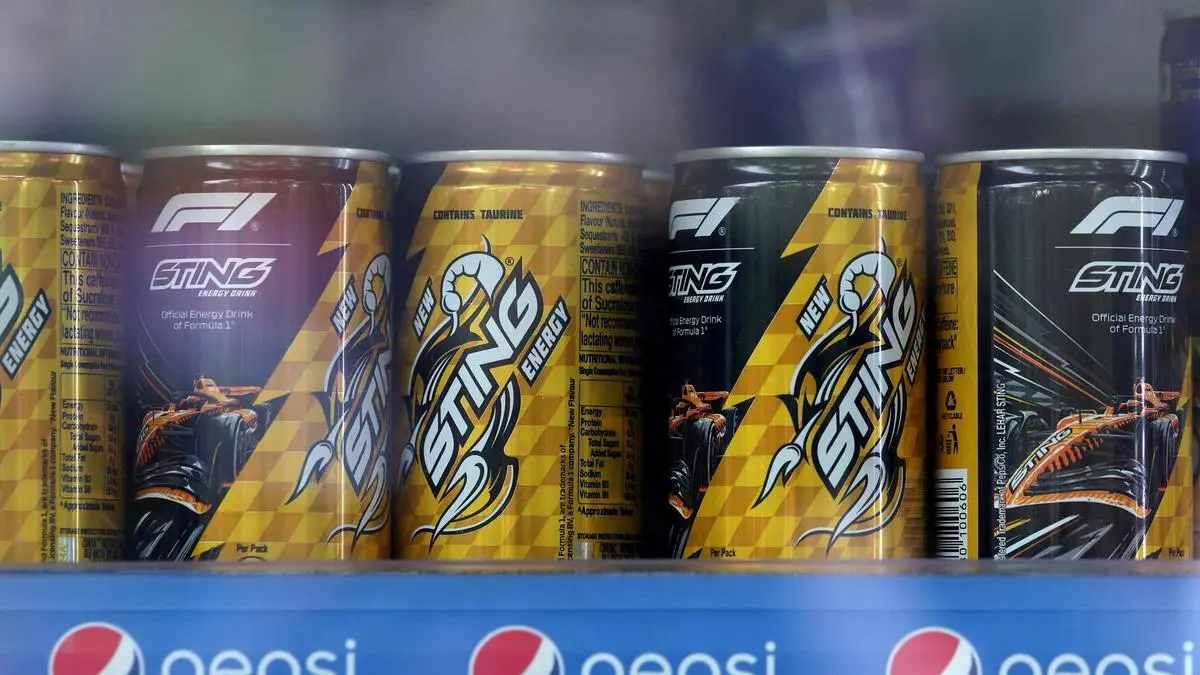
India’s energy-drinks market boomed after Pepsi launched Sting in 2017. Its ₹20 bottles proved popular among 15- to 19-year-olds and in rural areas, helping make it a market leader, Euromonitor says.
| Photo Credit:
REUTERS/BHAWIKA CHHABRA
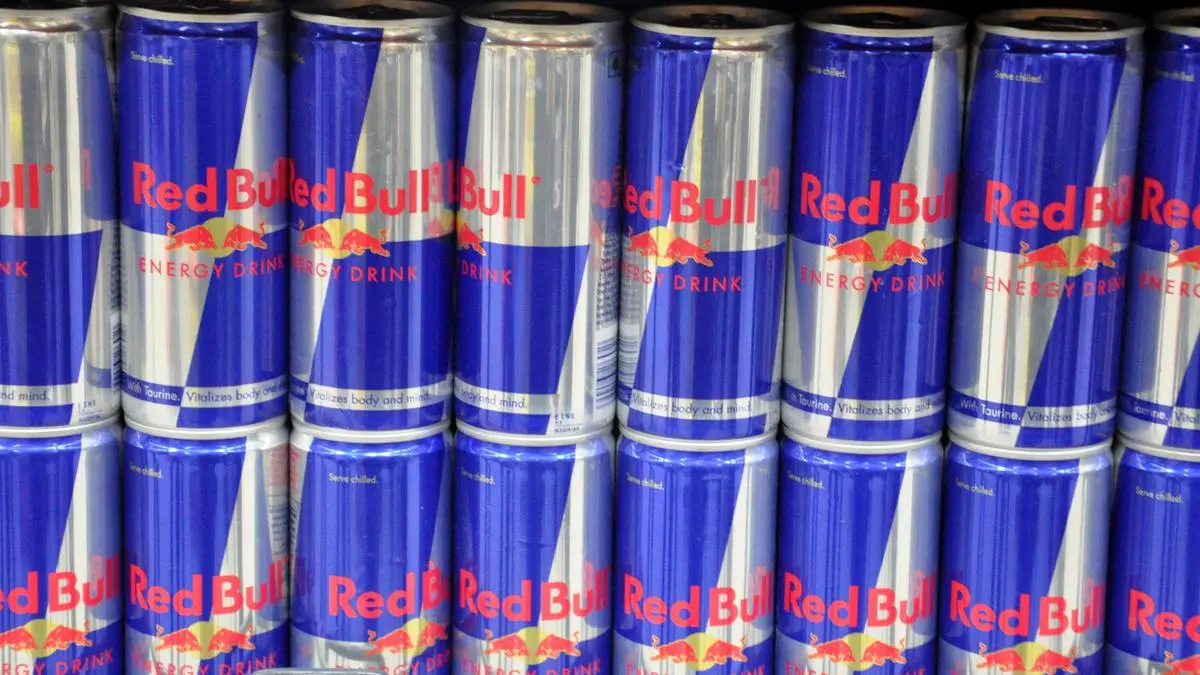
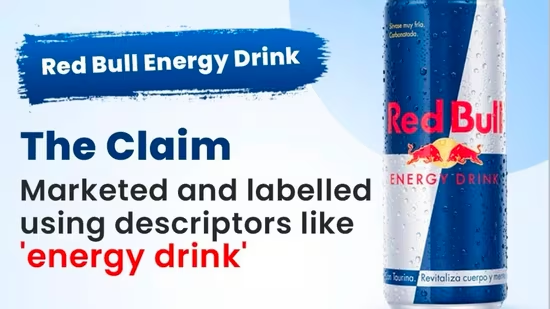
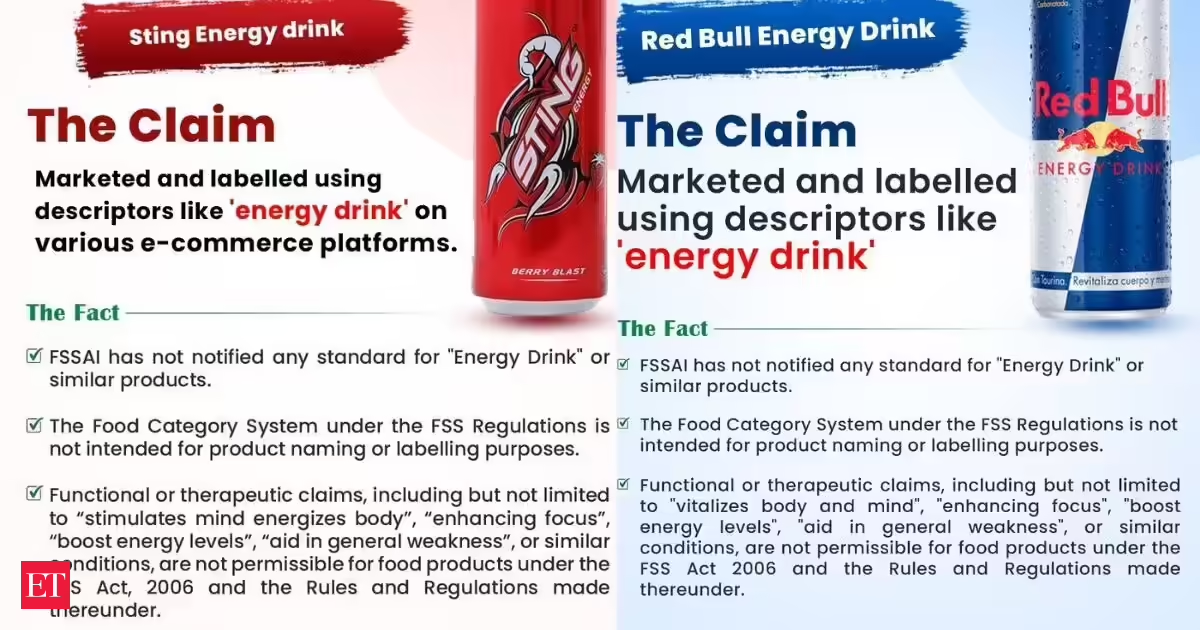
India has ordered makers of high-caffeine beverages sold as “energy drinks” to stop using that description, rejecting efforts to stall the regulatory intervention in a fast-growing market expected to be worth $1.6 billion by 2028, according to documents and sources.India’s food safety regulator said on social media in early July it had issued notices to companies saying there were no Indian standards for such products and claims that a beverage “vitalizes body and mind” or can “aid in general weakness” were misleading. It gave no further details.In private, the message from the Food Safety and Standards Authority of India (FSSAI) was even tougher: Pepsi, Red Bull, Monster Beverage, billionaire Mukesh Ambani’s Reliance and Hell Energy must drop “energy drink” — or any similar descriptor, according to confidential documents and people familiar with the matter. The move has triggered a standoff with companies, who fear removing the category label could damage brands built around instant-energy claims and disrupt sales. At a closed-door meeting with senior industry executives on Friday, FSSAI Chief Executive Rajit Punhani rejected arguments over the business impact, saying companies were free to challenge the decision in court, two people familiar with the discussion said.FSSAI and Punhani did not respond to Reuters queries. Pepsi declined to comment, while the other companies did not respond. Reuters is first to report the lobbying efforts and India’s decision.A government source said the industry agreed to comply with the labelling change after the Friday discussion, and the FSSAI has given them 90 days to comply. Energy drinks have sparked health concerns among some regulators globally who worry they contain high caffeine, sugar and taurine, an amino acid. High-caffeine energy drinks will be banned for under-16s in England from April next year, and some regions in Pakistan mandate they be called “stimulant drinks”.INDUSTRY WOES, ‘ELECTRIFYING ENERGY’ ADSThe energy drinks business is built on instant-energy marketing.Red Bull’s “Gives You Wiiings” slogan is globally famous, while Pepsi promotes its Sting energy drink in Indian ads that show it sends lightning through one’s body, giving “electrifying energy”.The Indian Beverage Association, which represents major companies, said it was committed to complying with regulations and engaging constructively with regulators on science-based policy.