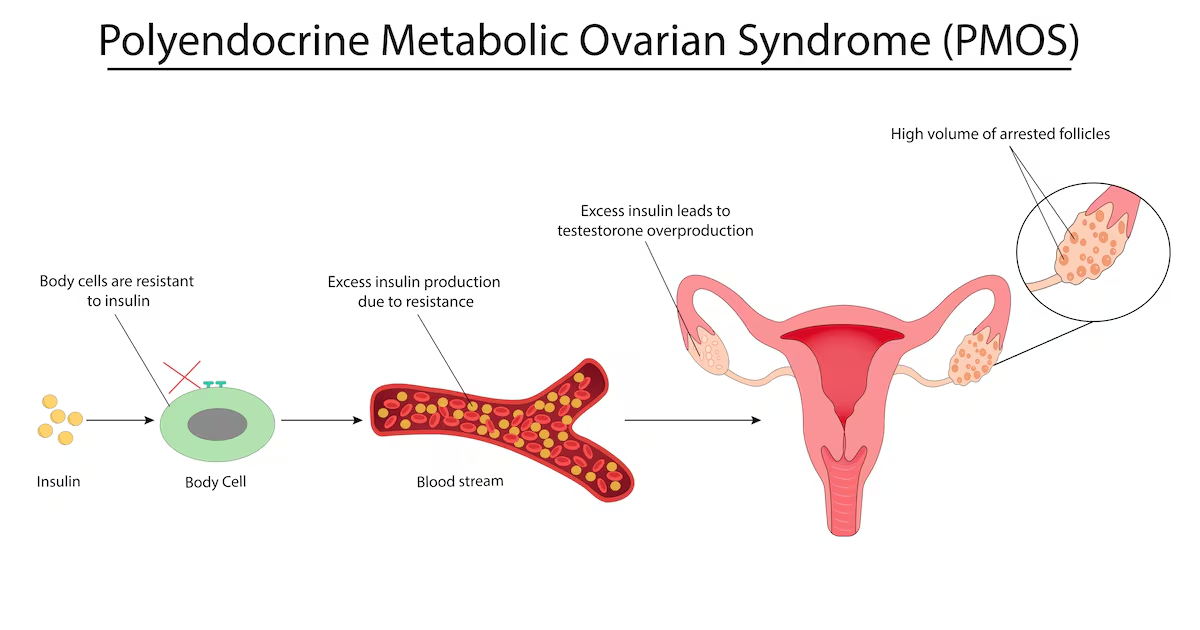
It’s not often that disease names change. When they do, it’s because of either a change in scientific knowledge or the evolution of patient experience and perspectives.One example is monkeypox, which was renamed “mpox” in 2022. The original name dated back to 1958, when monkeys in a Copenhagen laboratory developed a rash caused by a virus related to smallpox. But researchers later found the virus was more commonly carried by small mammals such as rodents. And the name change was also driven by concerns from the World Health Organisation (WHO) about elements of stigma and racism that had developed around the monkeypox moniker.The most recent example of a disease name being changed is polycystic ovary syndrome (PCOS), a condition affecting an estimated 170 million women worldwide. The updated name – polyendocrine metabolic ovarian syndrome (PMOS) – follows more than 10 years of collaboration between researchers and patients, and reflects a growing understanding that the condition is a whole-body hormonal and metabolic disorder rather than one primarily defined by ovarian cysts. PMOS causes complex, wide-ranging symptoms such as irregular periods, excessive hair growth, weight gain, acne and difficulty getting pregnant. The renaming was announced in a consensus paper published in The Lancet. It is the result of a process that has taken more than 10 years, involved 22,000 people across six continents, and brought together 56 patients and professional organisations.One of the researchers involved in the complex undertaking was Dr Elisabet Stener-Victorin, principal investigator of the Reproductive Endocrinology and Metabolism Research Group at the Karolinska Institutet in Sweden. Writing in The Conversation, she explained why this apparently small name change is, in fact, a big one that she hopes will lead to better care for patients.[ From PCOS to PMOS: How renaming a prevalent women’s disorder will improve countless women’s livesOpens in new window ]It turns out that the original PCOS name was a historical accident. When the doctors who first studied the condition examined affected ovaries under the microscope they saw clusters of small, fluid-filled sacs they thought were cysts. So the label “polycystic” stuck.But those structures were not really cysts. They are immature egg follicles that have stalled at an early stage of development. And many people who were diagnosed with PCOS do not even exhibit these abnormalities in their ovaries. “The name ‘PCOS’ focused attention on a part of the body that, for many patients, is the least of their problems,” Stener-Victorin explains. “And it implied the condition was solely a gynaecological issue. In reality, it’s a complex hormonal and metabolic disorder that begins early in life and lasts a lifetime.”PMOS involves a range of interacting disturbances. Levels of male hormones (androgens) are often elevated in those with the condition. The brain’s signalling to the ovaries is altered. The body’s response to insulin is blunted as well, which is why people with the condition have higher rates of type 2 diabetes, obesity, fatty liver and cardiovascular disease. There is also an increased risk of depression, anxiety, sleep apnoea and endometrial cancer.[ Polycystic ovarian syndrome: ‘There’s more information on outer space than there is on the reproductive system of a female’Opens in new window ]Hence the new three-part name: “polyendocrine” reflects the multiple hormonal systems involved; “metabolic” recognises the lifelong risk of diabetes and heart disease; and “ovarian” maintains the link to ovulation problems and infertility, which remain core features.The renaming should improve patient care. Under the old label, many women were told their symptoms were a fertility issue or a weight issue. Diagnosis took, on average, more than two years. And few were warned about their lifelong risk of metabolic disease.However, the diagnostic criteria for PMOS remain the same. If you already have a PCOS diagnosis, it will now be referred to as PMOS. You won’t need to undergo any new tests or attend new hospital appointments.There is still no cure for PMOS. The first-line treatment remains lifestyle change, augmented by medications such as metformin, hormonal contraceptives and, more recently, GLP-1 receptor agonists.But for Stener-Victorin, “getting the name right [for PMOS] is the foundation that everything else rests on.”mhouston@irishtimes.com
Dr Muiris Houston: Name change could be game changer for women who live with PMOS
Dr Muiris Houston: ‘Polycystic ovary syndrome’ implied issue was solely gynaecological but it is a complex hormonal and metabolic disorder
681 words~3 min read