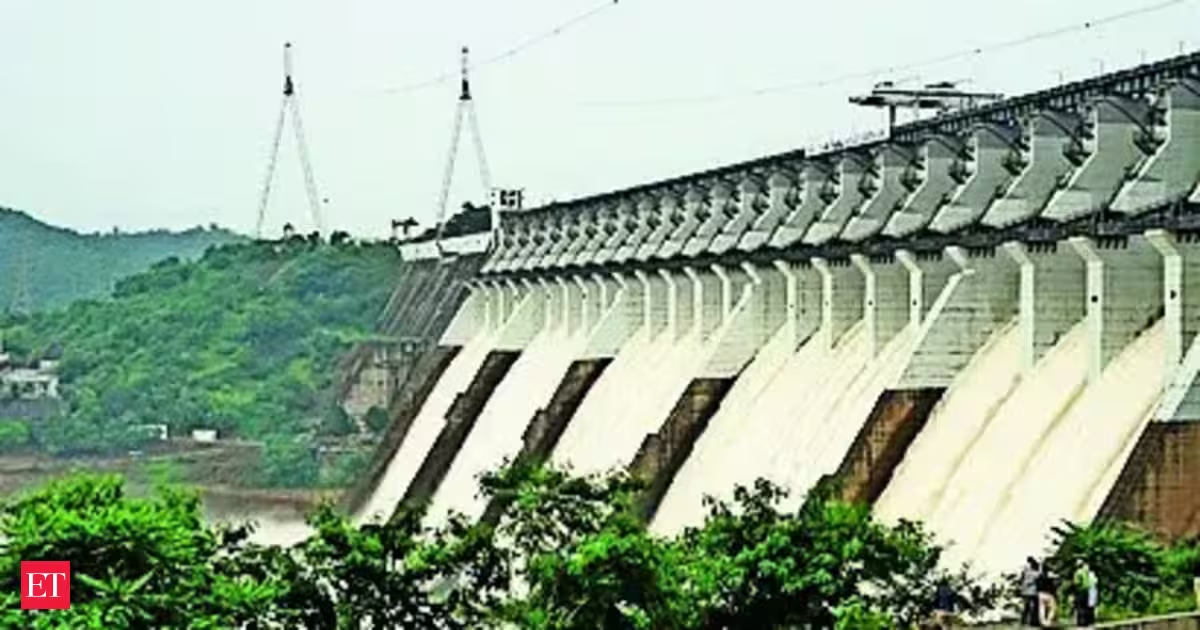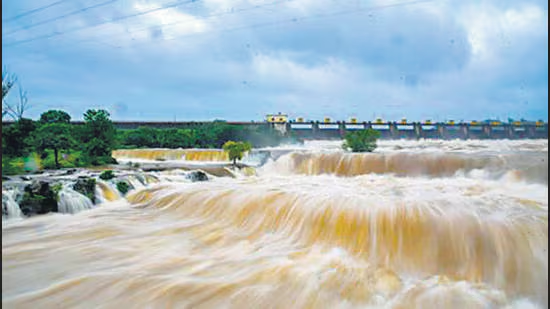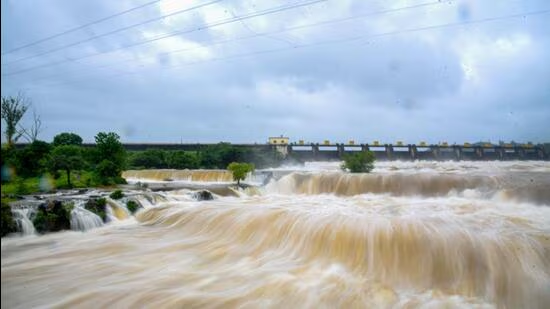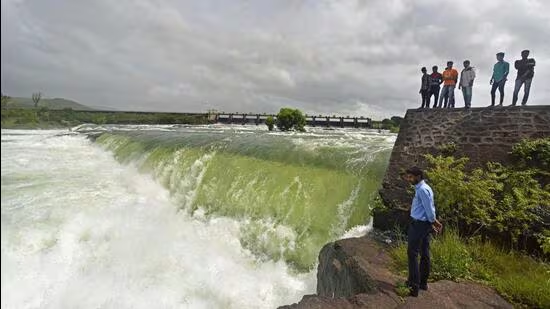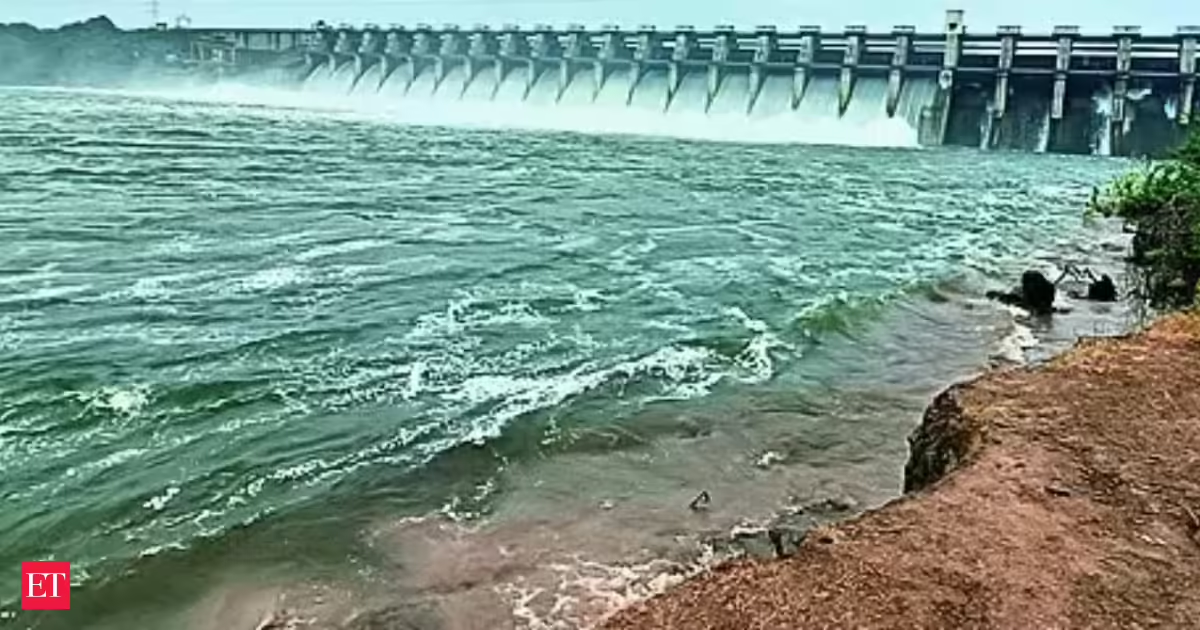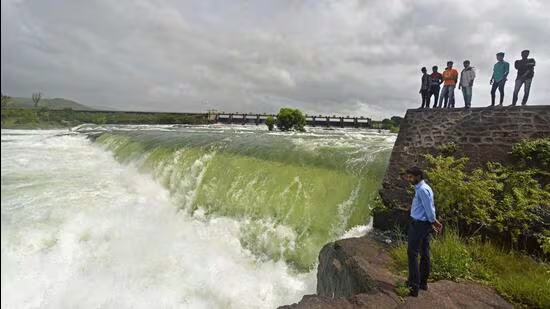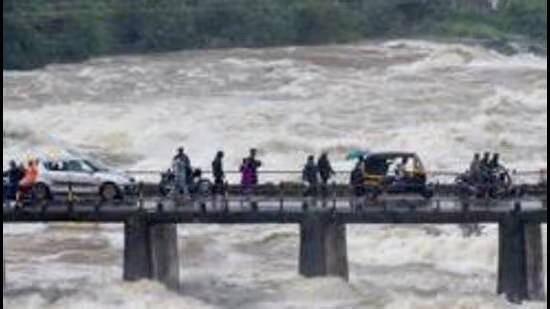
Pune :Pune, India - Aug. 4, 2019: Khadakwasla dam after releasing around 30000 quesecs of water in Pune, India, on Sunday, August 4, 2019. (Photo by Sanket Wankhade/HT PHOTO)The southwest monsoon has significantly improved water availability across Maharashtra, with the state’s 3,029 major, medium and minor reservoirs collectively holding 23,629.84 million cubic metres (MCM) of live water, or 57.39% of their total storage capacity as of 8 am on Sunday; according to the water resources department. During the corresponding period last year, Maharashtra’s reservoirs held 26,968.06 million cubic metres (MCM) of live water, or 65.47% of their total storage capacity.Among the state’s key projects, the reservoirs of the Khadakwasla dam complex are holding between 70 and 100% storage; Koyna dam has reached 70.79%; Ujani dam over 86%; while Jayakwadi dam in Marathwada has improved to over 50% live storage. However, as per the data shared by the irrigation department Sunday morning, the overall storage remains lower than the 65.47% recorded during the corresponding period last year.The Khadakwasla dam complex, which is the primary source of drinking water in Pune city, continued to witness healthy inflows on Sunday with the combined live storage in its four major reservoirs reaching 25.54 TMC, or 87.63% of total capacity, according to the irrigation department’s 5 pm bulletin. The storage is higher than the 24.84 TMC (85.20%) recorded on the corresponding day last year. Of the four dams, Khadakwasla dam remained at 100% capacity with 1.97 TMC of live storage. A total of 2.71 TMC water has been released through the spillway so far this monsoon. Panshet dam is at 9.85 TMC (92.49%); Varasgaon dam at 11.04 TMC (86.08%); and Temghar dam at 2.68 TMC (72.40%). The four dams together received an inflow of 650 Mcft during the day. Khadakwasla recorded an inflow of 234 Mcft; followed by Panshet at 157 Mcft; Varasgaon at 173 Mcft; and Temghar at 86 Mcft. Controlled releases from reservoirs are continuing as authorities regulate storage levels in view of the ongoing monsoon.According to Kiran Deshmukh, executive engineer, Khadakwasla dam cluster, the discharge from the Khadakwasla dam into the Mutha river was reduced from 2,996 cusecs to 856 cusecs at 7.30 pm on Sunday following a rapid decline in the reservoir’s water level. Deshmukh added that the discharge may be increased or reduced further depending on rainfall and inflows; and appealed to citizens to stay away from the riverbed and follow the administration’s safety advisories.Koyna dam, the state’s largest hydropower reservoir, is currently holding 71.61 TMC of live storage, or 71.53% of its total live storage capacity. No water is being released through the spillway or powerhouse.Further downstream, Ujani dam has reached 46.30 TMC of live storage or 86.42% of its total live storage capacity. No water is being released through the spillway, powerhouse or river sluices, with regulated releases continuing through the main canal (2,000 cusecs), tunnel (900 cusecs), and lift irrigation schemes.The Jayakwadi (Nath Sagar) dam, the lifeline of Marathwada, has improved to over 50% live storage. As per the updated data by irrigation department, the reservoir recorded 52.74% of live storage till 6 pm on Sunday. The reservoir recorded 76.67 TMC water storage as against its capacity of 102.73 TMC. “The reservoir is receiving an average inflow of 91,841 cusecs, while no water is being discharged through the spillway, allowing storage to build further,” said Mangesh Shelar, executive engineer, Jayakwadi dam project.
Maharashtra dam storage at 57.39%; Khadakwasla complex, Koyna, Ujjani and Jayakwadi witness healthy inflows
Among the state’s key projects, the reservoirs of the Khadakwasla dam complex are holding between 70 and 100% storage; Koyna dam has reached 70.79%; Ujani dam over 86%; while Jayakwadi dam in Marathwada has improved to over 50% live storage.
565 words~3 min read