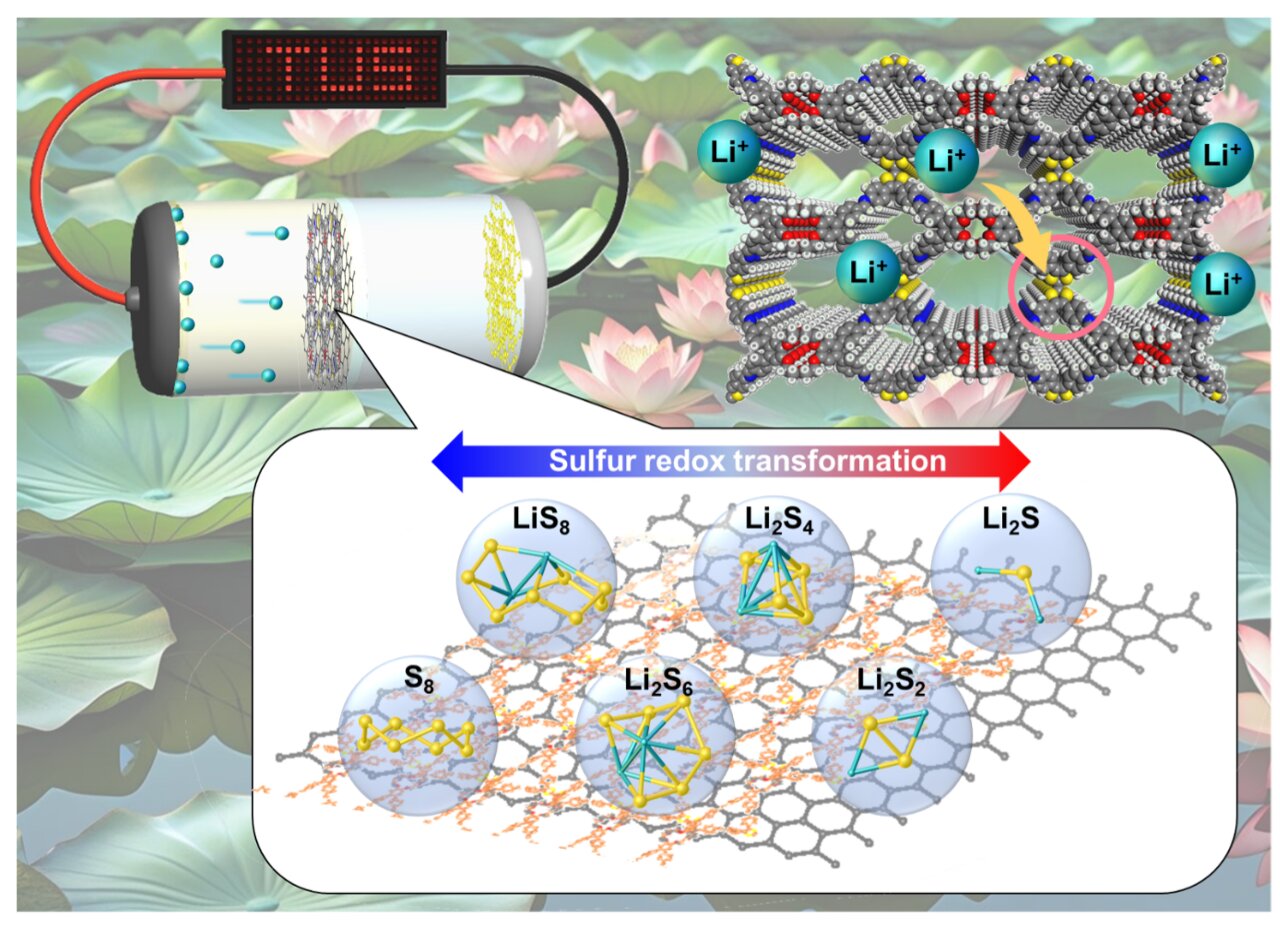
Lithium-sulphur (Li-S) batteries have the potential to rule the roost in the next generation of energy storage technology. They come with five times higher energy density than standard lithium-ion batteries, higher capacity (1,675 mAh) and lower raw material cost.But widespread adoption faces two stumbling blocks — leakage and sluggish reaction.As the battery functions, the sulphur turns into temporary chemical forms that dissolve into the battery’s liquid. Once dissolved, these molecules freely float back and forth between the positive and negative ends of the battery.Each time these molecules float away, the battery loses the key materials it needs to store power. This causes the battery to drain rapidly and permanently lose its ability to hold a charge.Second, charging and discharging the battery requires sulphur to constantly change its chemical state. Sulphur in the mix causes a solid build-up at the end of the discharge phase and this assumes insulation properties. Because electricity cannot pass through this layer easily, chemical reactions stall. Very slow charge is a common consequence of this build-up.To prevent the build-up of solids containing sulphur, scientists have toyed with catalysts. Earlier, single metal atoms embedded in graphene (carbon) sheets were used to trap the leaking sulphur.In a study published earlier this year in the Small Journal, researchers Sahil Kumar, et al found a more effective catalyst that used dual atoms.Dual-atom catalysts (DACs), containing two different metal atoms side-by-side, act like a chemical magnet for the leaking sulphur. They also help split the tough sulphur bonds, allowing the battery to charge and discharge much faster.Role of AINow there are scores of metals and an even greater number of pairings possible.How do you choose a pair? Trial-and-error method would take ages. The researchers instead used artificial intelligence to build a screening tool they named Precise and Accelerated Configuration Evaluation (PACE). This machine-learning workflow virtually tested 46,400 different structural arrangements in a short time. It filtered out the poorer options and helped select the optimal metal pairings.The AI and the follow-up tests showed that the strength of the metal pair mattered a lot in the most suited one.There are three types of pairs that deal with sulphur — metals like iron paired with titanium grip the sulphur so hard that they warp the catalyst and halt the reaction; some pairs were barely able to hold the sulphur at all.Best pairingThe combination of iron and nickel proved the most optimal.And why was that?This pair holds the sulphur tightly enough to halt the leaks but loose enough to allow the completion of the chemical reaction. This pair also used less than half the energy traditionally needed to break down battery waste during charging, and hence sped up the process.The researchers used their data to train a predictive machine learning model. Now, if new researchers were to try a brand new metal pairing, they can type it into the model, and the computer will instantly predict how well it will perform without the need for new experiments.Published on July 27, 2026
Reworking sulphur to win the energy storage race
Discover how AI is optimizing dual-atom catalysts to overcome lithium-sulphur battery challenges for enhanced energy storage solutions.
497 words~2 min read