Nigeria’s average maximum lending rate eased to 33.16 per cent in June 2026, down from 34.78 per cent in May, reflecting a modest decline in borrowing costs as the Central Bank of Nigeria maintained its benchmark interest rate amid improving macroeconomic conditions.
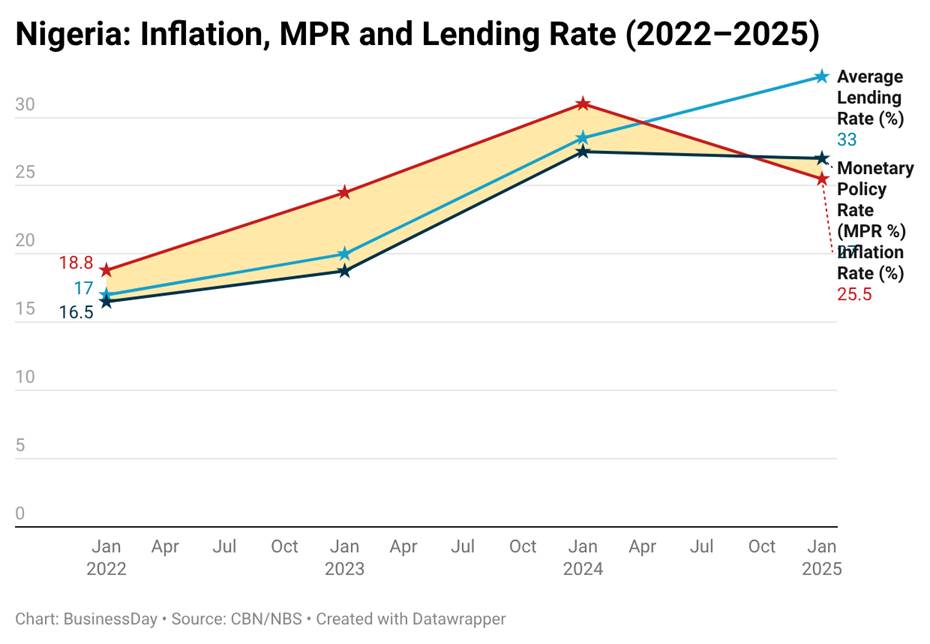
Data from the CBN’s latest Money Market Indicators showed the decline came after the Monetary Policy Committee kept the Monetary Policy Rate unchanged at 26.5 per cent, a position it has maintained since February following a 50-basis-point rate cut.
Despite the monthly moderation, borrowing costs remain significantly above last year’s levels. The average maximum lending rate stood at 29.51 per cent in June 2025, indicating a year-on-year increase of 3.65 percentage points.
The maximum lending rate represents the highest interest rate banks charge customers on loans and is widely tracked as an indicator of credit conditions in the economy. High lending rates typically discourage borrowing, investment and business expansion.
The latest decline marks only the second meaningful easing in lending rates this year. The average maximum lending rate began the year at 32.68 per cent in January before rising to 35.17 per cent in February, where it remained through April despite the CBN’s decision to lower the policy rate. Related News Tinubu lacks capacity to end insecurity – Obi FG earmarks nearly N1tn for SUVs, empowerment amid borrowing pressure Global tensions shape CBN’s monetary policy