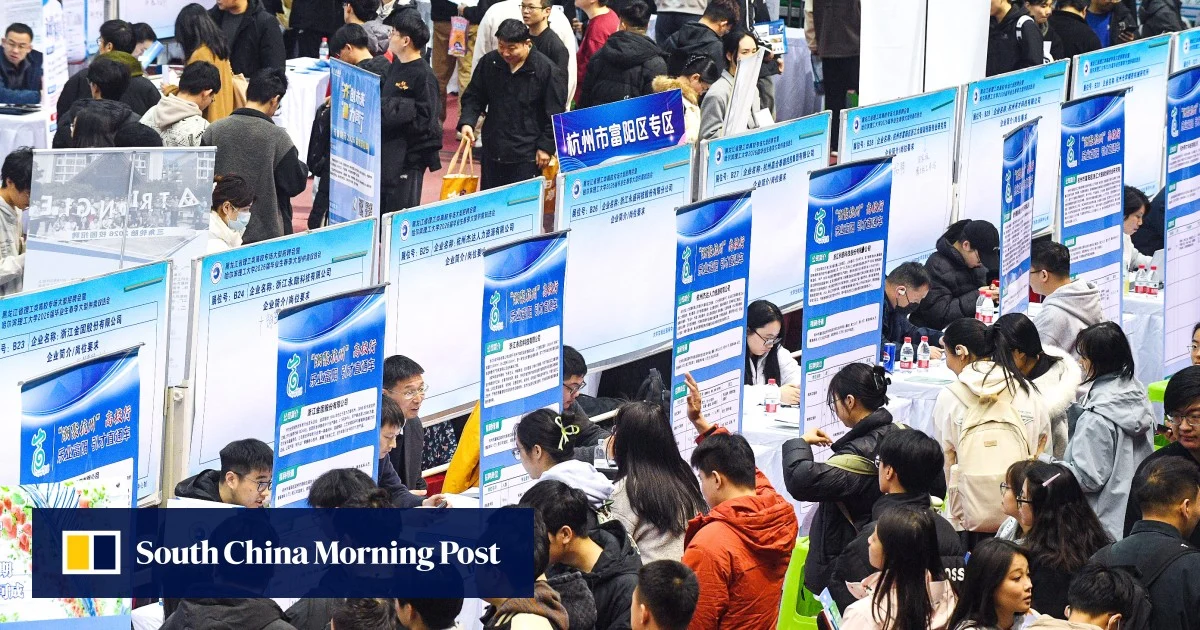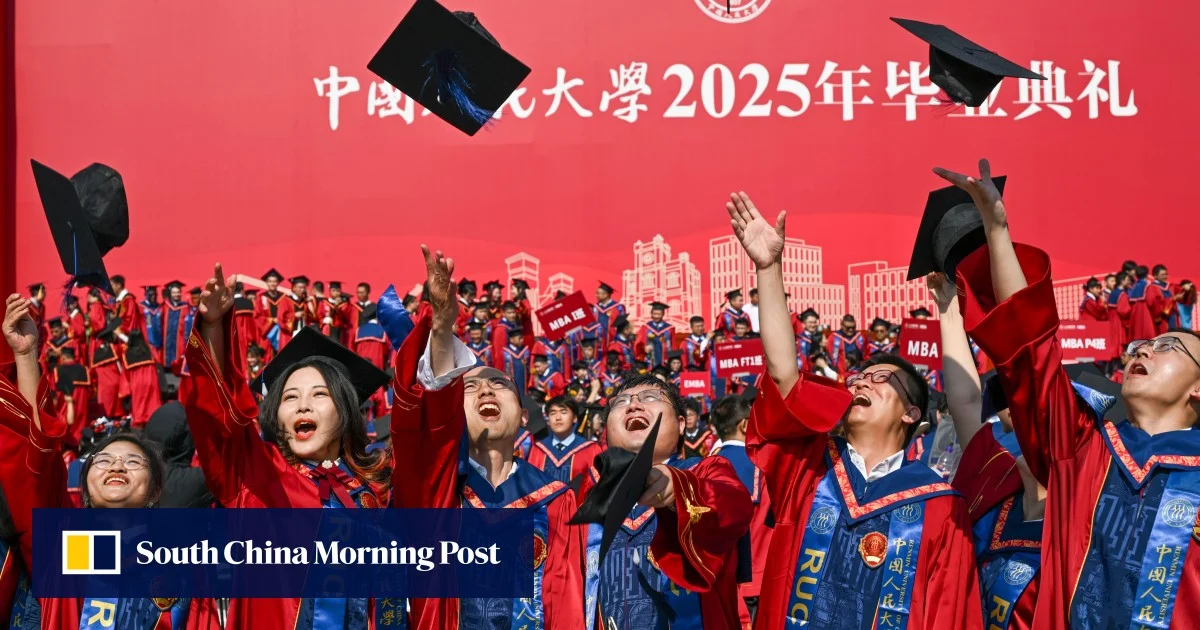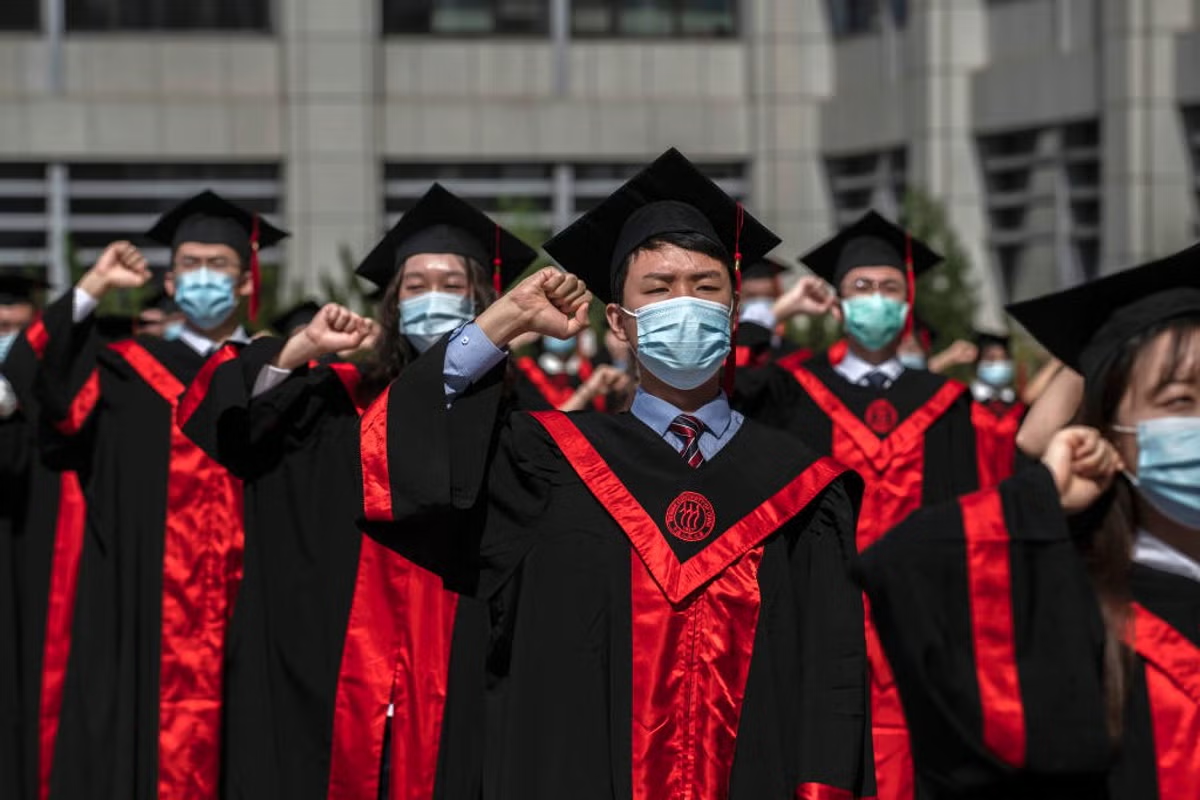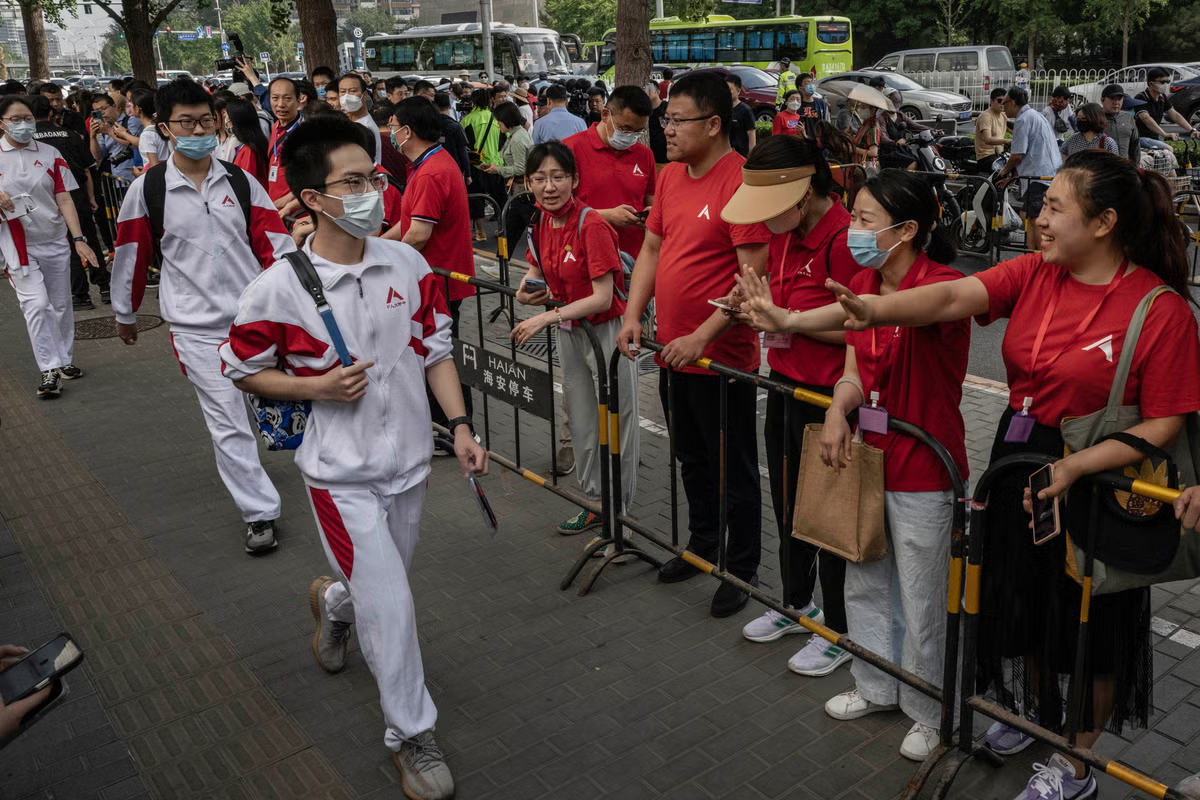
Programmes with weak labour-market outcomes, including parts of the humanities, arts, management, etc., are under greater scrutiny in China
| Photo Credit:
China’s higher education reforms have been attracting a lot of attention, mostly framed as a response to graduate unemployment. We don’t believe that’s the main reason for the reforms. Based on the data and information available, the effort looks far more strategic: China is treating talent as infrastructure, redesigning the pipeline to support its long-term push for technological self-reliance.Between 2021 and 2025, Chinese universities cut or suspended around 12,200 undergraduate programme points and added roughly 10,200 new ones. More than 30 per cent of undergraduate programmes were affected. One caveat on scale: a “programme point” counts one major at one university, so a single major discontinued across 50 campuses is counted 50 times.Even so, this was not a routine curriculum update. We see it as China’s industrial policy being executed through universities, with a very clear direction: build capacity in areas Beijing considers critical — artificial intelligence, semiconductors, robotics, embodied intelligence, the digital economy, energy and bio-manufacturing, among others. The reform is aimed at producing the engineers, researchers and technical workers China believes it will need over the next decade.This matters because China has spent two decades expanding higher education. That widened access, but it also created a growing mismatch. Some degrees produced weak employment outcomes, while strategic industries reported severe talent shortages. State-linked estimates point to gaps of more than five million AI workers, 2.3 million big-data workers and over one million workers in new-energy vehicles. China’s response has been to intervene before students reach the labour market.The scale and speed are what make this reform unusual. A 2023 plan set a target to adjust about 20 per cent of university majors by 2025. That target was not only met but exceeded. By the 2026 catalogue cycle, the annual adjustment rate had crossed 10 per cent for the first time, with 38 new majors added in areas such as embodied intelligence and brain-computer science.Highly coordinatedGovernance has also tightened. What began as a Ministry of Education initiative moved to the Party level in 2025, when a central action plan was issued for discipline and major adjustment through 2027. That shift is important.It shows that curriculum design is no longer being treated as an academic matter left to universities. It has become part of national economic and technology strategy.The cuts are equally revealing. Programmes with weak labour-market outcomes, including parts of the humanities, arts, management, etc., are under greater scrutiny. A red-yellow card system flags majors with persistent employment problems — best understood as a warning-and-correction mechanism rather than a fixed universal rule, since no complete threshold has been published. At the same time, frontier programmes are being concentrated in elite institutions such as Tsinghua, Peking, Zhejiang and Shanghai Jiao Tong, while mid-tier universities expand broader AI and digital offerings. It mirrors China’s wider industrial playbook: national champions at the frontier, backed by a broad supply base.The model is highly coordinated, but it is not risk-freeA centralised push can move too many students into the same fields. A student entering an AI or semiconductor programme in 2026 may graduate around 2030. By then, today’s shortages may have narrowed, investment cycles may have shifted, and automation may have reshaped the jobs these students were trained to fill. China could end up correcting one over-expansion by engineering another. There is also a deeper paradox. Many of the technical and white-collar jobs now being prioritised are themselves highly exposed to AI. Programmes will need constant updating, industry feedback and credible pathways for lifelong reskilling.And, it’s too early to call the reform a success. The first large cohorts from the new programmes will not graduate before around 2028.The lesson for other countries is not that China has found the answer. It is that the growing mismatch between the speed of technological change and the slower rhythms of education policy demands a different approach.Countries need better talent-intelligence systems connecting employer demand, emerging technologies, education capacity and reskilling — while recognising the limits of forecasting.China’s reforms should therefore be viewed less as a blueprint than as a large-scale experiment in strategic workforce planning. Its significance lies in the question it is attempting to answer: can a country redesign its talent system before technological disruption arrives, without locking students and institutions into assumptions that technology may quickly render obsolete?That is the challenge every major economy will increasingly have to confront.Nimisha is Young Professional, and Debjani is Distinguished Fellow, NITI AayogPublished on July 27, 2026