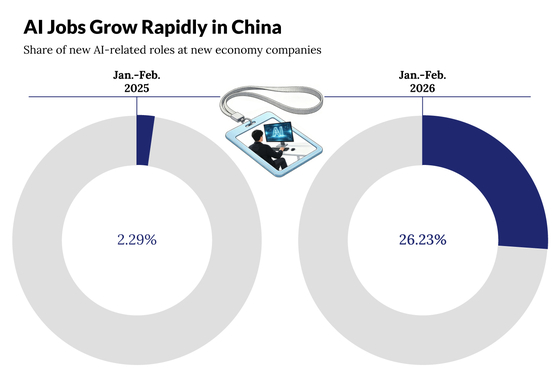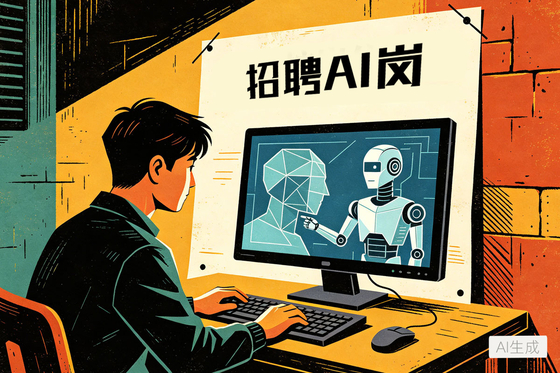
1. China's graduate job market exhibits a sharp divide during the spring recruitment season, with overall hiring volumes and average salaries declining worse than in 2024 and 2025, particularly challenging for humanities students from less competitive institutions, while AI roles buck the trend [para. 1][para. 2].2. Demand for AI-related positions is booming, with Boss Zhipin data showing year-on-year growth in average monthly new AI job postings rising from 8.5% in 2023 to 36.5% in 2024 and 74.1% in 2025 [para. 3].3. Companies offer premium salaries for scarce AI talent, such as LLM training algorithm engineers where new PhD graduates from top institutions can earn over 3 million yuan ($440,000) annually, averaging above 1 million yuan, surpassing prior AI roles in search and recommendations; computer science graduates from elite universities secure up to 600,000 yuan at internet firms [para. 4][para. 5].4. Most graduates face tough job hunts, submitting dozens of applications and 20-30 interviews for few offers, especially humanities students with only one or two options; structural barriers persist as AI tasks demand technical skills hard for non-experts [para. 6][para. 7].5. AI draws top talent, with nearly all PhD research focusing on large language models; most tech roles integrate AI across search, advertising, gaming, and efficiency tools [para. 8][para. 9][para. 10].6. University curricula lag AI advances—ChatGPT launched in 2022, but LLM coverage only pivoted in 2025 despite 2023 enrollments—giving early adopters an edge [para. 11][para. 12].7. Early pivots pay off: a Tsinghua law master's graduate interned at Moonshot AI in 2024, then joined a major internet firm and transferred to an LLM team, noting humanities backgrounds could enter top teams if shifting in 2023-2024 [para. 13].8. Entry paths include AI startups, peripheral roles (operations, product, engineering), or project portfolios; traditional internships lead to startups or VC, then big firms like Anthropic [para. 14][para. 15][para. 16].9. An archaeology major leveraged a cultural content internship into an AI startup role, building skills like coding tools for product development [para. 17].10. Graduates debate startups (DeepSeek, Moonshot AI, etc.) for rapid experience and multi-role exposure boosting value, versus big tech's stability and training, though startups risk routine tasks and big tech limits breadth; top startups like Moonshot have tight quotas needing academics, skills, and luck [para. 18][para. 19][para. 20][para. 21][para. 22][para. 23].11. AI boom sustainability is questioned: high salaries (over 1M yuan) may not last amid competition; unlike mobile internet, AI's intelligence-intensive nature limits job growth per Meng Fansong [para. 24][para. 25][para. 26][para. 27].12. Layoffs loom for non-AI users and middle management; lean AI firms (Moonshot AI ~300, MiniMax >400, Zhipu >1,000 vs. internet giants' tens of thousands) signal fewer jobs [para. 28][para. 29].13. Graduates eye "one-person companies" using AI for programming, product, design, marketing, and operations [para. 30][para. 31].(Word count: 498)AI generated, for reference only
In Depth: China’s AI Hiring Boom Belies a Struggling Job Market
While broader prospects for university graduates in China remain bleak, AI talent is commanding multimillion-yuan salaries as tech giants and startups race to deploy the technology
461 words~2 min read