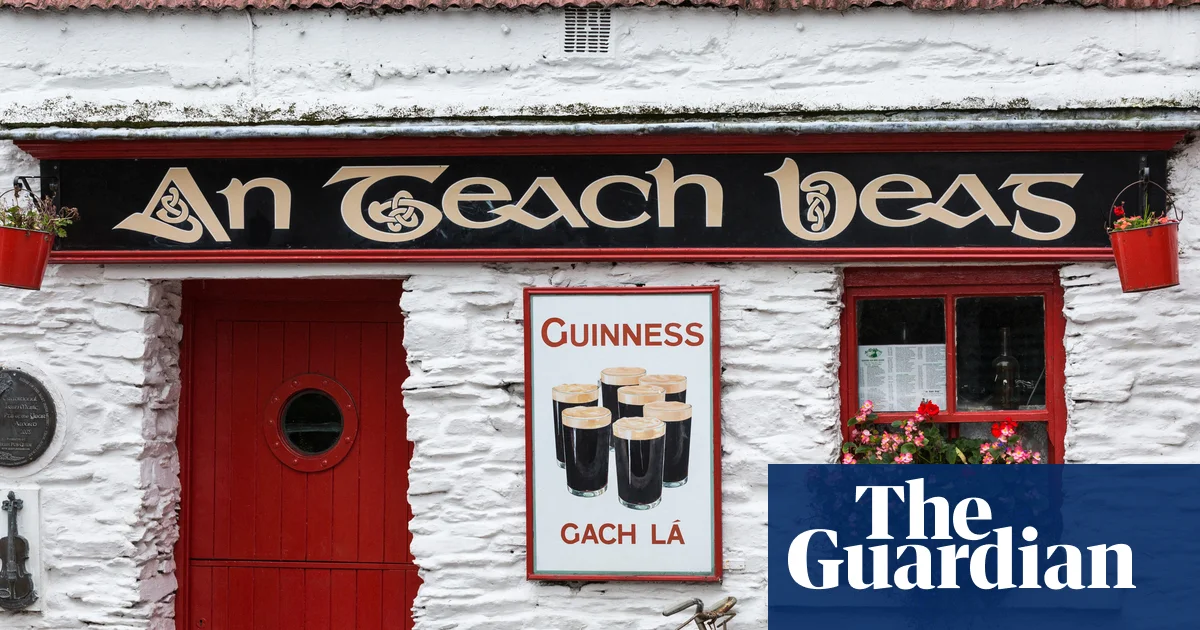
A self-described blow-in from Mayo who has only been living in Cork for more than 50 years, Des MacHale, author of joke books and emeritus professor of mathematics at University College Cork, recently had his latest book launched at the Kerryman’s bar, Cork.Langers & Lashes: A Compendium of Cork Slang claims to be the most comprehensive collection of Cork slang published. The title describes utter fools or arrogant types and attractive women. (“Langer” is also a Cork word for the male appendage and its plural form refers to someone wasted from drink.)Singer Tim O’Riordan belted out verses of his irreverent ballad, The Langer Song, at the launch. It was followed by a couple of words from MacHale’s son Dominic – an actor best known for playing Garda Sergeant Healy in the TV series The Young Offenders. (Dominic MacHale and fellow actor Shane Casey, who plays Billy Murphy in the Cork northside-based comedy, were taking time off from watching the World Cup for their humorous take on the games for RTÉ 2.) As the author’s son said, it takes an outsider to identify the slang that trips off the tongues of the natives.The book is certainly comprehensive with the inclusion of some slang that this writer never heard of despite being a Corkonian – albeit from the southside. That north/south dichotomy is important in Cork. “Norries” living north of the river Lee are generally seen as salt of the earth (think Roy Keane), unlike the “Sorries” who have notions, such as the fictional social media “Reggie” character living in a mansion on the salubrious Blackrock Road. (As it happens, Des MacHale is a resident of Blackrock.) This suburb would not be a hotbed of Cork slang. Which is why MacHale is indebted to members of the Frank O’Connor Book Club in Mayfield and the Blackpool Library Creative Writing Circle on the north side for their valuable contributions to the book.MacHale writes that most of the slang words in his book are words he has heard used in Cork over the years or words that have been reported to him as being in use. Apart from its religious connotation, I’ve never heard of the other meaning of “immaculate conception”, which refers to someone who develops a drink problem without ever standing a round. This phrase was imparted to MacHale by the late humorist, Niall Tóibín.Some of the slang in the book is “potentially offensive”, but rather than being censorious the dictionary preserves, in the interests of their historical contexts, words that embody prejudices that society now rejects. Crude anatomical and sexual references are included in the book to reflect the vernacular of old. Women come in for a disproportionate amount of derogatory terms, judging their behaviour, appearance and sexuality, compared to men. A difficult woman is “a wagon” while a good-looking female is a “fine half” or a “flah”. The latter word is also used as a verb for sexual congress. These terms are familiar to Corkonians, but how often is a word such as “balubas” used? To be balubas is to be seriously drunk. The term originated when Cork soldiers serving in the United Nations peacekeeping forces in the Democratic Republic of Congo (1960-1964) “inappropriately adopted the name of the Baluba people as slang. While still in use, using an African people’s name in this derogatory way reflects colonial-era attitudes that are recognised as offensive today”.Hardly offensive, though, except to particularly uptight parents, is the term “electrocution lessons” to help a child modify their accent and speech patterns. As a kid, I was sent to elocution classes (we never used the word electrocution in that jokey way) to try to nullify my burgeoning Cork accent. Southside mothers had antennae for picking up that sing/song way of speaking that wouldn’t help one’s career prospects on South Mall.Coming home from playing on the streets, an unsuspecting kid might ask for a glass of raza (raspberry cordial). The only response was to call in reinforcements, which involved packing him/her off to elocution sessions. Do people still send their kids to elocution? Or would that be considered too elitist these days?Still, the slang phrase “he spoke very well dressed” describes someone with a “superior accent or method of speaking”. I haven’t come across it, but it is in keeping with the Cork sense of humour, mixing and matching unlikely concepts so they make a certain kind of sense.In a note from the publisher, Mercier, the book is described as intending to be a scholarly reference on the development of Cork vernacular and not as a guide for contemporary usage. But we still hang on to such gems as “getting a fifty”, which sums up being ghosted when only 50 per cent turns up for a date. Cork slang is, of course, superior to that of any other slang in the country. Admittedly, we natives are guilty of Cork exceptionalism – which perhaps merits a book all of its own.
You Langer: Colette Sheridan on a wonderful new book of Cork’s slang words
Immaculate conception, fine half, electrocution lessons, a fifty and more in professor’s compendium
824 words~4 min read