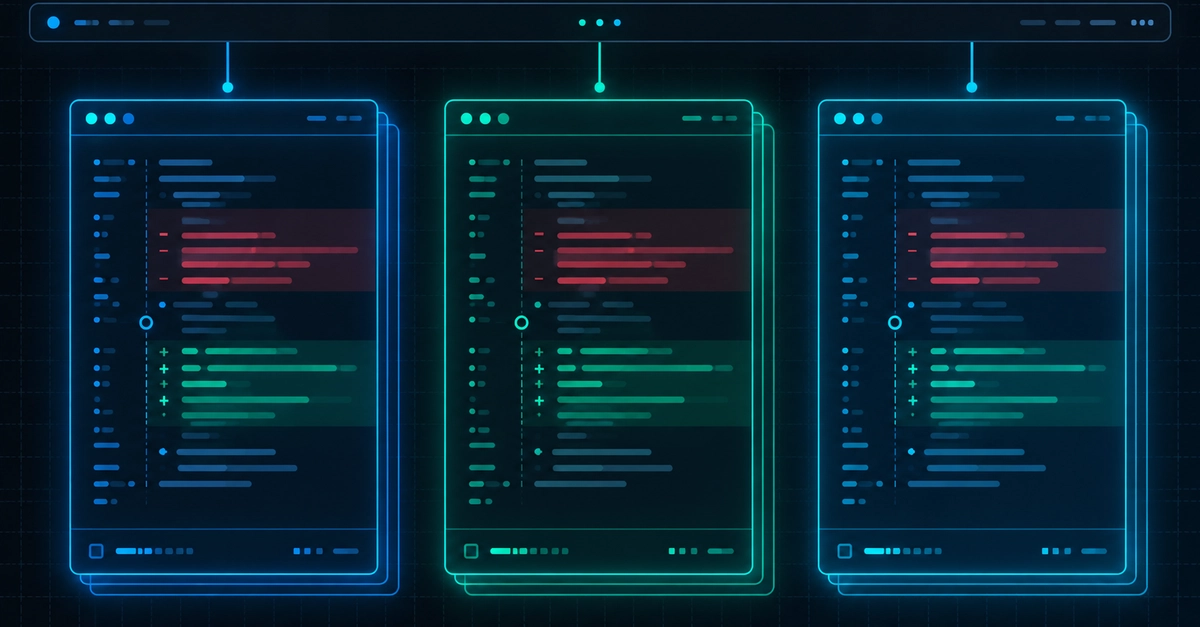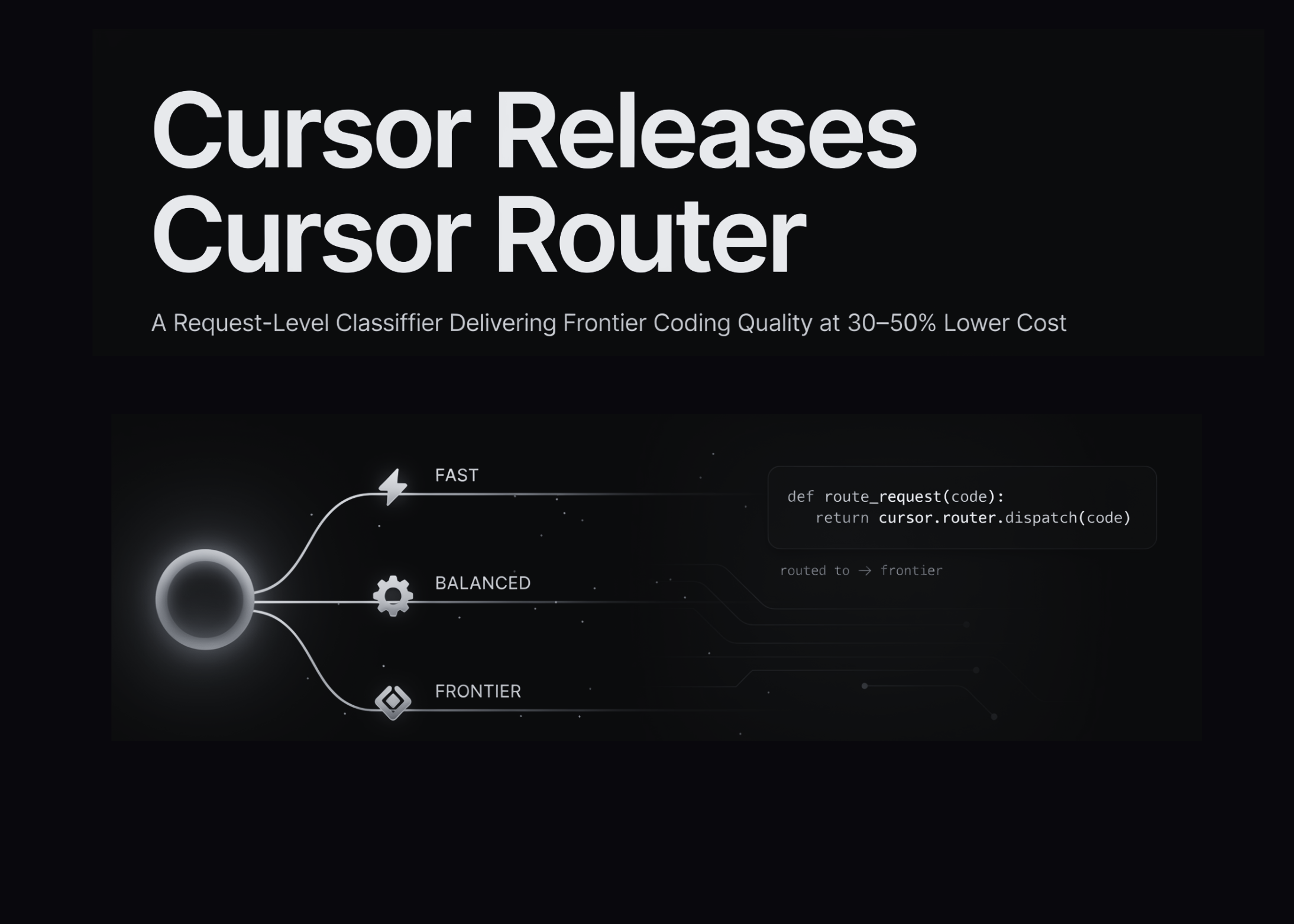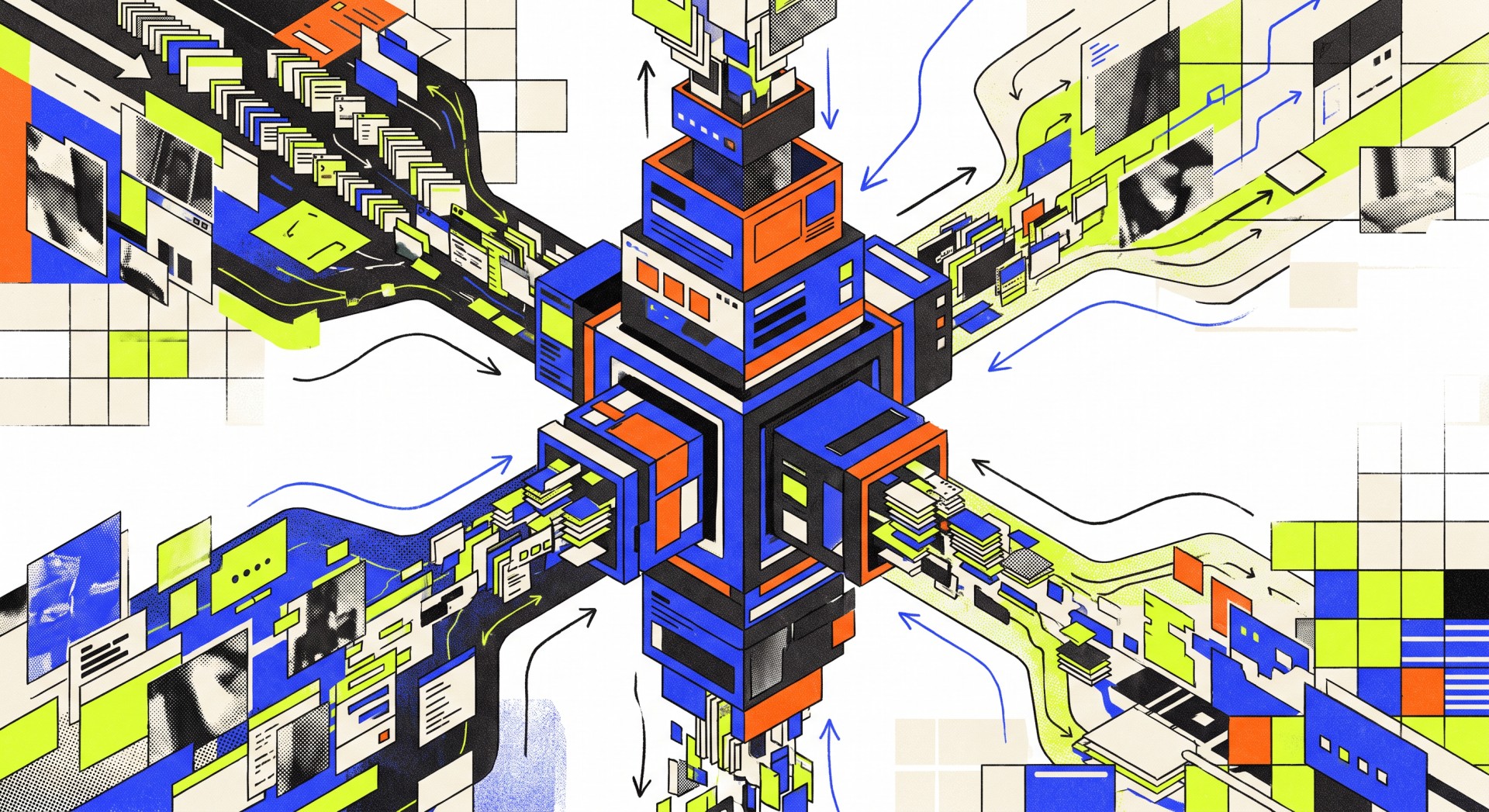
The system divides agents into two roles: planner agents using powerful frontier models recursively break a goal into smaller tasks. Worker agents using faster, cheaper models carry out those tasks. The result is a task tree that adapts as the work progresses.
Cursor says this role split primarily solves a context problem. A lone agent has to traverse the entire tree while keeping both the goal and the current task in mind. That helps explain why agents drift during long jobs. In Cursor's swarm, planners don't write code, and workers don't plan.
Cursor says swarms scale less through parallel work than by splitting context between planners that decide and workers that execute. | Image by Cursor
Git could not handle 1,000 commits per second
An earlier Cursor browser swarm reached about 1,000 commits per hour on Git. It used worker agents, a judge agent, and an integrator that resolved conflicts. The integrator ended up creating more bottlenecks than it removed.