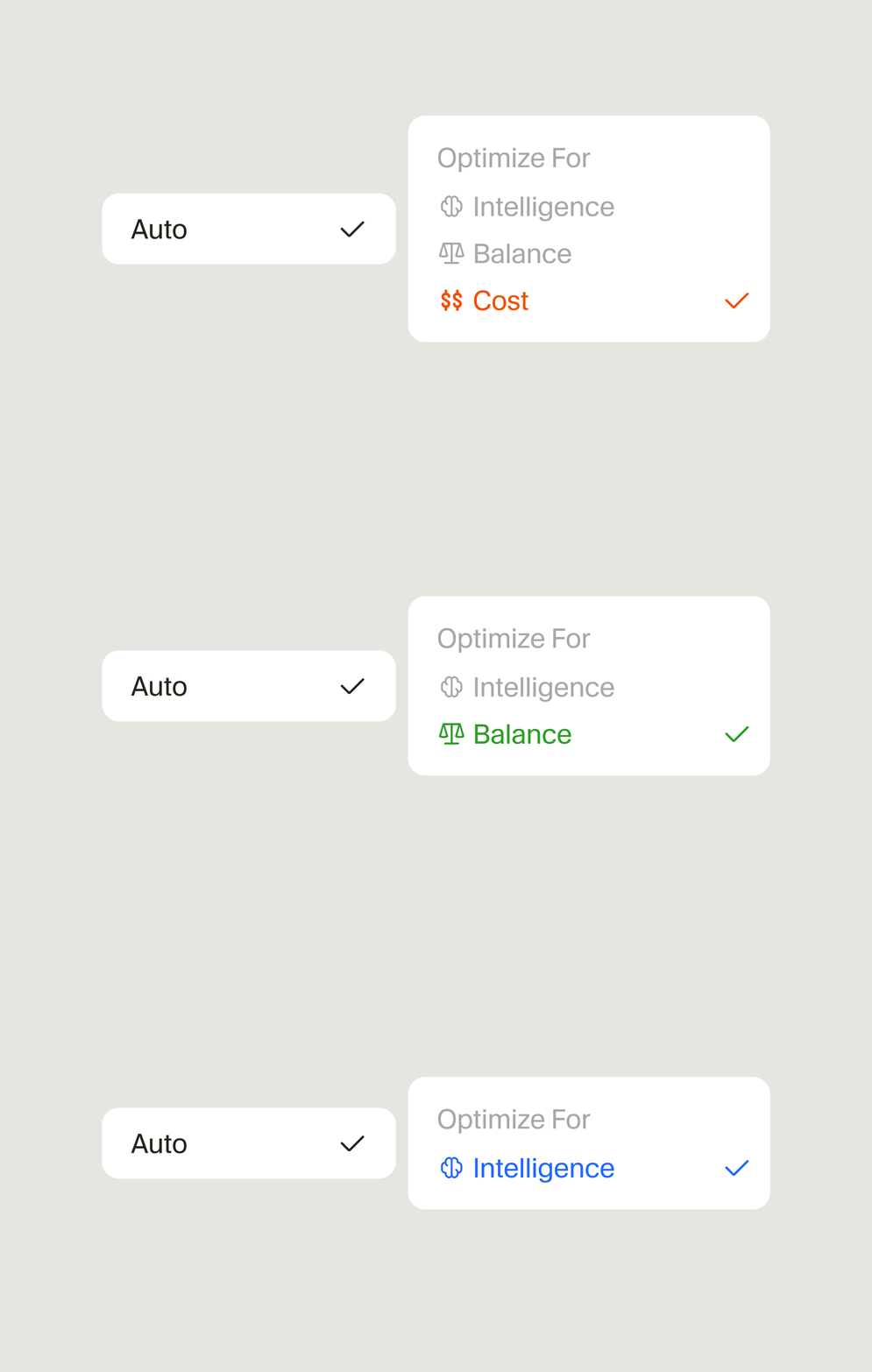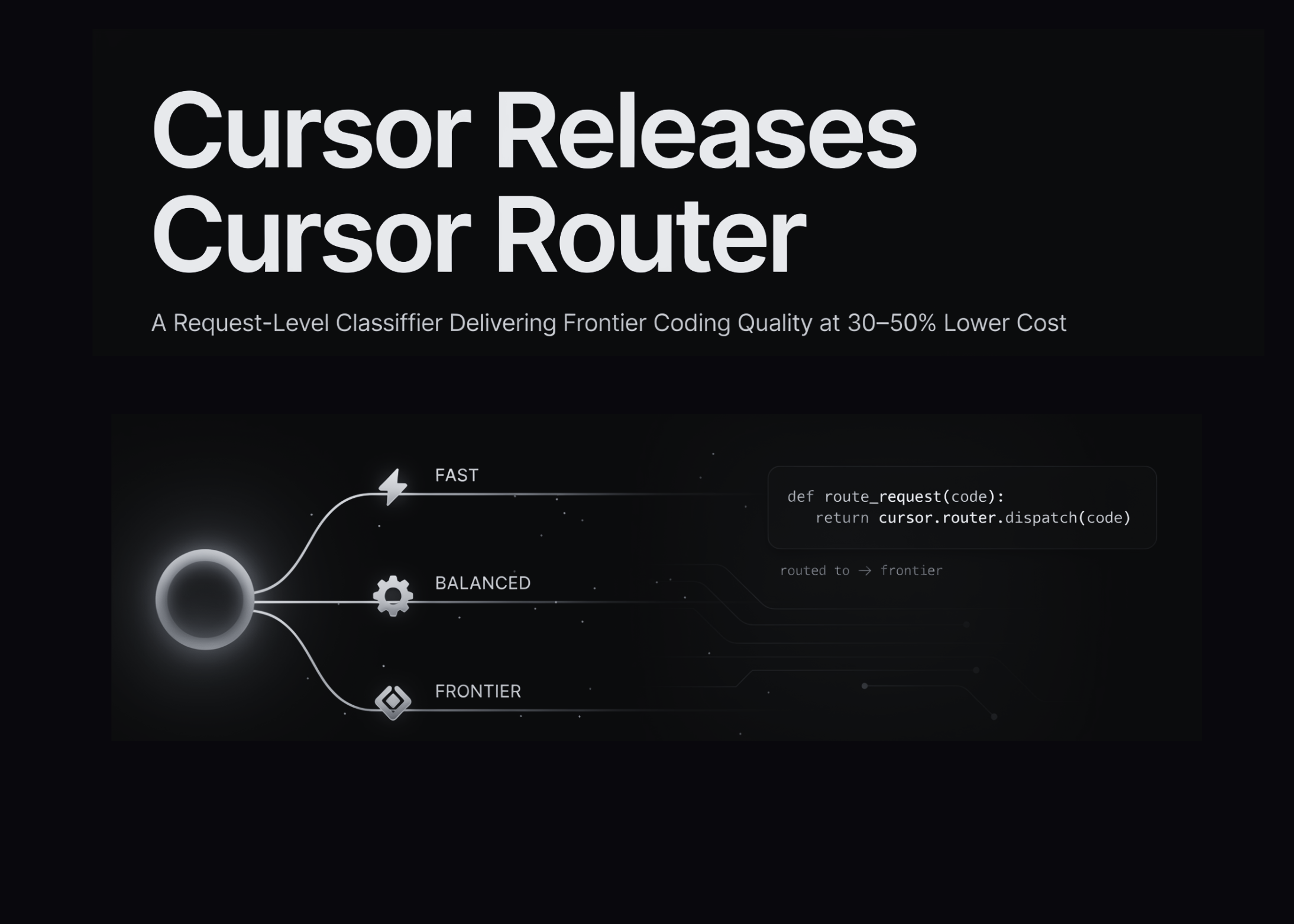
Cursor has made Cursor Router generally available for Teams and Enterprise plans. The system is a classifier that inspects each request before a model runs, then dispatches it to the model best suited to that specific task. The cursor team reports frontier-quality performance at 60% savings in online A/B tests, and 30–50% savings for early-access enterprise accounts.
The problem it targets is a spend pattern rather than a capability gap. Cursor states that roughly 60% of its developers pick a single model as a daily driver. Routine work therefore gets completed at frontier prices, and AI spend grows faster than output quality. Routing is Cursor’s answer to that mismatch.
What the classifier actually reads
Cursor Router is not a fallback chain or a retry mechanism. It is a classifier trained on 600k+ live requests, evaluated in an online A/B test across millions of live requests, and optimized for user satisfaction (AFC) as its reward signal.
For each request, the router analyzes four inputs: query, context, task complexity, and domain. It combines these with learned knowledge of each model’s behavior. Cursor publishes three routing rules that follow from that classification: