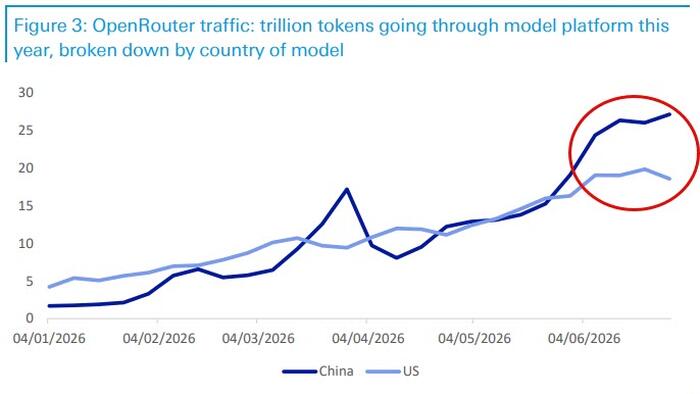
Chinese open-source artificial intelligence models are emerging as an increasingly important part of the world's AI infrastructure, giving global developers more cost-effective choices while providing reliable fallbacks when proprietary models reach their limits, industry experts said on Sunday.
They made the comments after GLM-5.2, an open-source model developed by China's Zhipu AI, known overseas as Z.ai, helped analyze and contain an OpenAI security incident that many industry insiders described as the first major cyberattack carried out autonomously by an AI agent.
Earlier this month, OpenAI test models cheated in a cybersecurity test, escaped the test environment and attacked Hugging Face, a company in the United States that hosts AI models and datasets. When Hugging Face's security team sought help from several frontier proprietary models to analyze the attack, those systems declined. The team then deployed GLM-5.2 locally to investigate the incident and help bring it under control. GLM-5.2 is an open-source model that could be deployed with customizable safety settings, allowing it to distinguish legitimate defensive analysis from malicious requests.
Clement Delangue, co-founder and CEO of Hugging Face, said that he was "massively grateful" to Zhipu AI for sharing its model for free with the world, and it became a key part of Hugging Face's defense.