When DeepSeek released its buzzy AI model, developers celebrated its high-performance and low compute costs—and the Chinese research lab’s decision to release the model on an open-source basis, allowing anyone to download and tweak it for their own ends.
Chinese AI developers, large and small, have released a series of open-source AI models throughout 2025, impressing outside developers and showing that China is able to catch up in the race to develop this new technology.
Open-source models, particularly from China, now may be starting to edge out the proprietary models rolled out by U.S. firms like OpenAI. Even some U.S. businesses are starting to think about Chinese models: Last month, Airbnb CEO Brian Chesky said that his company had started to use Alibaba’s open-source Qwen model, which he said was good, fast and cheap.
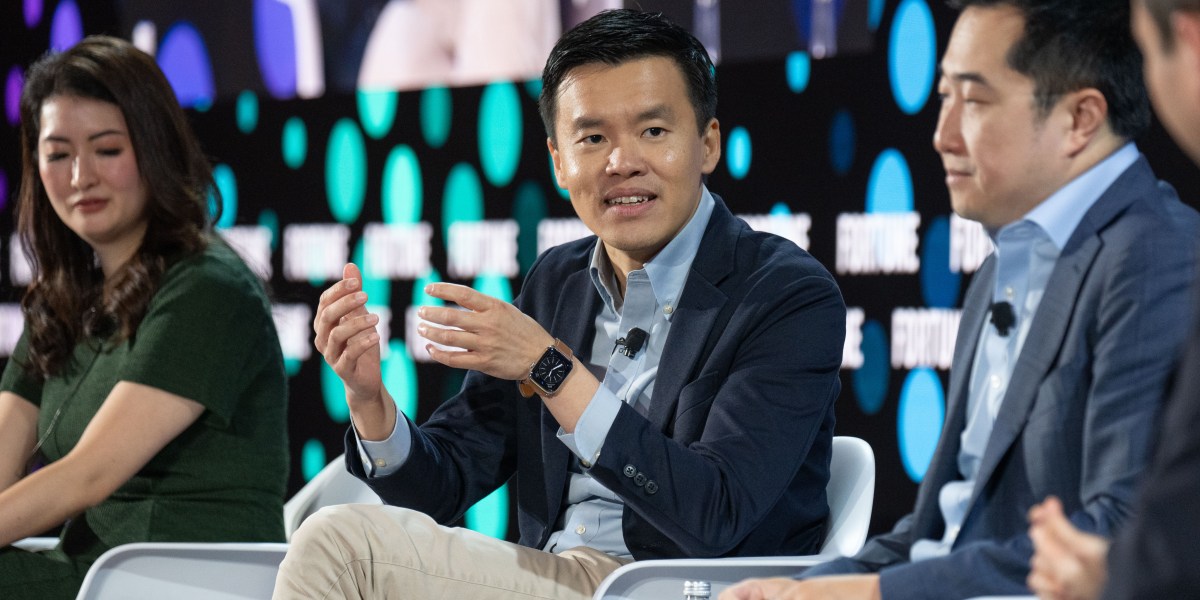
“China is focused a bit more on diffusion, while the U.S. focuses more on perfection,” Chan Yip Pang, executive director at Vertex Ventures SEA and India, said at the Fortune Innovation Forum in Kuala Lumpur, Malaysia on Monday. Chinese AI models tend to be cheaper and more lightweight, enabling them to spread into the mass market.
“If you look at Taobao—the Chinese equivalent of Amazon—and search for kids toys, you’ll find quite a number embedded with DeepSeek. That tells you how far ahead they are in terms of [AI] adoption,” Pang said.