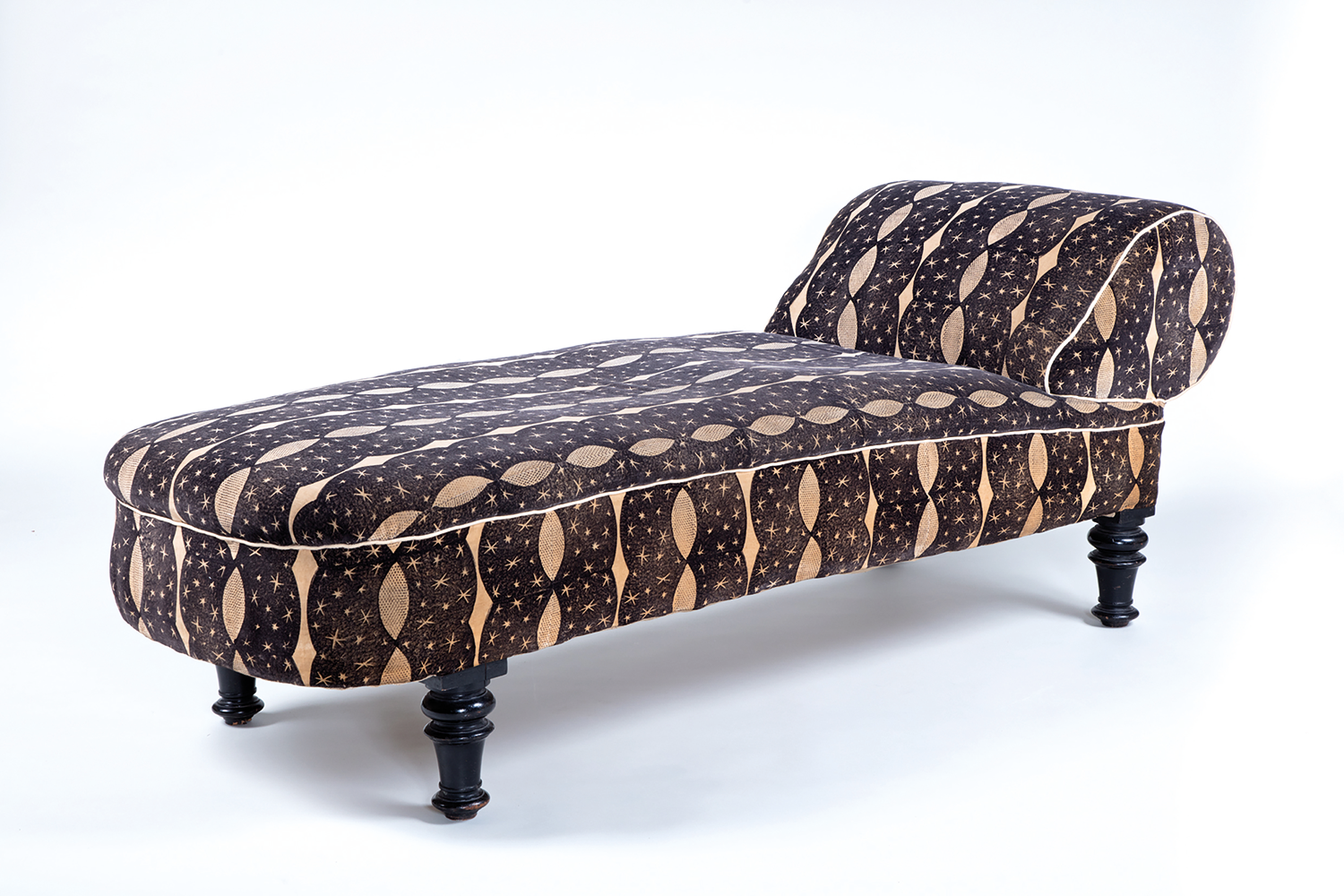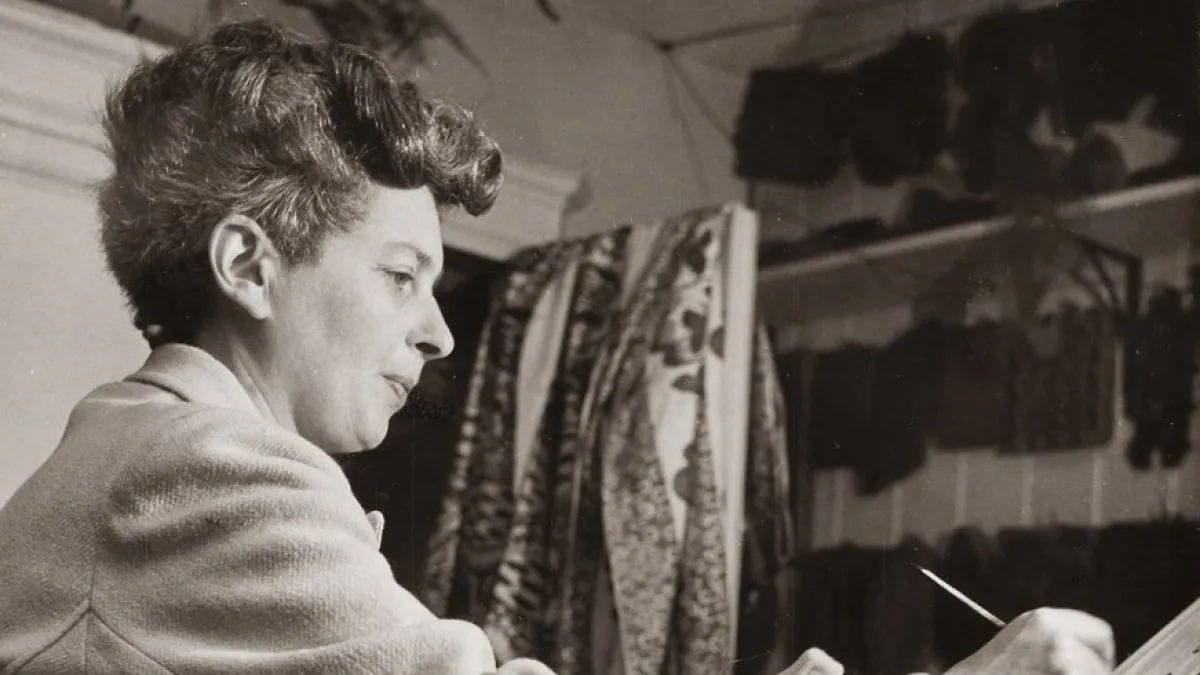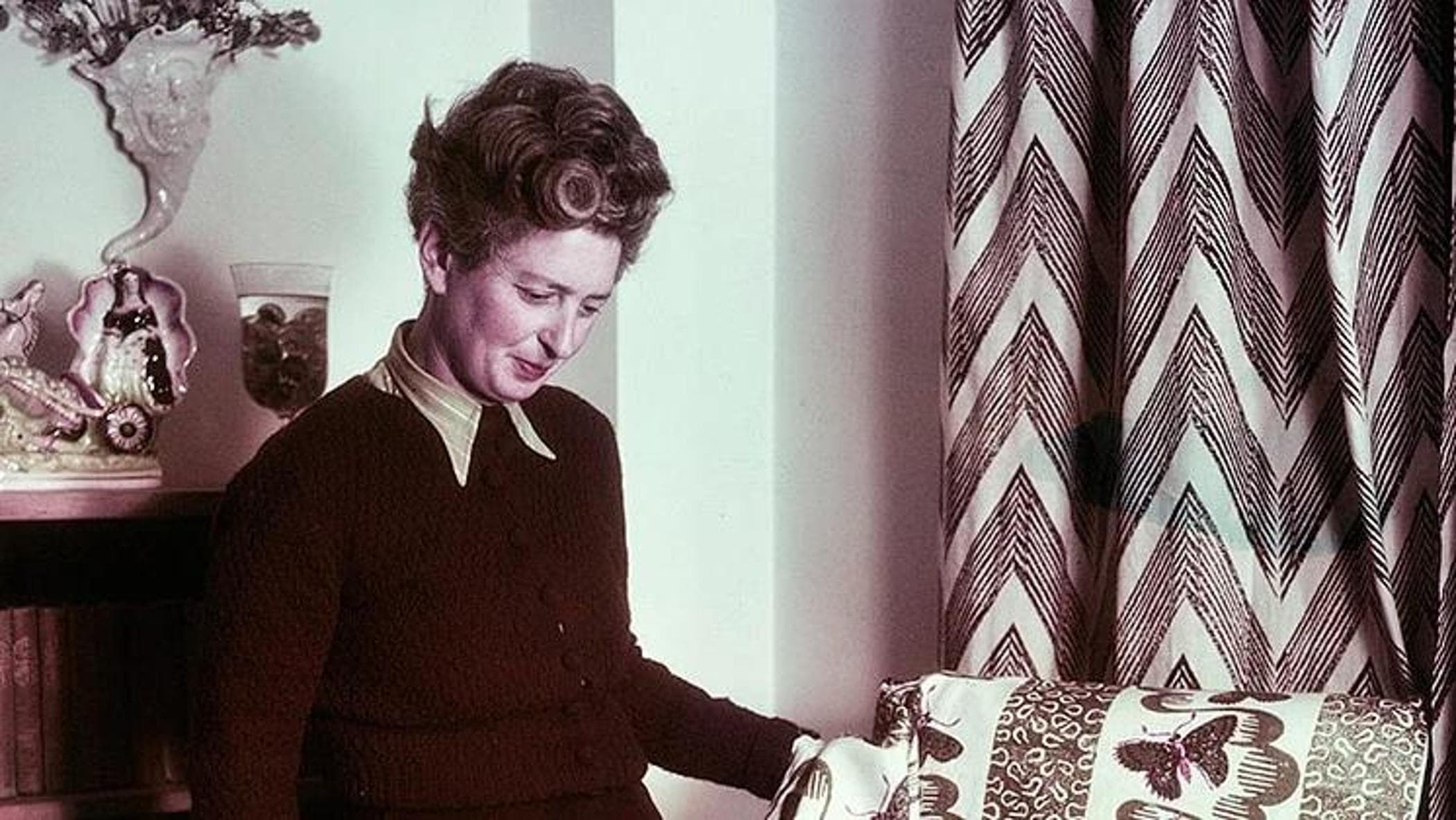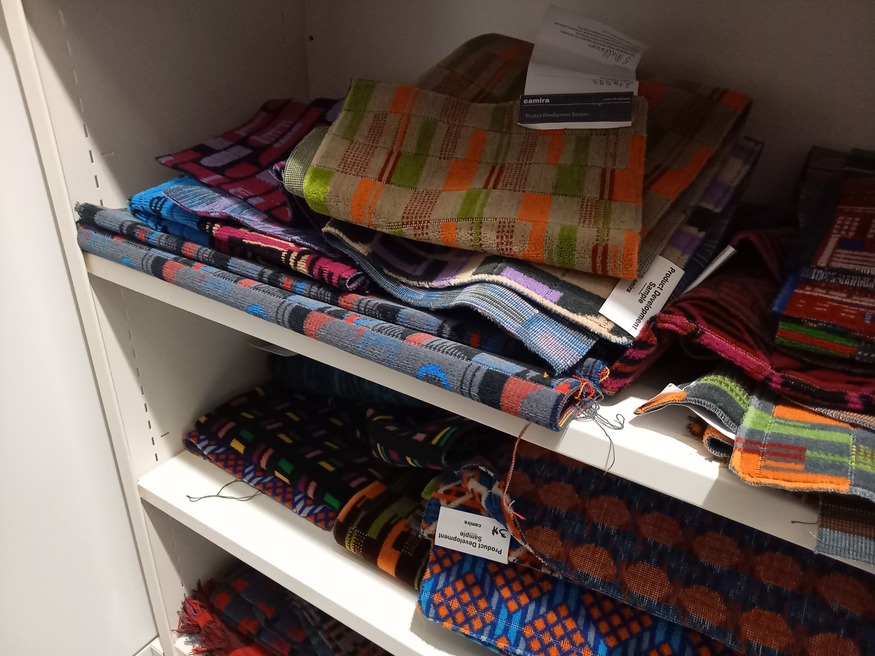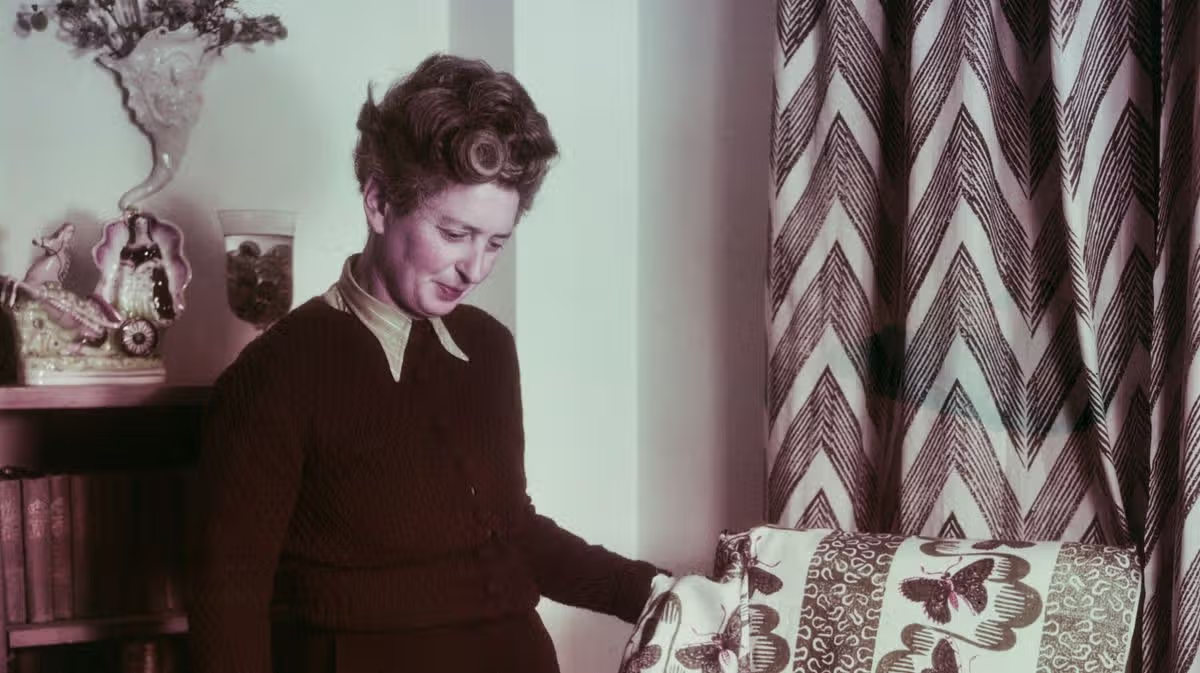
Her story is woven into the fabric of society. From the seats on London Underground trains to post war furniture, Christmas cards and stamps, the legacy of designer Enid Marx is everywhere. Now a major new exhibition aims to bring her groundbreaking talent into the spotlight once more.Lead curator of The Pattern of Life: Enid Marx and Modern British Design, Dr Az Crawford, explains: “Enid was a pioneer when it came to modern pattern design; she’s both an important and fascinating figure and her influence is all around us - not least on the capital’s Tube trains.“She was very well known in her lifetime, yet in later years she’s been overlooked. “Most people have no idea who she is - hopefully the exhibition redresses that.”The display opened this week at the Compton Verney Gallery in Warwickshire, a place Enid visited shortly before her death in 1998 aged 95, and to which she donated the art collection she had built with her life partner of more than 60 years, Margaret Lambert.The exhibition will look at the artist’s life through fabric and design and explore her influences and extraordinary career. It will also showcase her original London Underground fabric designs, the echoes of which can still be seen - and sat on - today.Enid, known all her life by the family nickname of “Marco”, was originally asked for design ideas for seating in new train carriages in 1937, by what was then the London Passenger Transport Board.The idea was part of an effort to modernise the Tube and make it more attractive to travel on. Her geometric patterns used a thick pile, durable fabric called moquette, with the seats’ original palette of dreary greys and browns - colours designed to blend in with commuter dirt - replaced by brighter, bolder hues which disguised it.In a later interview, Enid recalled the brief was “fun but strict.” While the strong, contrasting tones and brilliant colour were a hit, she had to be mindful of the potential nauseating effect on passengers of pattern when the train was in motion.Says art historian Dr Az: “She'd been making block printed fabrics throughout the 20s and 30s and her work was known for being versatile, modern and dynamic.“And because there was a drive to make travelling by Tube cool, Enid’s designs fitted the brief perfectly. The patterns are very rich. She chose green as a key colour, as it was believed it was soothing for passengers. We still have the same kind of concepts on the seats today. You are sitting on Enid's legacy when you sit on the Tube.”Enid was born in London in 1902, the youngest of three children. She was artistic as a child, collecting samples of ribbon from shops, and was influenced by her father, a paper making engineer.After studying at the Royal College of Art, where her classmates included sculptor Barbara Hepworth, she ultimately failed her Final Diploma Assessment. Her work there was judged “vulgar” as it rejected the traditional definition of fine art, although she finally received an honorary degree from the college almost 60 years later.By 1944 she had been awarded Royal Designer for Industry status - the UK’s highest accolade for designers - in recognition of her Tube seat design and work producing patterns for wartime utility furniture. Dr Az says: “There was rationing, including for all textiles, so when people were bombed out of their houses they needed new furnishings that were affordable.“Enid Marx designed all of the new patterns for what was known as utility items - the kind of pieces our great grandparents or grandparents might have had. Even today, people will remember this stuff - it’s a cultural memory. It also means Enid is kind of a lynchpin in different kinds of artistic movements, but also between us thinking about modern art textiles in a rarified way and then the mass production of them.”Enid, who had a love of both sherry and cats - she would draw an image of a cat almost every day - went on to design everything from Queen Elizabeth II’s early commemorative stamps, to Christmas cards, patterns for clothing fabric and even wrapping paper.She also illustrated children’s books. But her career was not without its challenges. Dr Az, who lectures in modern and contemporary art and visual culture at Exeter University, says: “She definitely faced hurdles as a woman. For instance, Enid talked about not being paid equally to men.“I also think her positioning as a textile designer has been denigrated by what people see as ‘legitimate art’. Textiles were historically associated with femininity and viewed as a kind of light form of art, or even rather irrelevant - she fought against that.”She was a complex figure too. “Enid was in a lifelong partnership with Margaret Lambert, always had a short back and sides and tended to wear men's or women's clothes, but never wanted to be labelled or known for her sexuality,” says Dr Az. She retained very tight control over what was said about her.”The constraints under which the designer lived are, says the curator, evident in her work: ”Her textiles show aspects of being within this kind of containment, of not quite being able to fully express herself. I think that restraint shows something about the culture in which she was living in.”As time passed, Enid’s reputation faded, her designs falling out of fashion because of their style and her association with austerity. Dr Az says: “People thought ‘we want something fresh and new, not things that are kind of associated with wartime and rationing.’ So that’s why she has been overlooked.”Now, though, gallery curators hope a new generation will come to know and appreciate the woman who was a pattern pioneer. Explains Dr Az: “It’s important to revitalise her history and put her back in the spotlight.“What would she herself make of the exhibition? I think she’d hate it! She was quite careful around how her image was viewed so I’m not sure she would have welcomed this introspection. I'm definitely going to be haunted by Enid holding a sherry glass!"*The Pattern of Life: Enid Marx and Modern British Design is open now at visual arts destination Compton Verney in Warwickshire.
Forgotten icon who changed London's Tube forever but critics wiped her name
All aboard! A major new exhibition celebrates Enid Marx, the pioneering British designer behind London Underground's iconic seat fabrics and wartime utility furniture.
1,034 words~5 min read