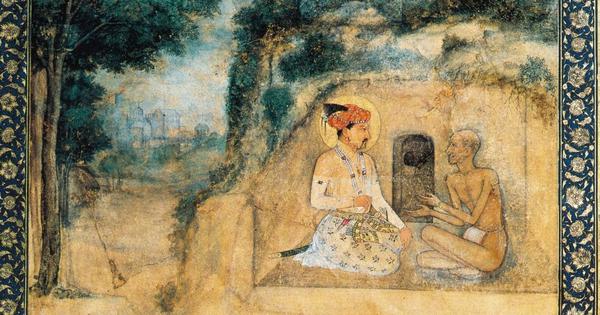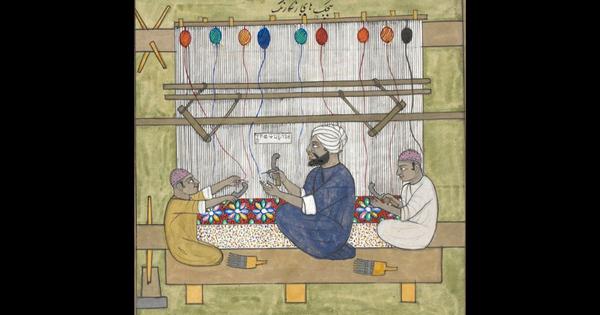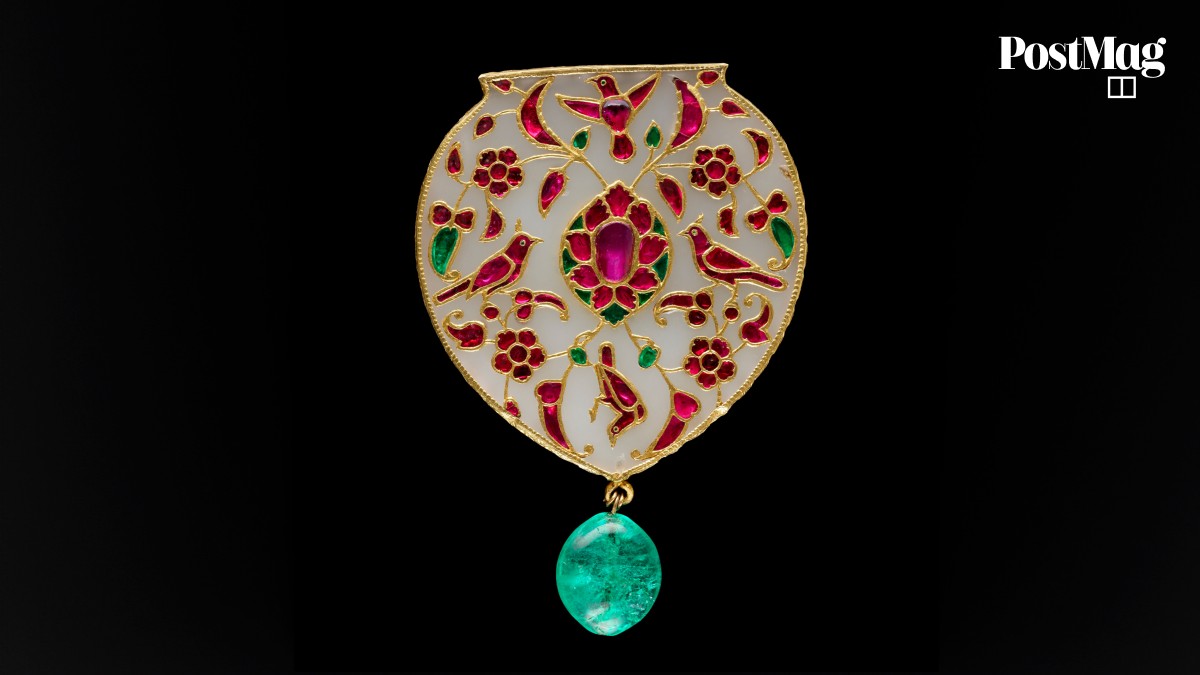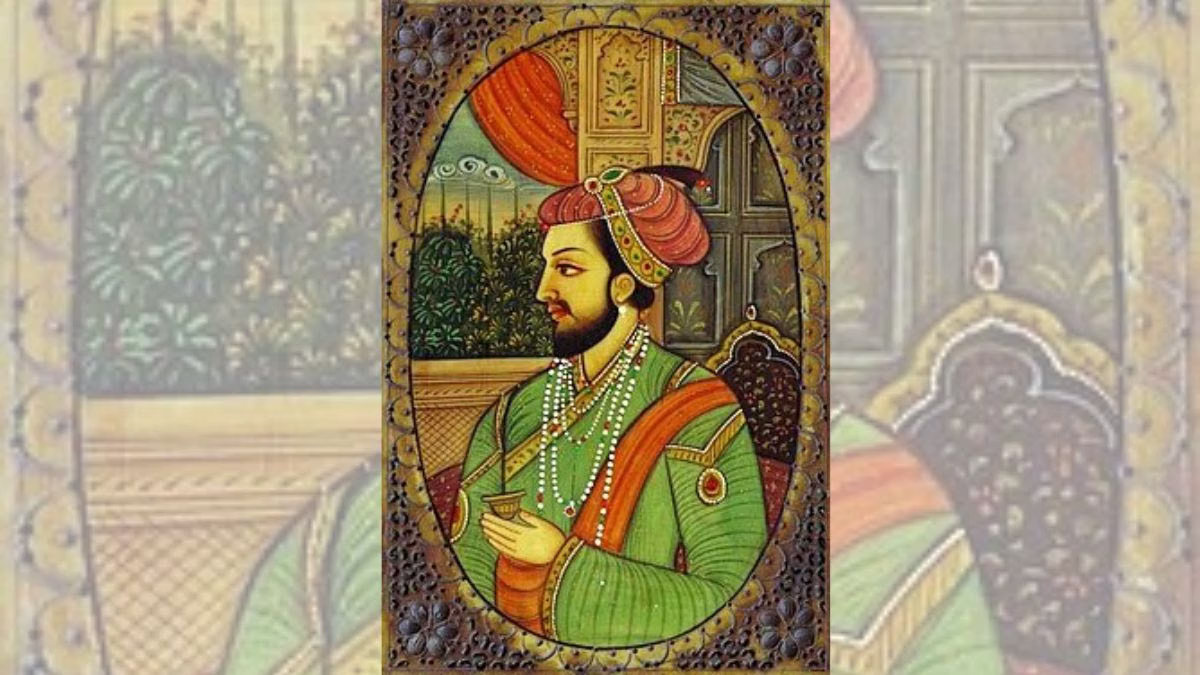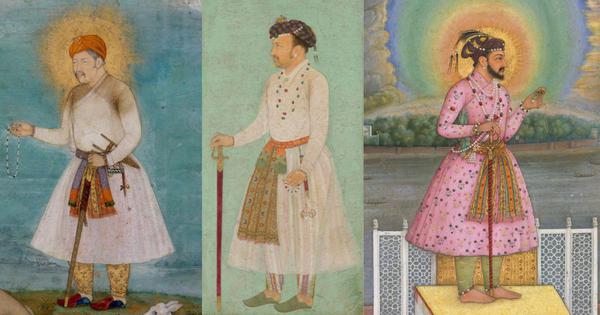
In his memoirs, the Tuzuk-i Jahangiri, Jahangir is represented as the quintessential aesthete. This is exemplified in his miniature portraits, often featuring a host of luxurious objects, such as jade wine cups, jewel-encrusted daggers, and finely woven textiles.In one such painting, where he is depicted in his typical resplendent regalia, two overlapping textile sashes or patkas gracefully wind around his torso – one bearing a distinctive bandhani tie-dye design, emblematic of Rajputana culture, and the other displaying intricate Islamicate geometric designs.
Portrait of Raja Suraj Singh Rathor of Marwar wearing a chakdar jama, from Shah Jahan Album; Bishan Das; 1640; Ink, opaque watercolour, and gold on paper. Courtesy The Metropolitan Museum of ArtThe politics of styleSurpassing the jama as a codified instrument of politics was the khil’at (Robe of Honour). The Arabic origin of the word means “cast off garment” – pointing to the practice of a sovereign handing his expensive robe to a subordinate as a mark of appreciation. Such a “gift” emphasised the superior status of the sovereign but also symbolised the imperial goodwill bestowed on a loyal vassal or courtier. The khil’at, typically decorated with jewels and other precious ornamentation, also held monetary value. But a “robe of honour” could take other forms and deliver other messages.For instance, Jahangir would personally invent the Nadiri hunting coat drawing on Persian, Chinese, and European design elements, reflecting Mughal cosmopolitan culture. The exclusive design was meant primarily for his own personal use and to create khil’ats for a select few. So when Prince Khurram (Shah Jahan) emerged victorious in the Deccan, Jahangir sent him an astoundingly elaborate Nadiri to express his happiness, an acknowledgement that the young prince was entering the exclusive club of elites who the emperor held in high esteem.Similarly, Jahangir was known to hand soft pashmina shawls to Rajput rulers to communicate volumes about the warmth of their partnerships. But at the same time, such shawls, previously rebranded as “Paramnarm” by Akbar, alluded to a lingual play on the Persian phrase “Ragi gardan narm kardan”, which meant renouncing pride and learning to obey. The gift of the shawls, therefore, was Jahangir’s way of sending the hard message to his vassals to stay loyal but couched in the softest of materials.The concept of the khil’at was used by Jahangir in another unusual context to define his relationship with another powerful Persianate kingdom – Safavid Iran. Undoubtedly, the Mughal dynasty owed a debt of gratitude to them for supporting Humayun and helping him reclaim his kingdom. But, at the same time, the Mughal empire had, in the succeeding decades, become a competing and important centre of Persianate political and cultural power. This paradoxical situation was depicted in Abu’l-Hasan’s painting, Emperor Jahangir embraces Shah Abbas. In reality, the Safavid shah, known as “Abbas the Great”, had never visited the subcontinent or met Jahangir in person. In the painting though, based on a dream that Jahangir supposedly had, the two rulers are shown embracing each other while standing on the globe. While Abbas wears a Persianate-style robe of brocaded silk in a style typical of a gifted khil’at – symbolising subordination – Jahangir is shown wearing a simple cotton jama beneath a green Nadiri vest. In this painting and others, Jahangir would visually assert that he wore no one’s robes but his own, and owed no form of political submission to the Safavids.