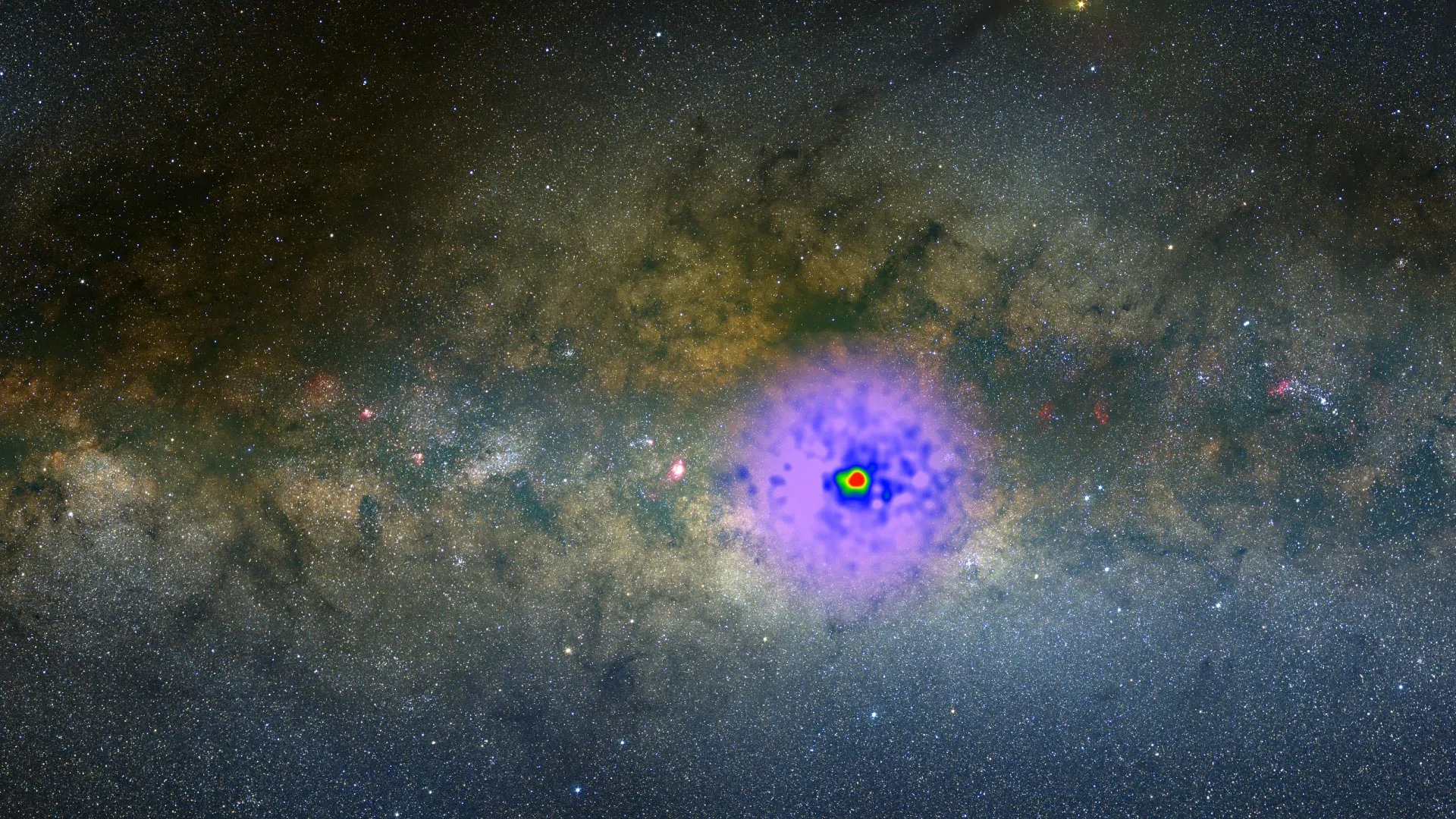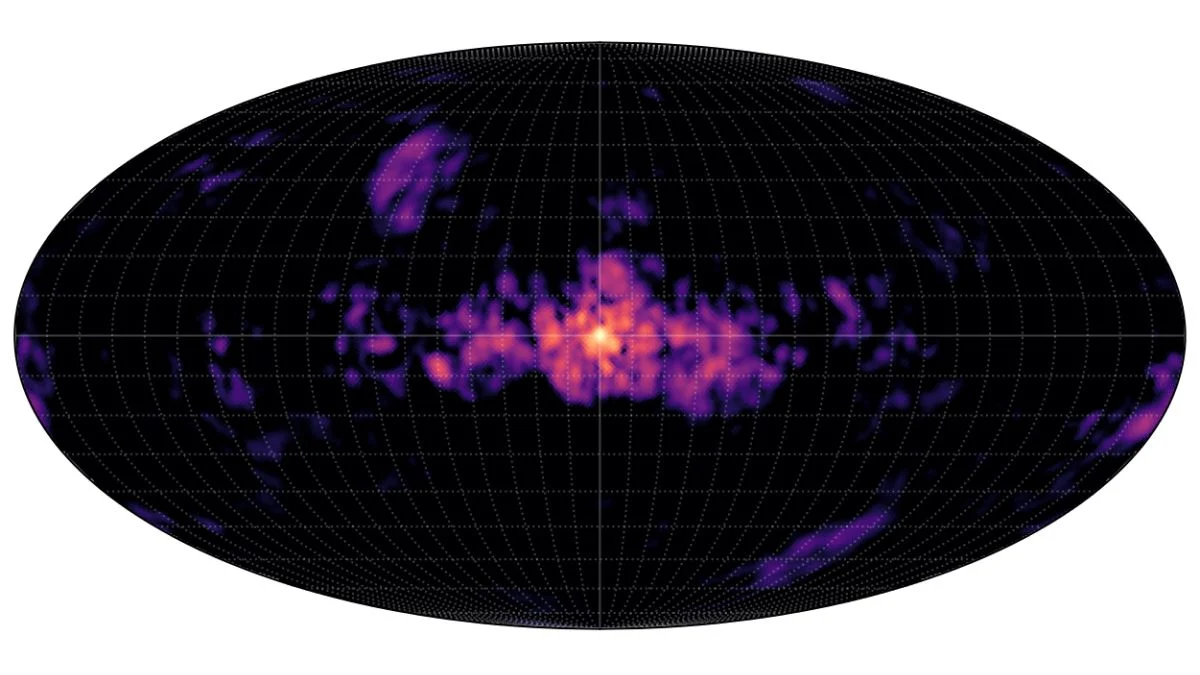
There's something wrong with the center of the Milky Way.For decades, astronomers have puzzled over a vast population of antimatter particles, or positrons, that collide with electrons to annihilate in flashes of gamma rays around the center of our galaxy.The problem is that known astrophysical sources cannot account for how many positrons the Milky Way appears to produce – and now a pair of physicists has reported evidence that could make that problem worse.According to a new paper by Thomas Siegert of the Julius Maximilian University of Würzburg in Germany and Hiroki Yoneda of Kyoto University in Japan, the gamma-ray signature of matter-antimatter annihilation may have been detected outside the Milky Way for the first time.At least one location suggests that some positrons may be escaping far beyond the Milky Way's disk before annihilating.If true, that could mean the Milky Way is producing significantly more antimatter than previous estimates indicated."This would be the first detection of extragalactic positron annihilation," Siegert told ScienceAlert. "That in itself would mean that the positron content of the Milky Way is much larger than what is currently observed 'inside'."
Astronomers Think They've Detected Antimatter Signals From Beyond The Milky Way For The First Time
There's something wrong with the center of the Milky Way.
968 words~4 min read