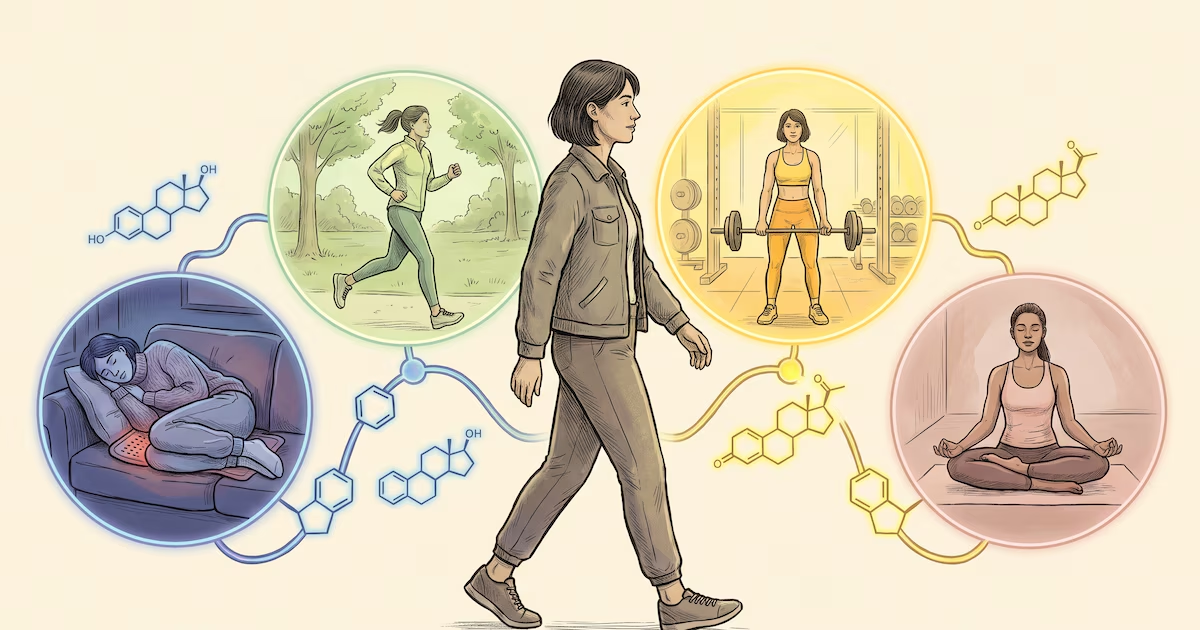
Many who practise cycle syncing deliberately slow their pace, choose nourishing meals and prioritise recovery (Photo: Gemini)
The traditional nine-to-five workday and modern fitness regimes were largely built around a 24-hour circadian rhythm. However, an increasing number of women are adopting “cycle hacking” or cycle syncing to plan their work, exercise, and nutrition around the shifting phases of their monthly menstrual cycles.
Driven by popular wellness trends and specialised cycle-tracking apps like Clue, Natural Cycles and MyFLO, this self-care approach treats hormonal shifts not as inconveniences, but as a roadmap for personalised wellness and productivity planning. While advocates praise its life-altering benefits, the scientific community urges caution, emphasising that evidence remains limited.
While many women say the approach has helped them become more in tune with their bodies, health experts caution that the science is still evolving. They stress that cycle syncing is not a one-size-fits-all formula and may not work for everyone.
A typical menstrual cycle lasts around 28 days, although anything between 21 and 35 days is considered normal. It is divided into four phases.