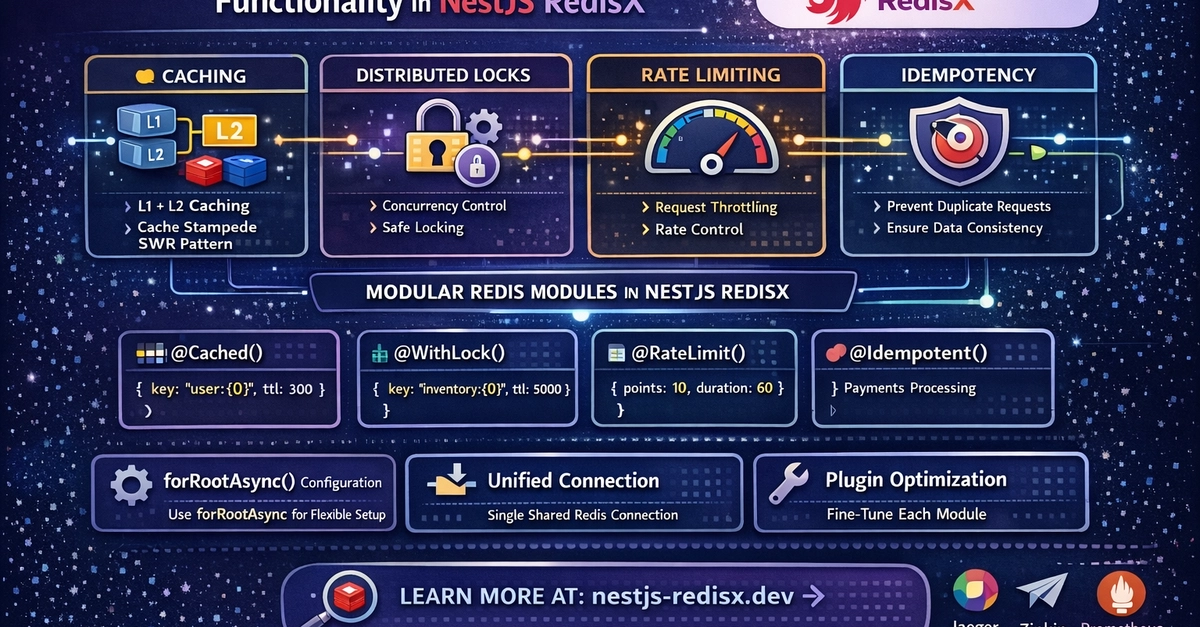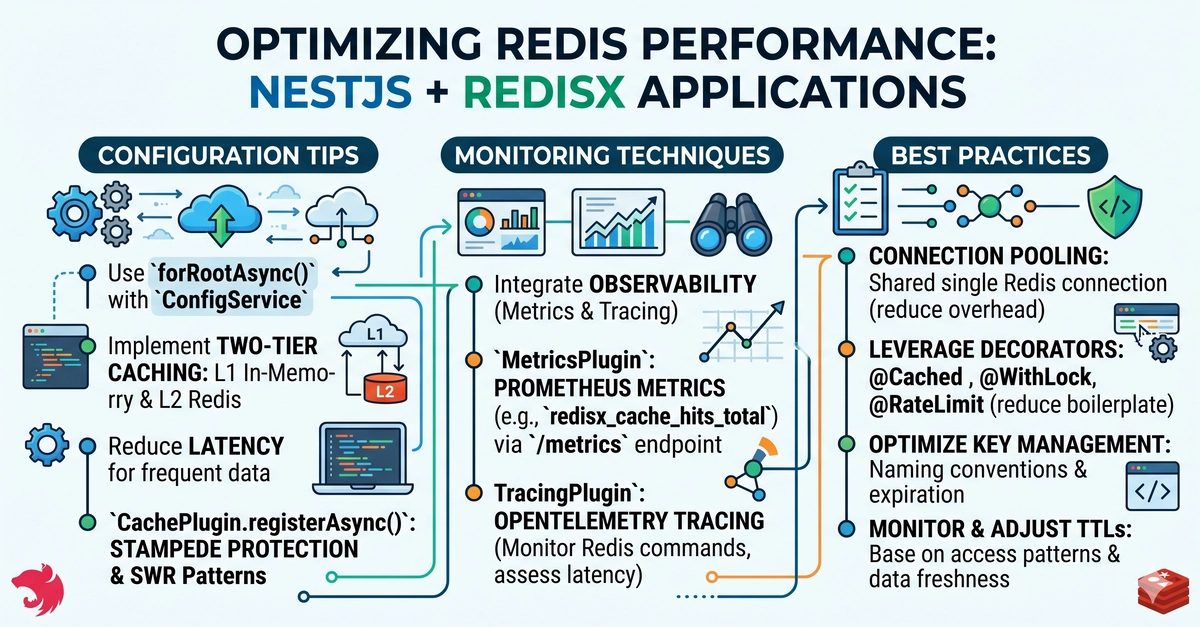
Getting the most out of Redis in your NestJS applications is all about fine-tuning performance. RedisX is a toolkit that makes integrating Redis into NestJS a breeze. Let's break down how you can beef up performance with configuration, monitoring, and some smart practices.
Configuration Tips
First things first: when you're setting up Redis, you want it to play nice with your NestJS config. Enter forRootAsync(). It's like the swiss army knife for async config using ConfigService. This keeps things flexible and tidy. Want to shave off some latency? Think about a two-tier caching system—L1 in-memory and L2 Redis. Use CachePlugin.registerAsync() if you're aiming for stampede protection and Stale-While-Revalidate (SWR) patterns. Check our previous SWR post if you need a refresher.
Here's a quick peek at how you might set that up:
RedisModule.forRootAsync({