When I started building Footalyzer, I didn't think much about Redis. I had Next.js on the frontend, Express on the backend, MongoDB for data — that felt like enough. Then I started hitting real problems: slow API calls, repeated requests hammering an external football API, and AI-generated content that took too long to feel "live." That's when Redis, caching, and job queues stopped being buzzwords and became things I actually needed.
Here's the simple version of what I learned.
What even is Redis?
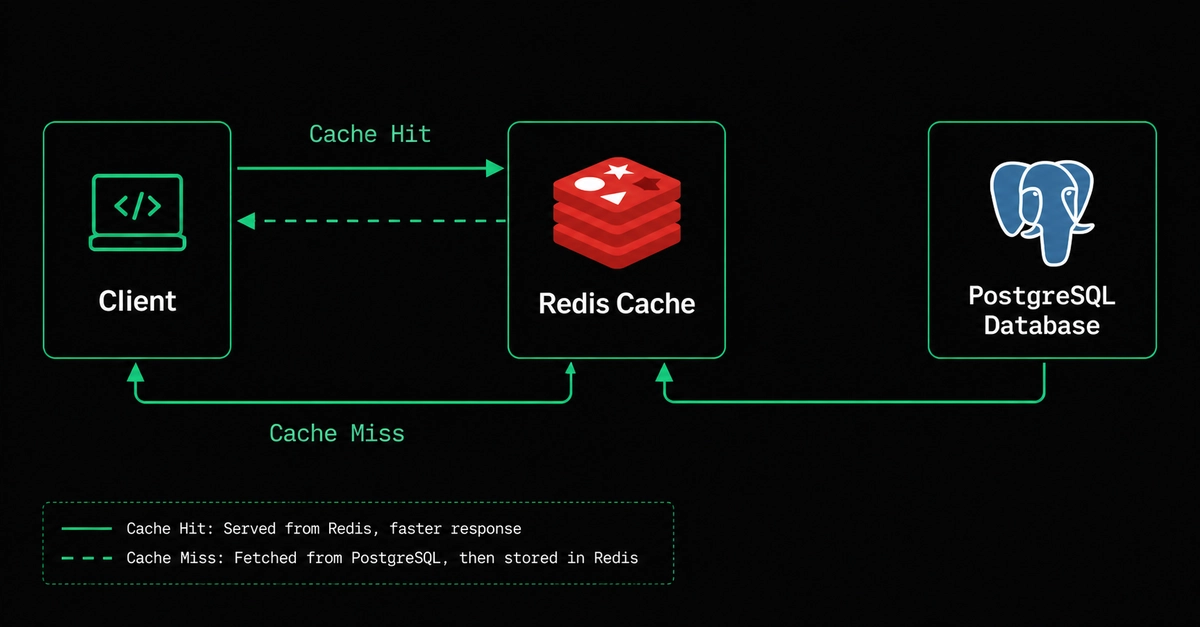
Redis is basically a super-fast storage box that lives in memory (RAM) instead of on disk. Because RAM is way faster than a database like MongoDB, reading and writing to Redis takes microseconds instead of milliseconds.
The catch: it's not meant to be your main database. It's meant to hold stuff temporarily — things you'll ask for again and again, or things you need to process in the background.