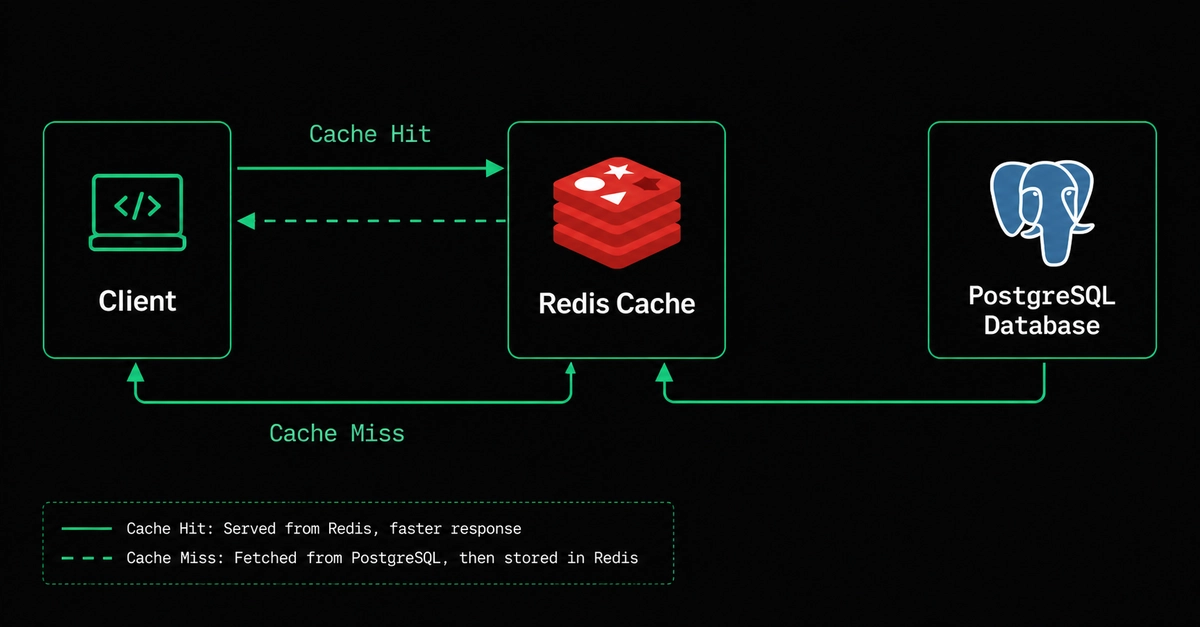
A practical walkthrough of the cache-aside pattern — why it exists, how to implement it, and what breaks if you skip it.
When I built Flacron Gamezone, one of the first questions I had to answer wasn't about the UI or the API design. It was simpler and more uncomfortable than that: what happens when fifty users refresh the live scores page at the same time?
The honest answer, without caching, is that all fifty of them hit the database. And then the next fifty do the same. And the one after that. For a football platform where the data changes every few minutes but gets read thousands of times between those changes, that's a lot of identical queries doing identical work for no reason.
This is the problem Redis solves. More specifically, it's the problem the cache-aside pattern solves. Here's how I implemented it, what it looks like in production, and why the details matter.
Why Not Just Cache Everything?