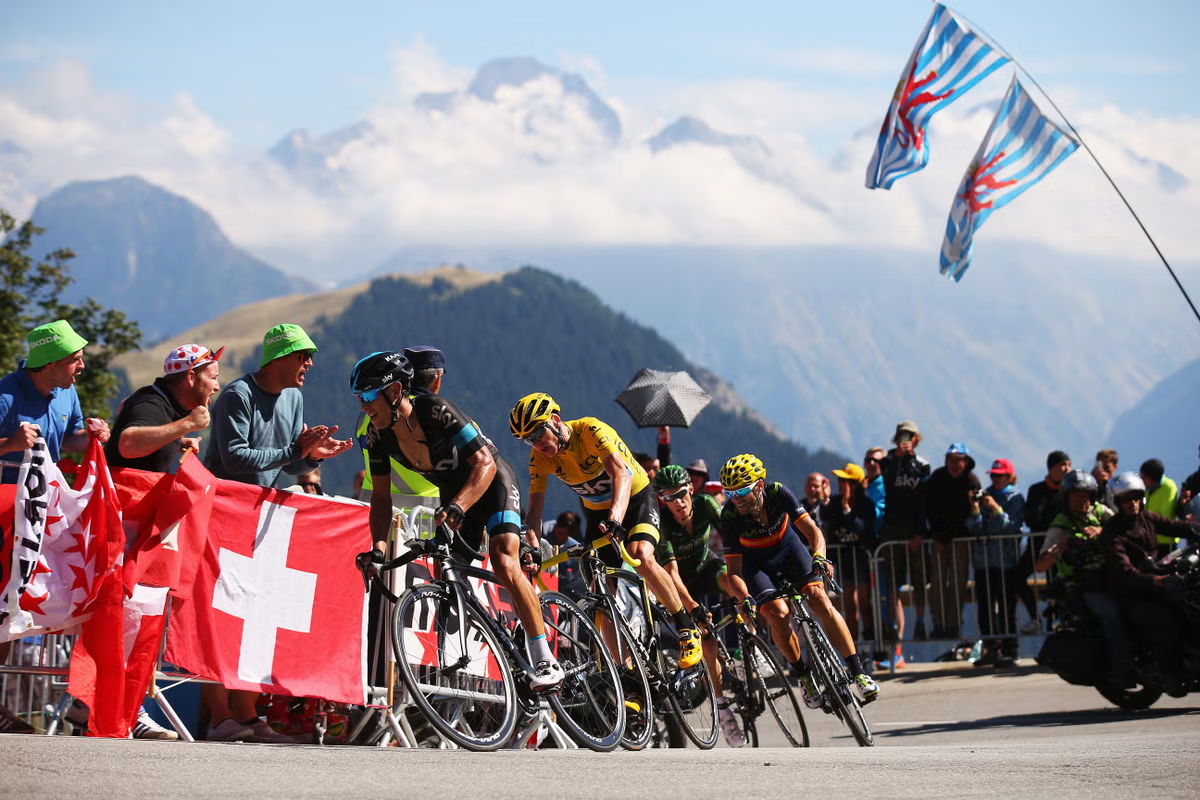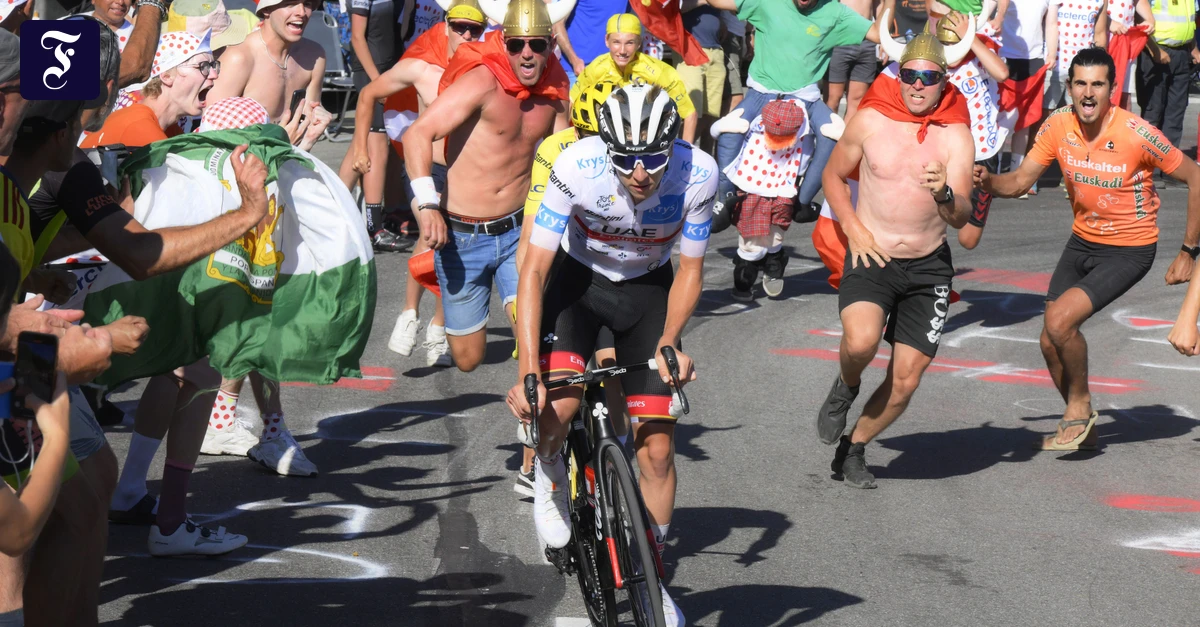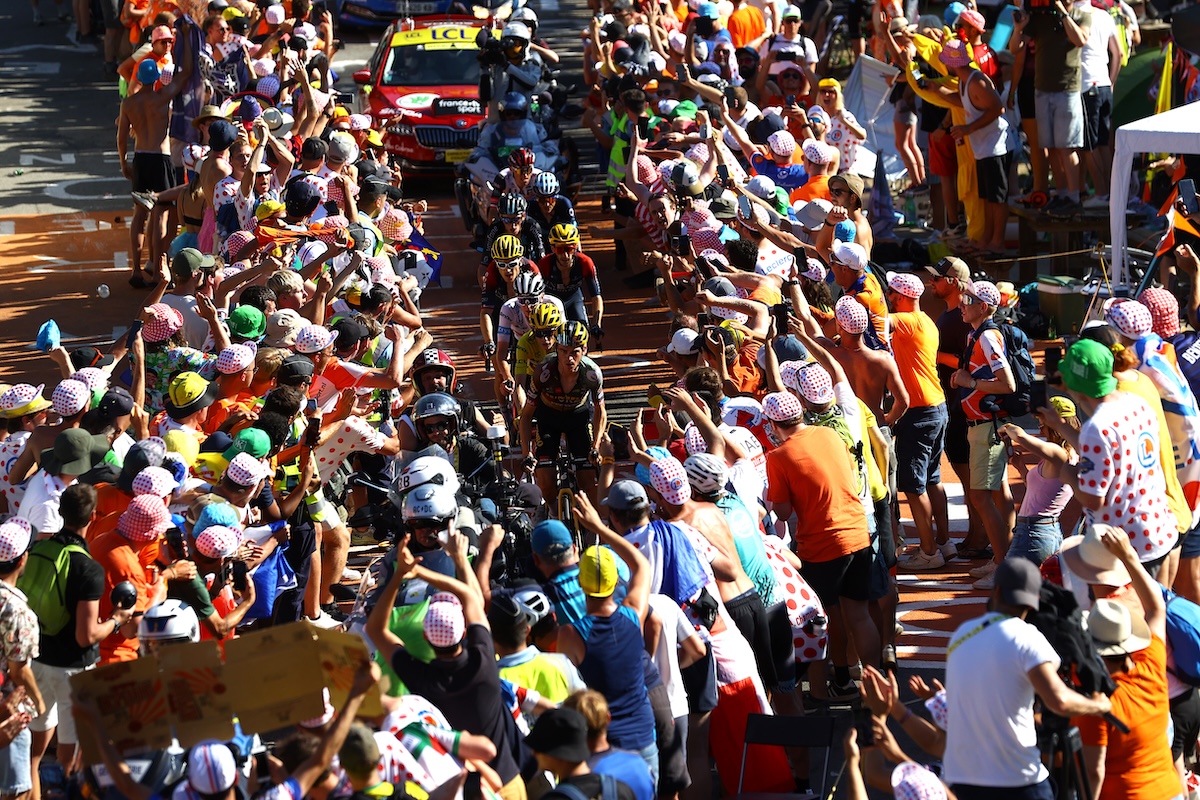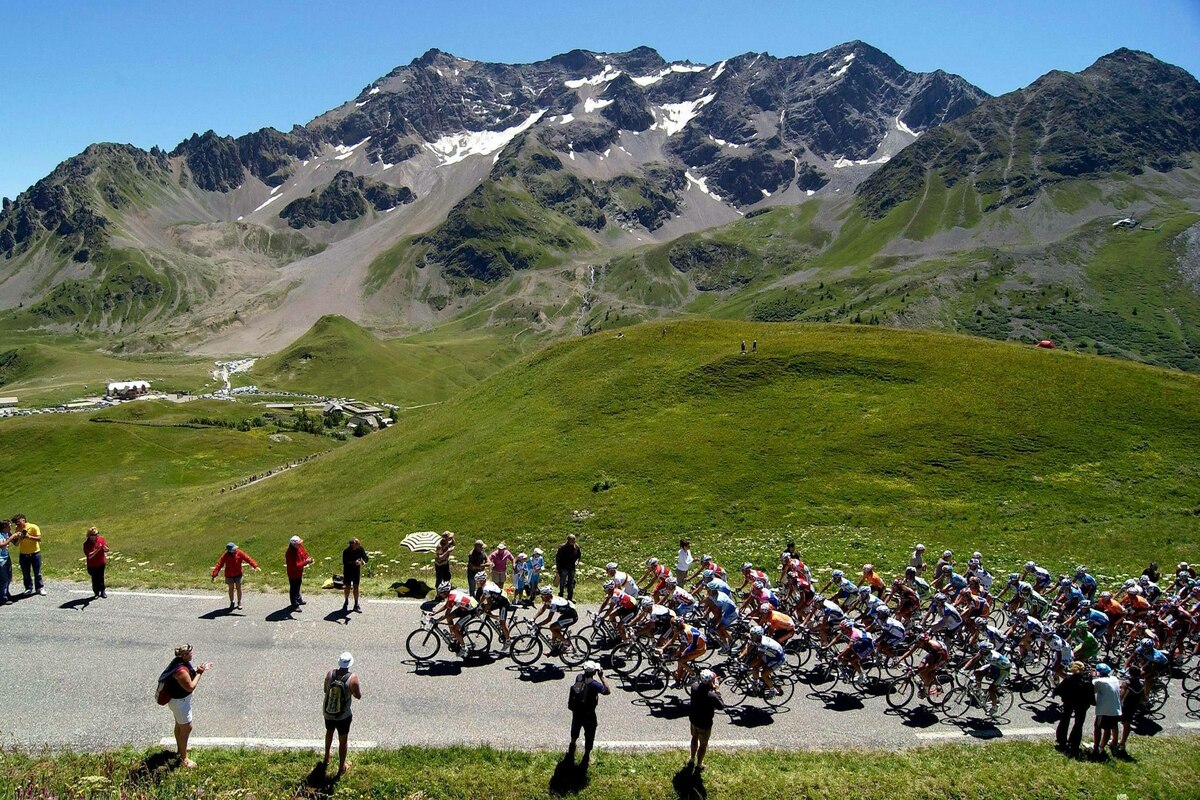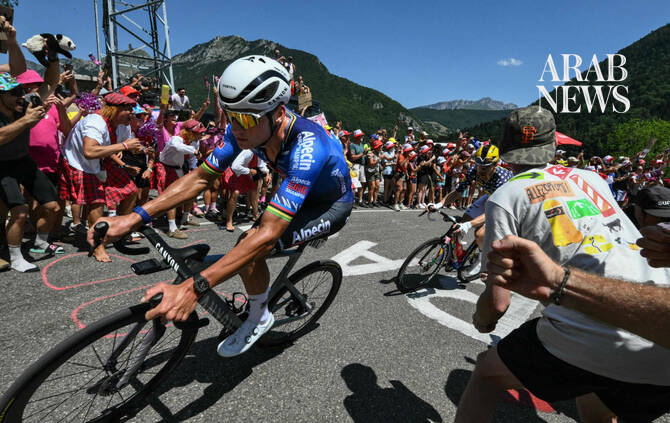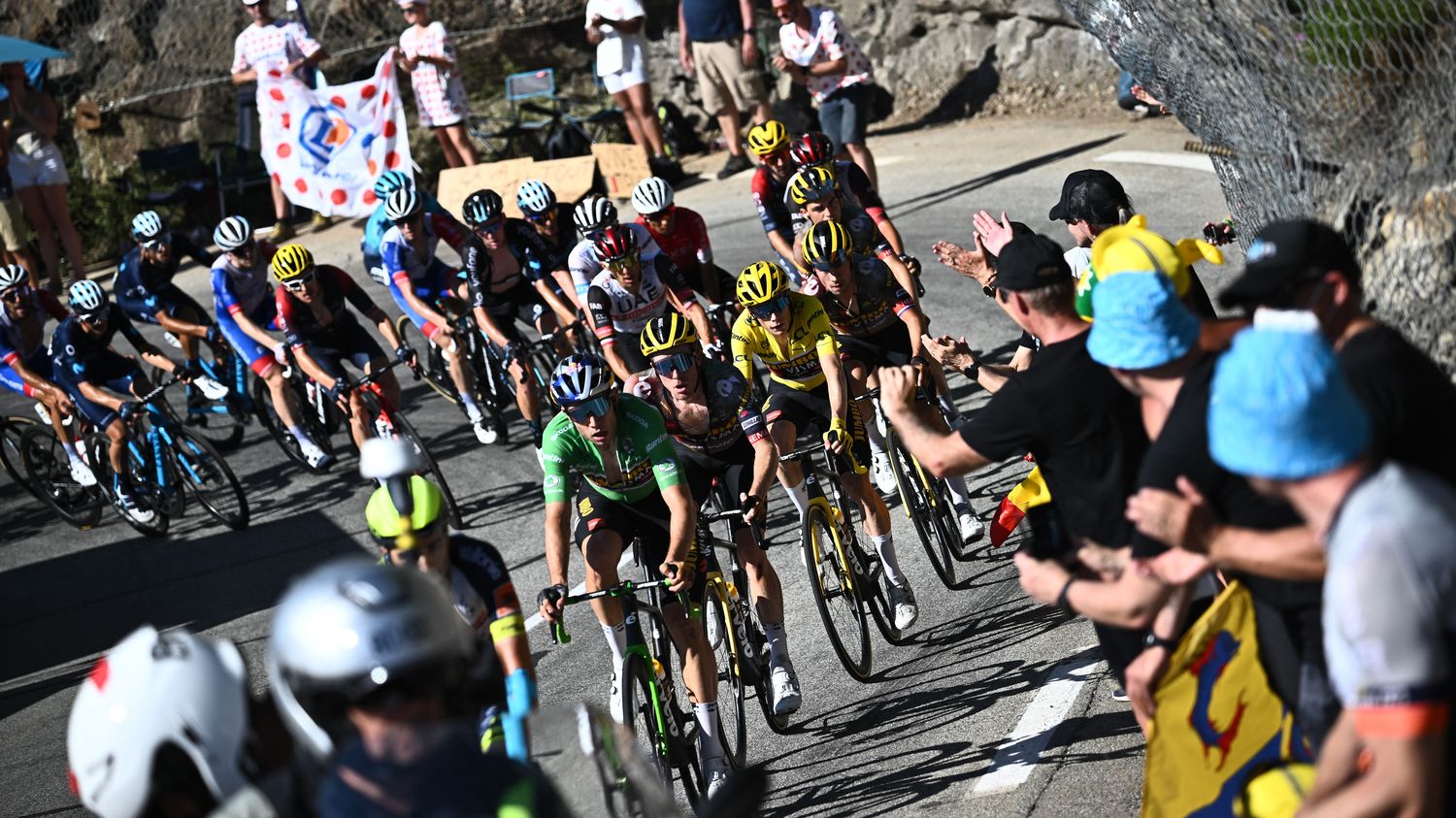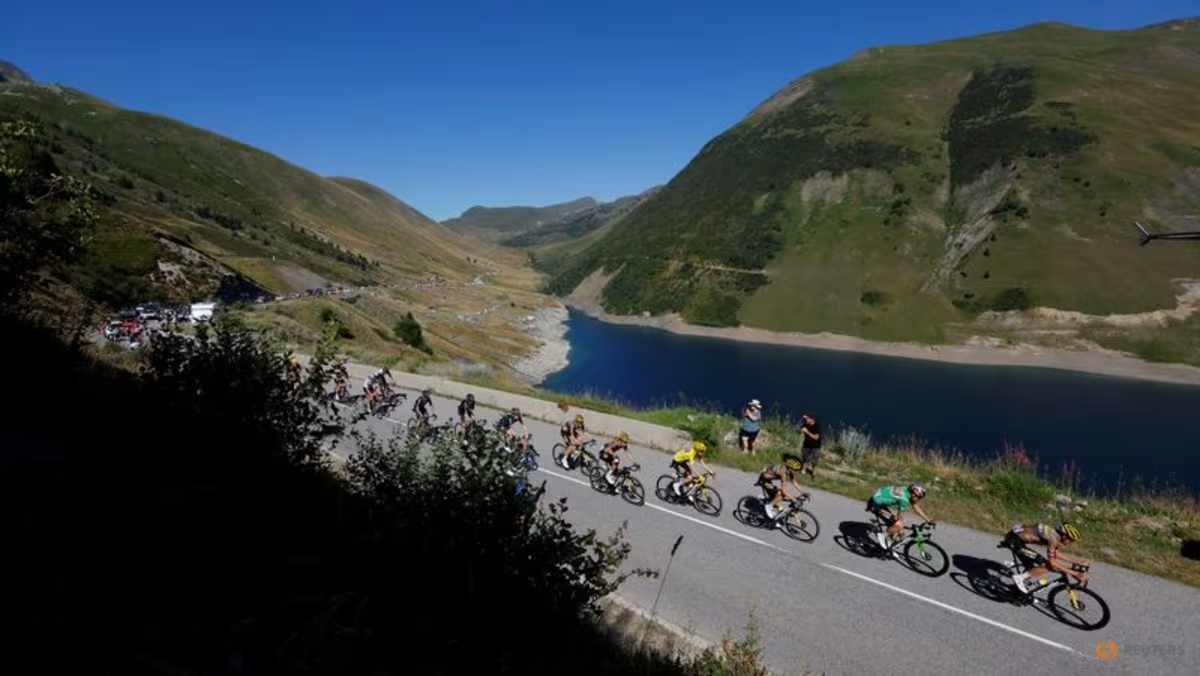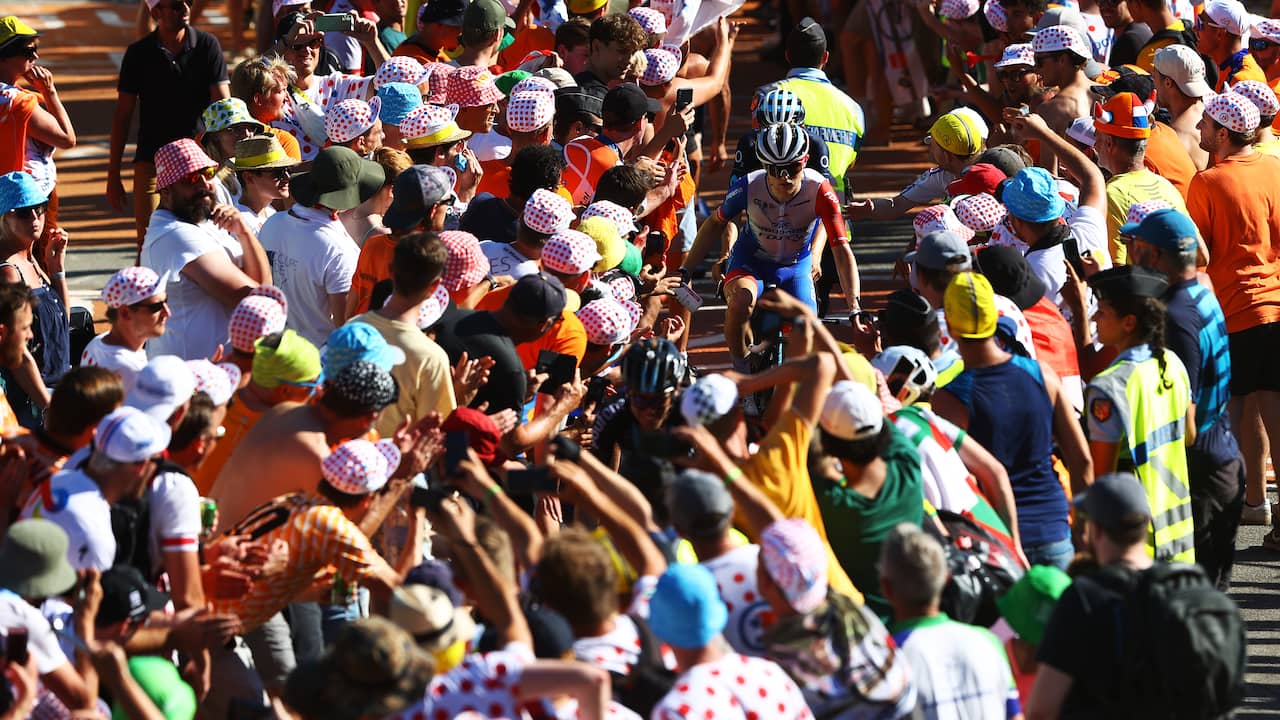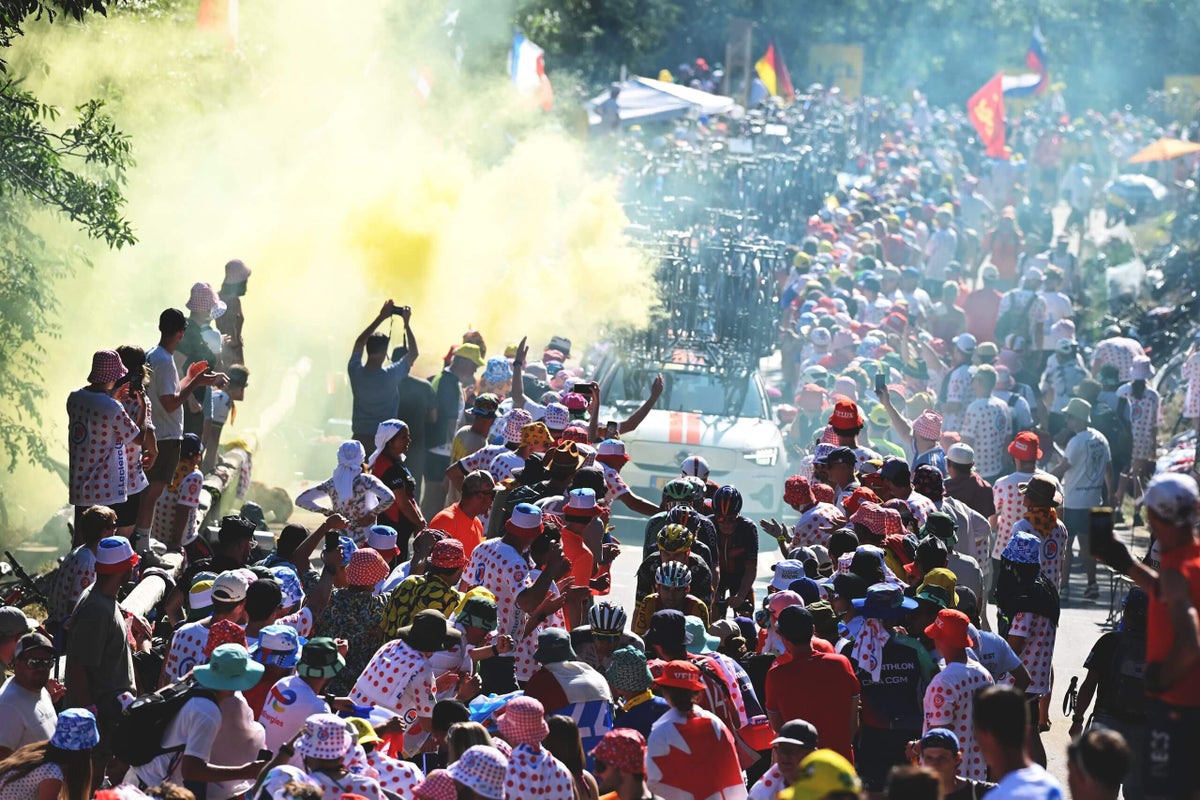
It feels religious. There is a devil on the roadside, his tail seductively flickering. There is wine, the name Paul painted onto the tarmac, the old and the young worshipping together, but in what other faith is the road to heaven lined with Teletubbies, tandem bikes, and cars rocked by two dozen hands?Alpe d’Huez is not one of France’s hardest climbs, or even one of its most beautiful — but its 21 hairpin bends, and the crowds that cling those laces like barnacles to a ship’s anchor, have made it the Tour’s most atmospheric.Didi the Devil, a longstanding roadside presence at the Tour (Jacob Whitehead/The Athletic)Without those fans, the ascent of the Alpe d’Huez is just a highway to a busy ski station; thicketed by forest, bearing a doll’s house of a church midway, and lined by wood-panelled Alpine restaurants.And yet it is their presence that puts the existence of Alpe at risk, as a Tour de France climb at least. Whereas once the names of past winners that crown each bend were carved anew each year, the race has immortalised just three new riders in the past decade.On Friday afternoon, Movistar’s Einer Rubio was forced to withdraw from the Tour, just two days from Paris, after a Team UAE Emirates car just ahead of him had to slam on its brakes due to the crowds blocking its path. The Colombian received 20 stitches in his face after smashing into the car’s back windscreen and was transferred to hospital in Grenoble.This is not an isolated incident; merely the latest.The Alpe’s own reputation, drawing crowds on Friday of almost half a million people from across Europe — and wider still — is now a noose tightening around its neck. Ahead of two successive summit finishes, The Athletic walked its 13.8km (8.5 miles), 1,100m (1,200 yards) of ascent, and 21 bends to discover its place in the modern Tour de France.
Walking Alpe d’Huez on race day: Is the Tour de France’s ultimate mountain becoming a problem?
Huge crowds and unruly behavior could mean fewer visits to one of the race's most iconic stage finishes
2,316 words~11 min read