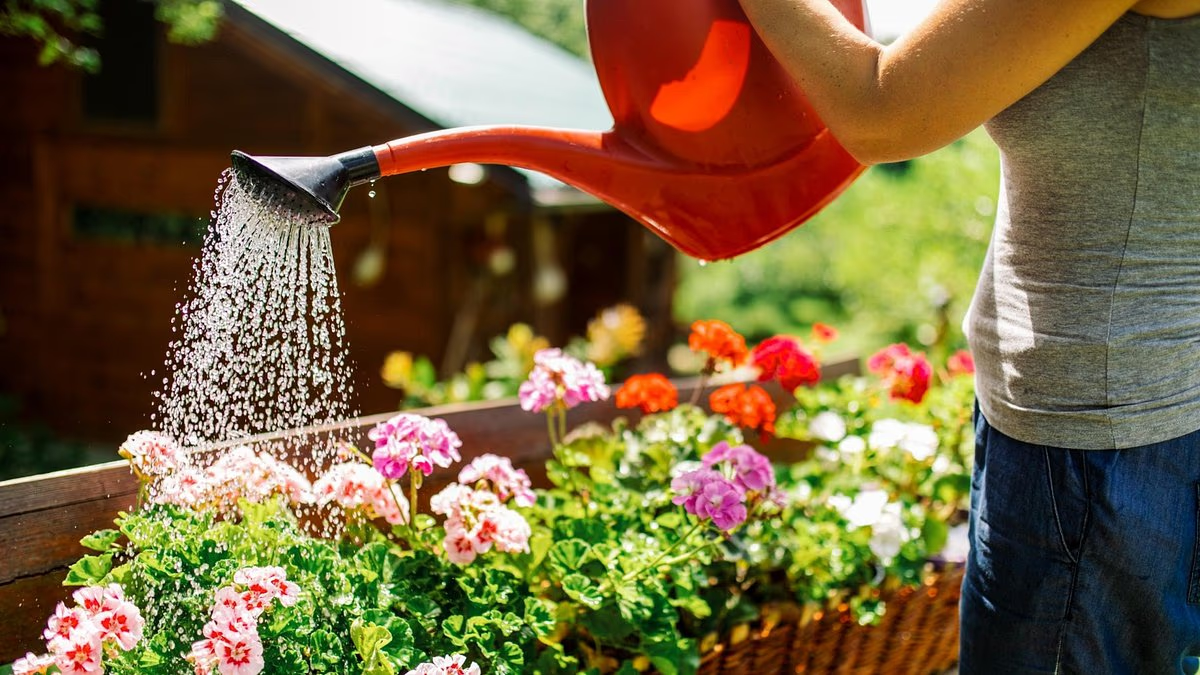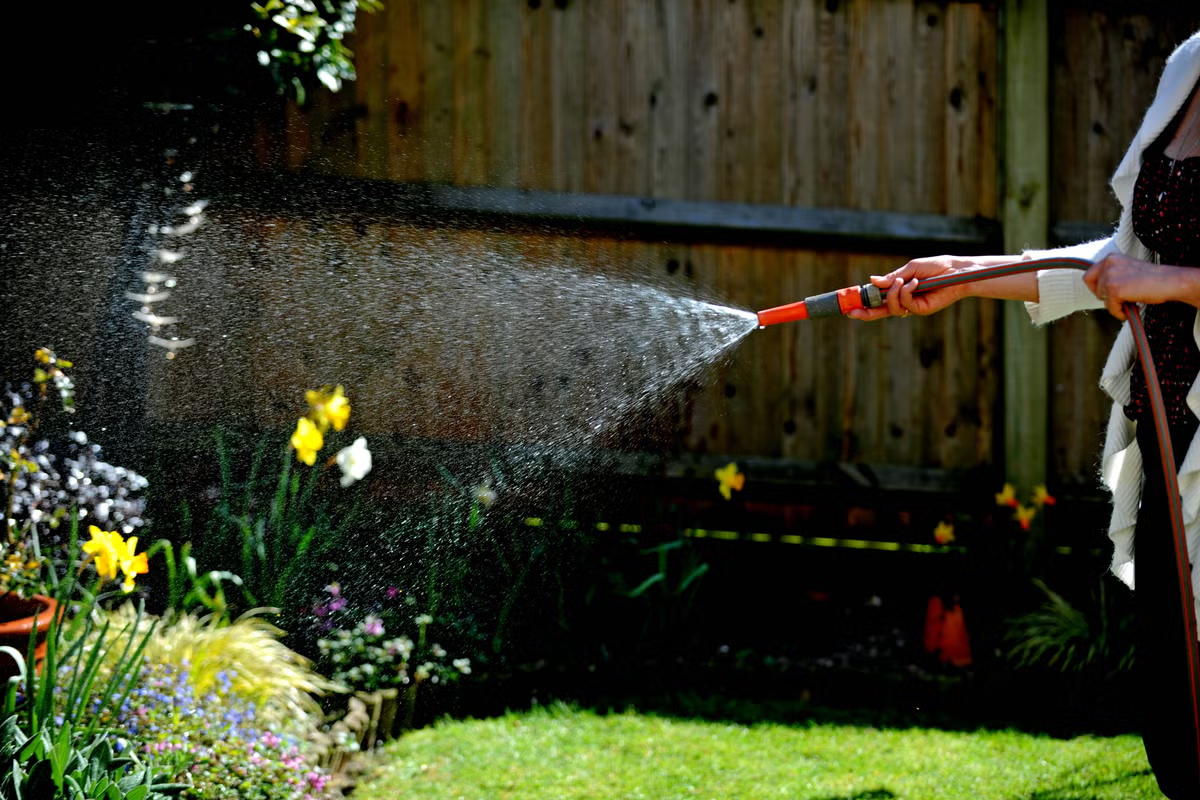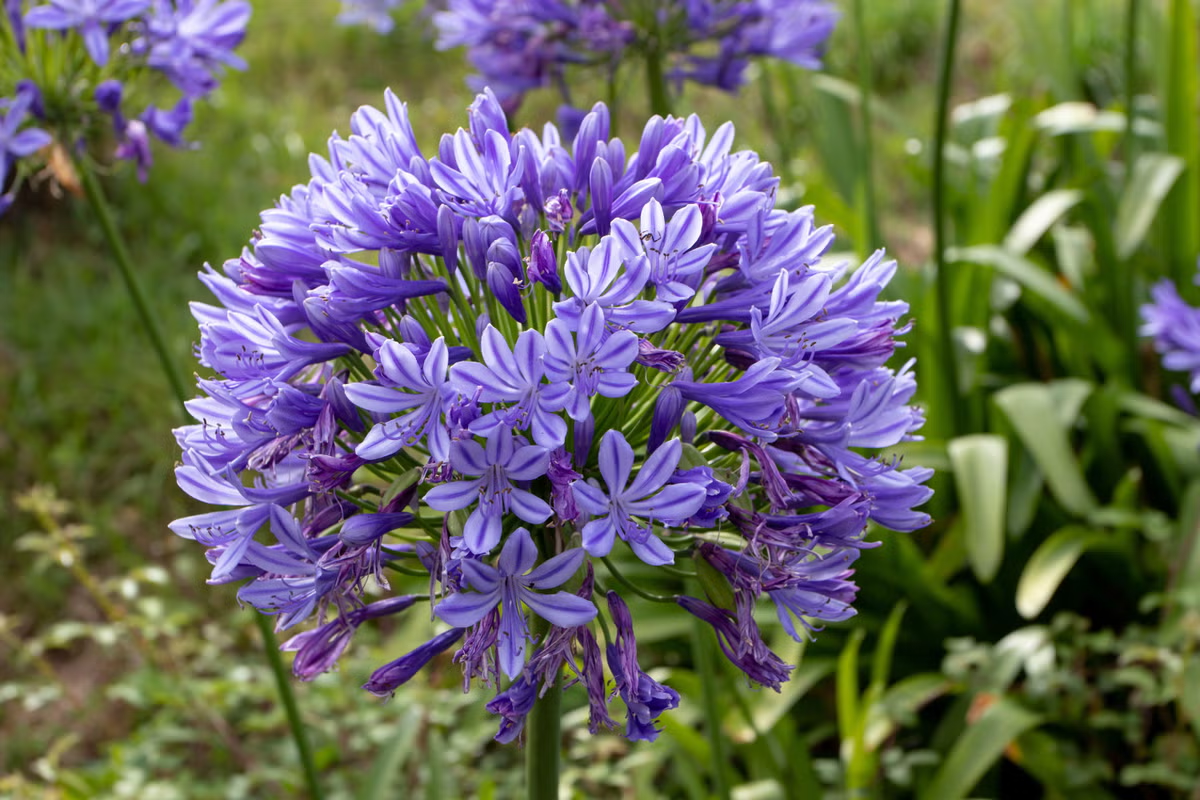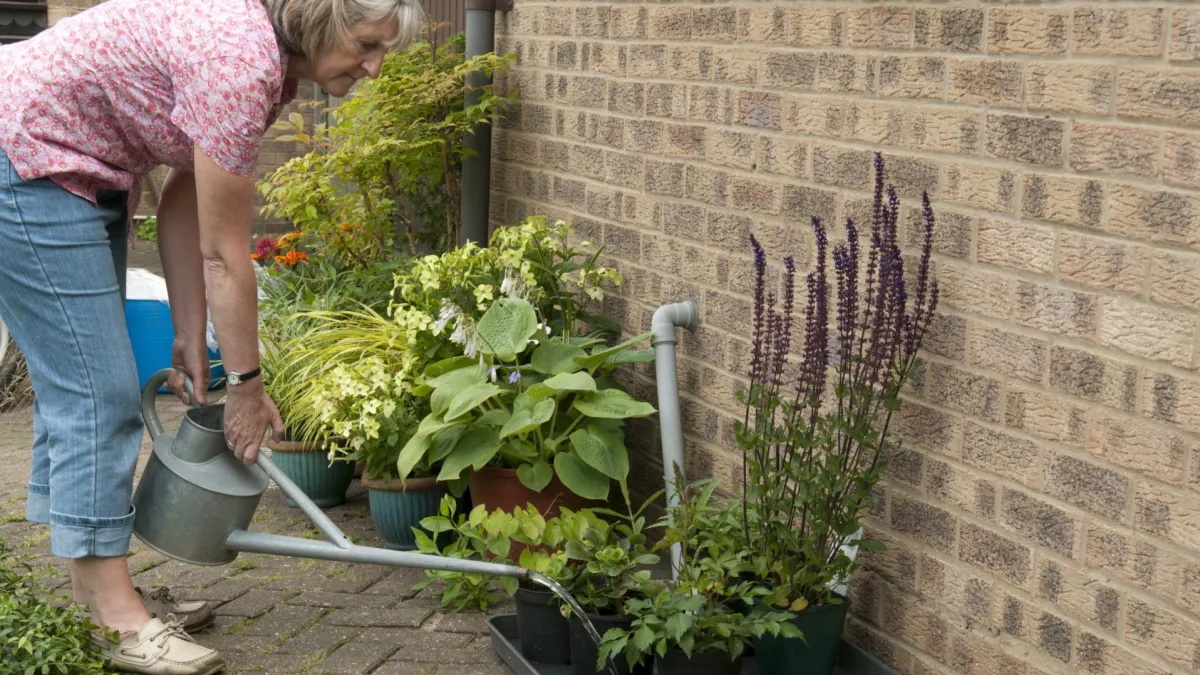
It is a truth universally acknowledged that as soon as a gardening columnist offers pearls of wisdom regarding the best ways to cope with a heatwave, the rain clouds will gather. It is another truth universally acknowledged that as soon as a gardening columnist writes such a sentence, the weather gods will do their very best to prove it to be entirely untrue.So let me instead start by explaining that I’m writing these words as the sun beats down relentlessly upon my garden and flower field with a ferocity that’s leaving the soil parched, and its plants and wildlife struggling, not to mention the humans that tend it.Given the nine-month-long winter we recently endured, it feels begrudging and even a little ludicrous to complain. After all, both warm temperatures and bright sunshine are beneficial for plant health and necessary for great germination, excellent leafy growth, fantastic flowering displays, good seed production and general all-round vigour. But, importantly, there’s a key tipping point at which plants start to struggle, one that varies according to the particular species but whose impact is made evident in a variety of ways.For what are known as cool-season plants, which are particularly sensitive to a spike in summer temperatures – such as lettuce, peas, coriander spinach, many members of the brassica family (examples include kale, cabbage, broccoli, rocket and radish) hydrangea, stock, astilbe, fuchsia, anemone, heuchera and phlox – that tipping point is around 24 degrees. But for many others, it’s around 30 degrees.Once this tipping point is reached, symptoms of heat stress start to appear. These can include reduced growth levels, scorching, wilting and browning of leaves, sudden leaf drop, wilting flowers, aborted flower buds, and a reduced or shortened flowering display, as well as fruit drop, and “bolting” in leafy food crops. Quite the list.Hydrangea (Hydrangea macrophylla): Extremely hot weather causes its petals to scorch and wilt What to do? Some of these symptoms of plant stress are simply beyond our control. There is nothing a gardener can do, for example, to prevent a leafy food crop such as lettuce or coriander from bolting, beyond ensuring that you’ve chosen to grow a variety bred to have good bolting resistance. Likewise, the delicate flowers of astilbe, hydrangea and stock are just not designed for extremely hot weather, which causes their petals to scorch and wilt.But there are still practical things we can do to mitigate the worst of the impact, especially as the rapid pace of climate change makes these kind of heatwaves ever more likely as well as more severe. Soil health, for example, is key in supporting plant health during such fierce temperatures. Mulching the ground in spring is one of the very best ways to help lock in moisture and shield both the soil and plants’ vulnerable root systems from extreme heat. You can use a combination of a wide variety of materials to do this, from home-made garden compost, well-rotted manure, leaf mould, grass clippings, chopped straw or hay and responsibly foraged seaweed to commercial products such as Enrich. Failing that, even a simple mulch of fine pebble will help to shield the ground and the complex web of soil life that it contains from the searing summer sun.Hay used as a mulch around lettuces. Photograph: Alamy/PA The highly respected Laois-based organic gardener Tanguy de Toulgoet has also had great success using the French-Canadian BRF (bois raméal fragmenté) method. First popularised in the 1970s to help Quebec foresters rejuvenate damaged soils, this woody mulch relies on the use of chopped up, lignin-rich young branches and twigs of deciduous species of trees and shrubs to create a protective, nourishing mantle for the soil.[ Meet the French gardener who wants to save Irish soilOpens in new window ]Likewise, creating a dense, upper leafy canopy of trees and shrubs in your garden will do a lot to create valuable shelter for its lower-storey planting as well as for the many mini-habitats for garden wildlife that it contains. This sort of multi-tiered planting can also be used to create welcome pockets of cool shade for heat-sensitive plants, as well as shady outdoor seating spots for heat-sensitive humans unused to the sort of broiling temperatures we’ve experienced this summer. Not only are they both restful for the soul and beneficial for garden wildlife, pools are also yet another useful way to cool and refresh the air, a welcome boon for anyone sitting nearby.Pools are a good way to to cool the air in your garden As for traditional lawns, it’s important to reduce mowing to an absolute minimum and raise the blades to help the grass withstand the scorching temperatures. But don’t water it. Turf is remarkably resilient in the face of summer heatwaves and though it may temporarily turn yellow, it will recover. That’s not the case for trees, shrubs and hedging planted in the last year, especially bare root specimens, which should be watered regularly and thoroughly in the evening, directing it gently around the base of the plants.[ ‘We have entered a new reality’: Ireland is alarmingly unprepared for a heatwave futureOpens in new window ]If you grow plants in a glasshouse or polytunnel, the challenges are greater again. Fierce temperature spikes are almost inevitable in these kinds of protected growing structures, no matter what. In this case, generous ventilation is crucial to avoid dead zones where temperatures rise so high that they result in plant death. Bear in mind that both glasshouses and polytunnels can be retrofitted to increase ventilation, from adding side vents and automatic roof vents to mesh panels, ridge vents, louvres, roll-up side vents and extraction/intake fans. Shade netting can also be used to protect plants, while regularly damping the structure down in the morning or in the relative cool of the evening will also help to reduces the stress on plants. In much the same way as a garden pool helps to cool the air around it, some buckets of water placed at intervals within it will also have a beneficial effect.Lasty, container-grown plants are similarly vulnerable to damage during summer heatwaves. So make sure to keep them very generously watered (at least once a day), placing saucers beneath the pots to provide an additional cooling reservoir. During the peak of any summer heatwave, it’s also well worth temporarily moving these into shade if possible.This weekCut off the faded flowers of lavender to encourage strong bushy growth, using a sharp shears to do so while making sure not to cut back into any old wood.Dahlias are thirsty, greedy plants that need to be kept deadheaded and very generously watered to encourage the production of plenty of their colourful flowers in the coming months. Regular liquid feeds are also very beneficial but should only be given after first thoroughly watering, as otherwise these could cause scorching of the roots and leaves.Dates for your diary June Blake’s Garden, Tinode, Blessington, Co Wicklow, W91EC90, Summer Talks series continues every Sunday afternoon (from 2pm) throughout the remainder of July and all of August, with a guided tour of this exceptionally beautiful Irish garden by owner and creator June Blake and a range of delicious home-baked cakes available in the garden’s coffee shop, see juneblake.ie From today, Saturday, July 25th to Sunday, August 2nd, the annual Carlow Garden Festival takes place with an outstanding line-up of guest speakers including Joe Swift, James Alexander-Sinclair, Arit Anderson, Chris Beardshaw, Bunny Guinness, Tom Coward, Fiann O’Nualláin, Colm O’Driscoll, Jimi Blake, Oliver Schurmann, Helen Begadon, Daphne Shackleton and Mary Keenan. Pre-booking essential; see carlowgardentrail.com and carlowtourism.com
Mulch, shade, water, ventilate: How to help your garden over the summer months
Taking some practical measures can lessen the impact of dry weather on your plants
1,259 words~6 min read