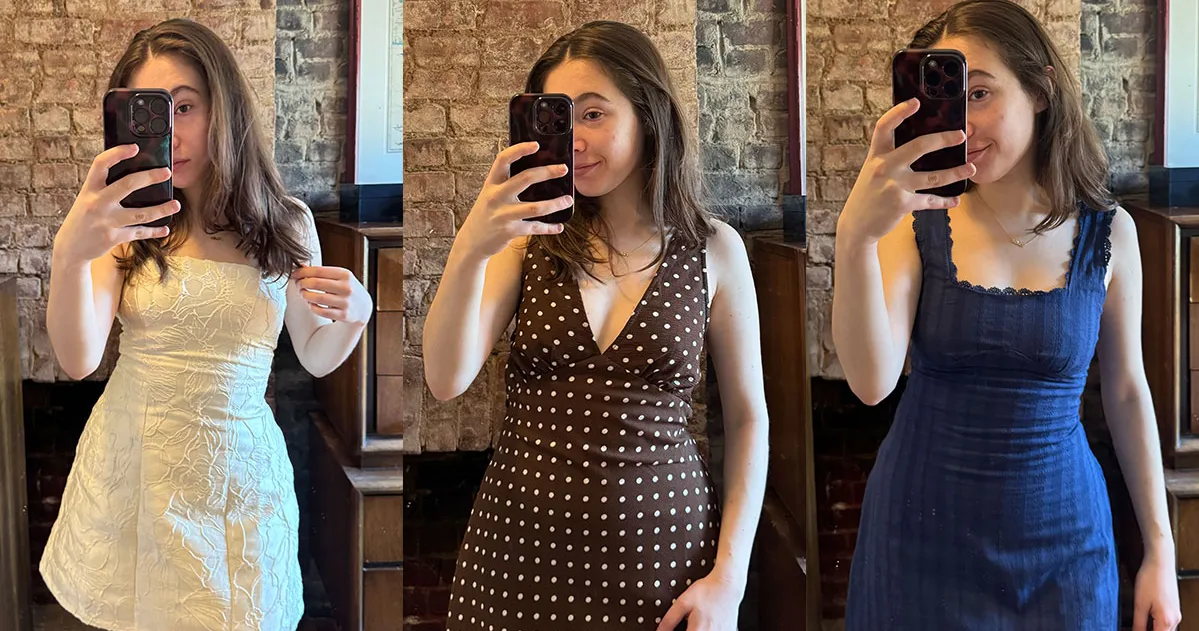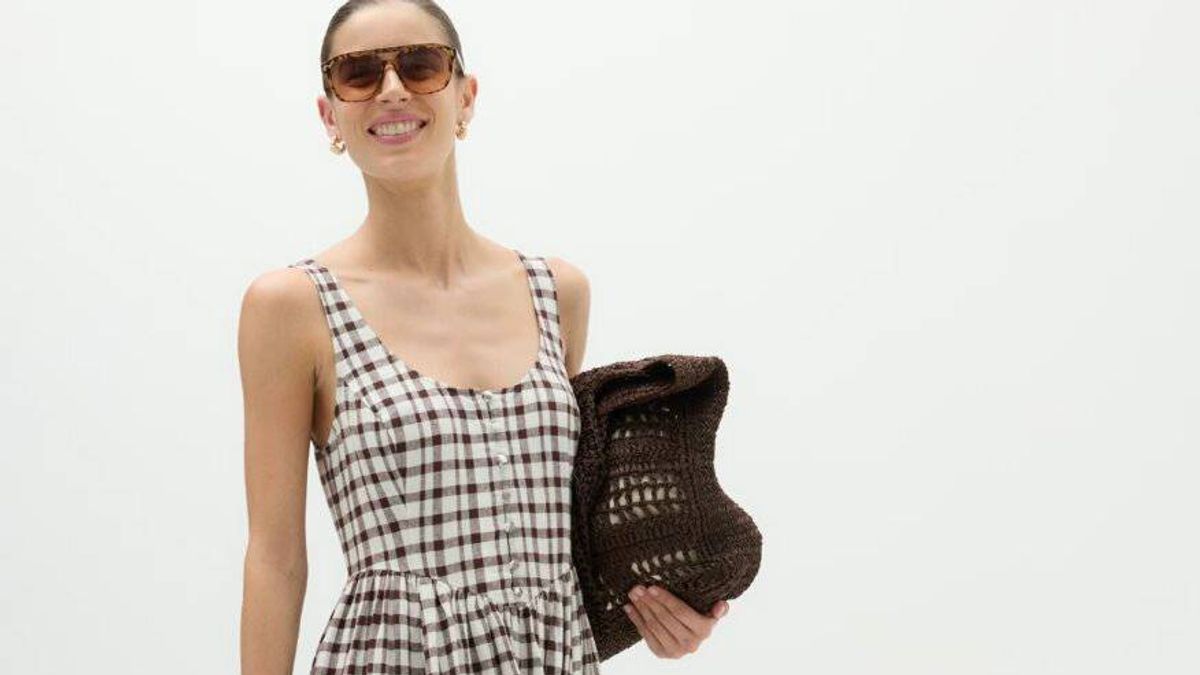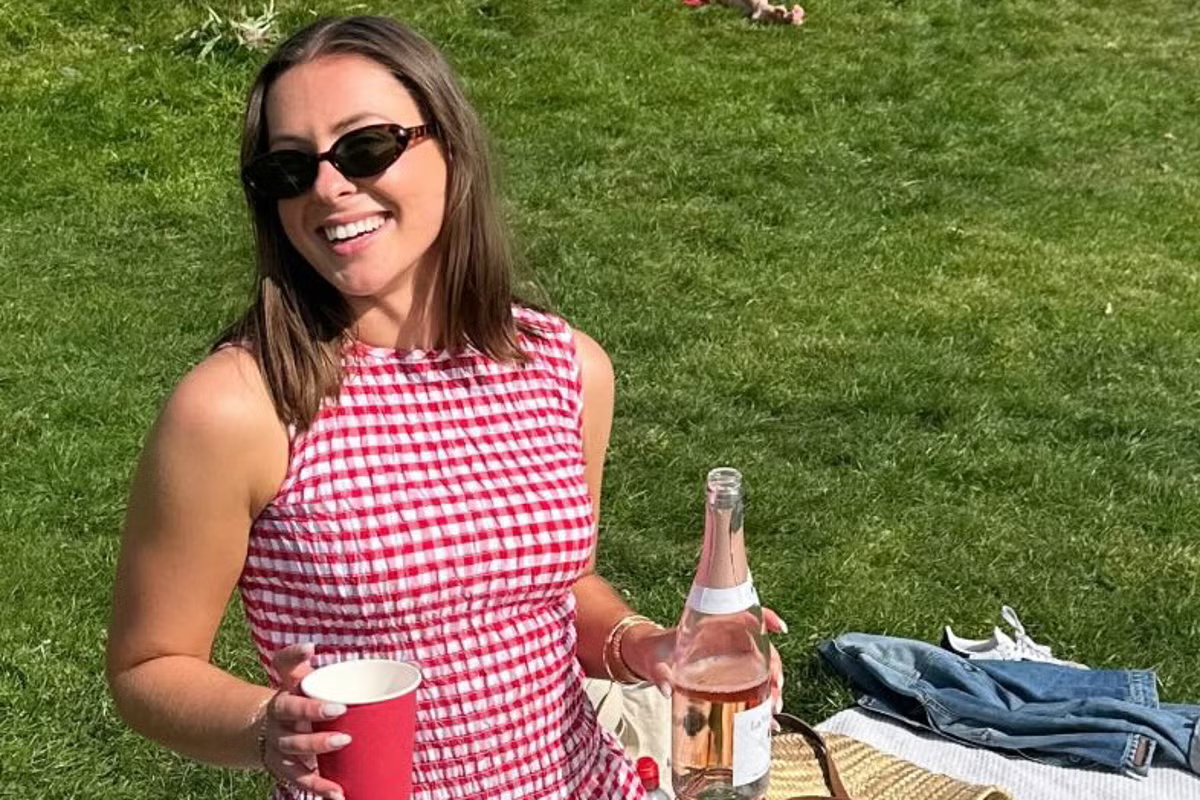
The first time I wore a girl’s 10-11 years gingham Primark dress to the pub, I was, frankly, scared. Could you tell I was wearing children’s clothing? Was it emanating school summer picnic energy? Was my bum exposed? But when I arrived, the outcome was all the more hilarious and unexpected – one of my friends was wearing exactly the same dress from the kids’ section, too. Buying children’s clothes from high street brands including Primark, M&S, H&M, and Zara has boomed in popularity over the past year thanks to influencers sharing their best purchases on TikTok, with certain items (like my £10 gingham dress) becoming lusted-after viral buys. But many shoppers in the know have seen the appeal of this practice for years: no 20 per cent VAT cost, meaning anyone under five foot five with small feet can enjoy the latest styles for a markedly lower price. But often, especially with basics, these savings go well beyond the 20 per cent VAT cost, too. Nipping down to my nearest M&S, I go on the hunt for a short-sleeved black T-shirt. I find almost identical products in the girls’ and women’s sections, marked at £4.50 and £9 respectively – a double in price. Additionally, the kids’ T-shirt (aged 13-14 years) is made of 97 per cent cotton and 3 per cent elastane, while the adult’s equivalent contains 2 per cent less cotton and 5 per cent synthetics. Viral: Lydia and her friend Catherine showed up to the pub in the same children’s dress (Lydia Spencer-Elliott/The Independent)Twenty-seven-year-old Holly Gardner has amassed 129,000 followers on TikTok and 54,000 on Instagram sharing her best buys from the high street’s kids sections. Standing at 4ft 11 inches tall, she’s been ditching adult offerings in the pursuit of a better fit since she was around 17. “Initially, I would say it was due to length and price but as I got older I realised the proportions of the clothes just fit me better,” she says. “Especially when it comes to the hip sizes and crotch to belly button. “A lot of petite ranges won’t actually cater for petite bodies,” Gardner adds. “They will literally get the same measurements as their average size and make the length shorter, which isn’t very flattering and it doesn’t really fit… I wasn’t too shocked by how popular the content became.” Of the high street’s offerings, Gardner prefers Zara’s kids’ section overall, thanks to their on-trend designs, New Look’s kids’ section for the way their clothes fit, and H&M’s kids’ section for their trendier style of jeans, including a low mid-rise cut, which are otherwise hard to find.“My best ever buy was probably a pair of cargo trousers from the New Look kids’ section,” she enthuses. Gardner had previously written off the style as all of the cargos from adult sections of stores were “baggy to the point of drowning”, particularly in the crotch area. “It was so unflattering,” she says. “But these New Look cargos fit perfectly – especially on my hips and they weren’t too high-waisted, so the crotch didn’t feel super low.” The same but different: a ribbed black T-shirt was twice the price in the M&S women’s section compare to an age 13 (Lydia Spencer-Elliott/The Independent)Whenever Gardner shares her finds to social media, there’s always a smattering of comments complaining about inclusivity. “What if you’re short and curvy?” one commenter asks. “My hips will never fit in child-sized,” adds another. “I am not skinny enough to do this,” says a third. Obviously, we don’t want women aiming to fit in children’s clothes if that’s not their usual size. But you don’t have to be a size zero. In a recent video, Gardner, who’s a UK size 4-6, shops with a friend who’s 5ft 4ins tall and a UK size 10-12 with 30G boobs to see who the kids’ section could cater to; both fit in the same outfits, including one pair of white lace shorts that looked similar to a £44 pair from Free People. Another criticism is that, if designs suit adults, then perhaps they’re not appropriate for children. “I do totally agree with that,” says Gardner, who adds this can work both ways: “Some items will have little features that’ll signify that it’s meant for a younger audience,” she says. “They’ll add a heart patch or something to a T-shirt, whereas you wouldn’t get that in the adults’ section. Some of the clothes definitely feel a lot more playful.” Of course, the answer here is for brands to carry sizes that legitimately reflect the population: the short, tall, skinny, fat, big-boobed, flat-chested, curvy-thighed, wide-shouldered, narrow-waisted – and everyone in between. But with fast fashion moving at the speed of light, careful tailoring comes at a cost, and is hard to come by on the high street. So, shoppers are taking matters into their own hands; purchasing from men’s sections, children’s sections and second-hand (Vinted is now the third-largest fashion retailer in the UK) to find the affordable perfect fit. In the UK, brands independently decide what their clothes sizes look like, hence why you could be a size eight in one store and a large in another. If a brand is aiming to appeal to teenagers, for example, they’re more likely to model their clothes on somebody they deem to reflect that. As such, Gardner will also often shop in Zara’s youth-focused sister store Bershka, which will often have the same product, with better measurements for her body type. But, if her tastes mature, this option could be off the cards. For now, she and the hundreds of thousands that follow her are grateful for the adaptability of the children’s department. “As an adult, it’s super hard to find clothes that will fit you,” Gardner concludes. “So, I think the petite girls feel seen... I just knew people would want to hear the news.”
From M&S to Zara: How TikTok taught me to shop for clothes in the kids’ section
People’s spending has contracted in the ongoing cost of living crisis, but now clothes are shrinking too? Lydia Spencer-Elliott is among the growing number of shoppers who are heading to the kids’ section to find clothes that cost half of the identical adult equivalent
981 words~4 min read